Seismic Activity Shifts Regional Risk Focus Amid Pacific Quake Frequency
Repeated seismic events across the Pacific, despite immediate tsunami clearings, highlight persistent geological vulnerabilities and imply ongoing operational adjustments for regional stakeholders.
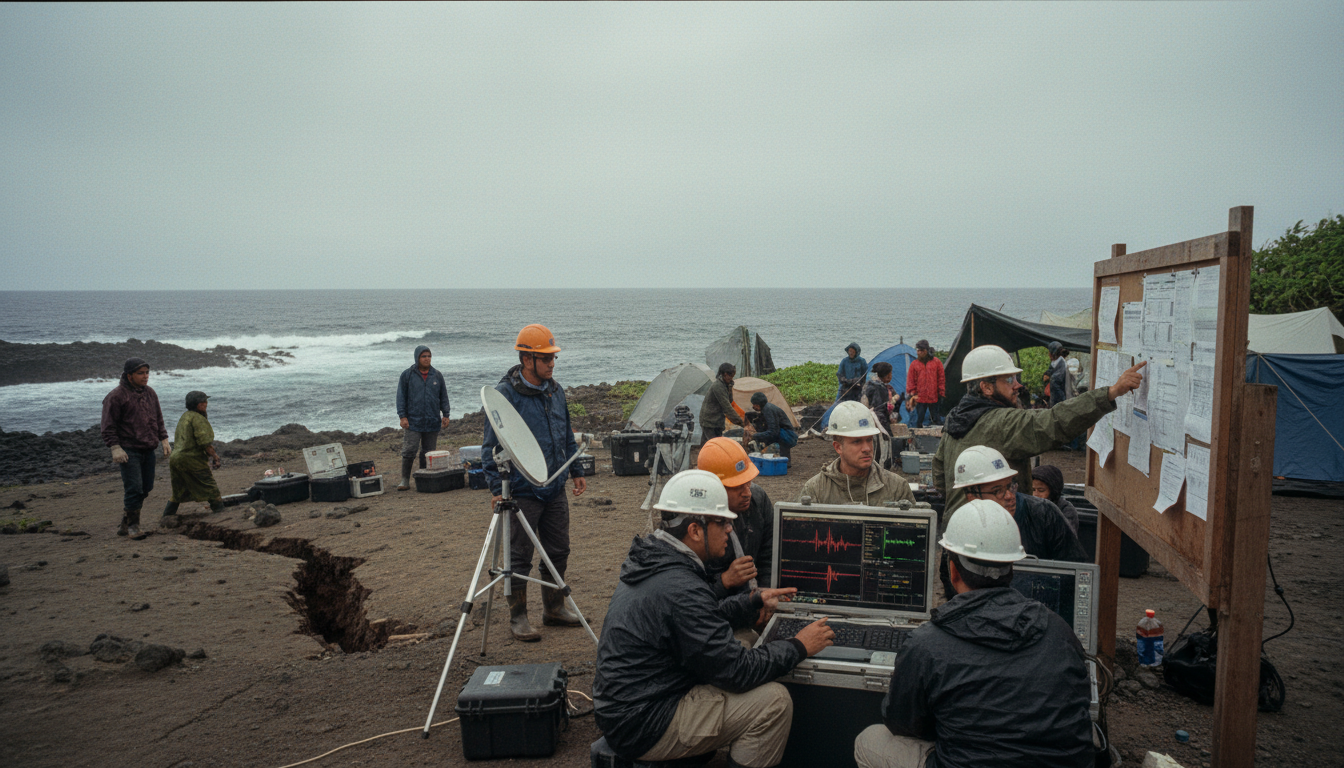
A recent magnitude 7.6 earthquake off Panama, occurring at 6.56am NZ time at a depth of 33km, prompted an immediate assessment from the US Tsunami Warning Center. The Center subsequently issued an update, stating there was no further tsunami threat to Guam, the Commonwealth of the Northern Marianas, American Samoa, Rota, Tininan, Saipan, or Hawaii. This swift communication of a 'no threat' status has become a recurring pattern in the Pacific following significant seismic events.
While the immediate absence of a tsunami threat is a positive outcome for the affected islands, the frequency and geographical spread of these quakes warrant closer examination. In March 2026, a deep 7.6 magnitude earthquake near Tonga also resulted in no tsunami threat. Two months later, in May 2026, a 6.0 magnitude earthquake was detected off the Hawaii coast. More recently, in June 2026, a 7.8 magnitude earthquake in the Philippines led to tsunami advisories for parts of the Pacific, and caused at least 35 fatalities.
These incidents, ranging from magnitude 6.0 to 7.8, indicate a consistently active seismic environment across the Pacific basin. Each event, regardless of its ultimate tsunami impact, triggers a chain of assessment and communication protocols. The prompt 'no threat' declarations, while reassuring, do not negate the underlying geological instability. Instead, they highlight an operational efficiency in disaster response systems, particularly those managed by entities like the US Tsunami Warning Center.
The economic implications for nations and territories in the Pacific Islands region extend beyond direct damage from a tsunami. The recurring need for such alerts can influence risk perceptions for insurers, shipping companies, and investors. While there is no reported economic data directly linking these 'no threat' declarations to changes in regional investment or insurance premiums, the persistent seismic activity presents a background risk that could factor into long-term strategic planning for infrastructure development and business continuity. For instance, any increase in perceived risk, however small, could incrementally raise the cost of capital or insurance for projects in vulnerable areas.
The challenge for Pacific nations is to manage both the actual physical risks and the perception of risk. Although major destructive tsunamis have not materialized from these specific events, the potential for such an event remains a constant. The ongoing seismic energy release suggests that preparedness cannot be a static condition but requires continuous adaptation. This includes evaluating building codes, upgrading early warning systems, and maintaining evacuation protocols, even in the absence of immediate threats.
One could argue that the consistent 'no threat' outcomes reduce public anxiety and maintain economic stability by preventing unnecessary disruption. However, this perspective overlooks the cumulative effect of constant vigilance. Each event consumes resources in monitoring, analysis, and communication. Furthermore, there is a risk of 'alert fatigue' if repeated warnings, even those concluding in 'no threat', become too commonplace, potentially dulling the urgency when a genuine threat emerges.
Ultimately, the continuous seismic activity across the Pacific, exemplified by the Panama quake and its predecessors, reinforces the region's inherent geological volatility. While the US Tsunami Warning Center's timely clearances prevent immediate panic and economic disruption, the underlying data points to an environment where seismic risk remains a fundamental, unresolved constraint for long-term planning and resilience strategies across the Pacific Islands and beyond.
Sources
Newsletter
Pacific Daily
A curated briefing from Thailand, Asia-Pacific and the world.