Routine Shutdown Reveals Persistent Infrastructure Vulnerabilities in Southeast Asian Energy
A temporary closure of the Songkhla export pipeline, a joint venture between Malaysia's Petronas and Thailand's PTT, underscores how infrastructure integrity concerns compound with geopolitical and operational risks.
SINGAPORE
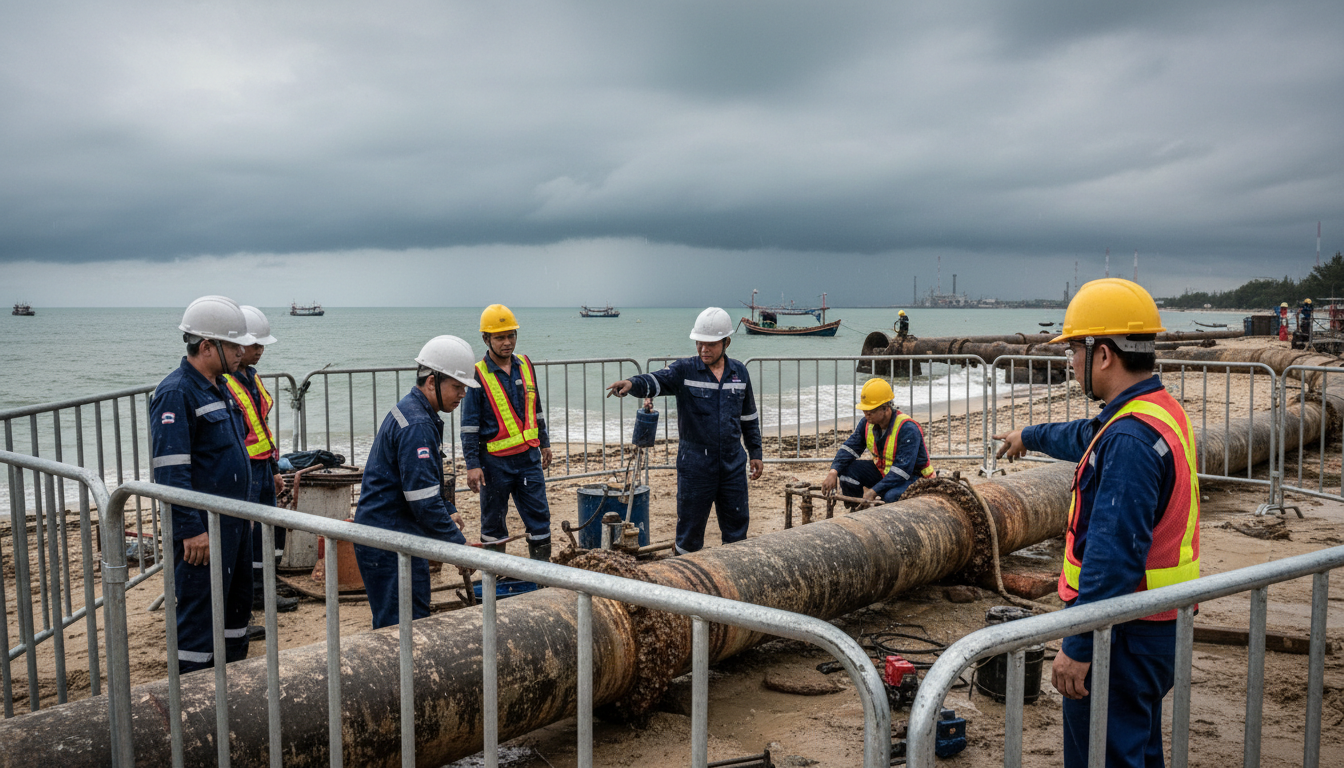
The temporary shutdown of the Songkhla Export Pipeline by Trans Thai-Malaysia (Thailand) on October 1, 2026, due to an issue identified during a routine inspection, highlights underlying fragilities in Southeast Asia's energy infrastructure. This pipeline, a joint venture between Malaysia's state energy firm Petronas and Thailand's PTT, forms a critical part of the Trans Thailand-Malaysia gas system. While Petronas described the measure as precautionary, intended to protect pipeline integrity and ensure safe operations, the event points to systemic challenges that extend beyond standard maintenance protocols.
Such operational interruptions carry implications for regional energy security. The Trans Thailand-Malaysia gas system is a vital component for gas supply in the region. This incident, though temporary, demonstrates that even established infrastructure faces unexpected vulnerabilities that can disrupt supply. The event follows previous disruptions, such as the towering blaze on a Petronas gas pipeline in Malaysia on April 1, 2025, which resulted in dozens requiring hospitalisation. These occurrences collectively illustrate a pattern of critical infrastructure under stress, impacting operational capabilities rather than merely prompting statements of intent.
The context of regional energy supply is further complicated by geopolitical factors. Malaysia noted Beijing's concerns regarding its energy projects in the South China Sea, as reported on April 4, 2023. This regional political dynamic, coupled with operational challenges, suggests a complex environment for energy development and distribution. The interdependence of national energy firms, exemplified by the Petronas-PTT joint venture, means that operational issues in one segment can have cross-border effects, reinforcing the need for robust, resilient regional infrastructure.
Global market volatility also intersects with these regional operational concerns. The CEO of Petronas warned that the Israel-Iran conflict contributed to a “polycrisis” engulfing the oil market. Such warnings indicate that external geopolitical events exacerbate existing operational and infrastructure risks within the Asia-Pacific energy landscape. The Songkhla pipeline incident, in this broader context, is not an isolated event but a manifestation of underlying, unresolved tensions between operational maintenance requirements, regional geopolitical pressures, and global energy market instability. The capacity to ensure consistent energy flow depends not only on new investments but also on the sustained integrity of existing assets. This incident reinforces the constraint that infrastructure reliability remains a constant, unresolved challenge in regional energy strategy.
Sources
Newsletter
Pacific Daily
A curated briefing from Thailand, Asia-Pacific and the world.