Japan's Shipbuilding Fund Faces Southeast Asian Market Realities
Tokyo's new investment mechanism aims to boost its shipbuilders, but regional competition and global demand trends will shape its impact on nations like Thailand.
SINGAPORE
Japan’s establishment of a shipbuilding revival fund, designed to stoke private investment, represents a strategic move to restore domestic industry. The fund aims to channel capital into Japanese shipyards, an effort seen as vital for an industry that has faced decades of international competition. This initiative, reported by Nikkei Asia on October 1, 2026, surfaces as global maritime trade patterns shift and regional shipbuilding capacities, including in Southeast Asia, expand.
The fund’s stated purpose is to attract private investment. This indicates a shift from direct government subsidies towards a model that leverages public-private partnerships. This approach could provide a capital injection to Japanese firms, potentially enabling upgrades in technology, efficiency, and capacity. The success of such an endeavor, however, hinges on more than just available capital; it also depends on the competitive landscape and the actual demand for newly built vessels. The intervention follows other significant financial movements, such as Japan's August foreign reserves experiencing their largest-ever drop after record intervention, suggesting broader economic pressures.
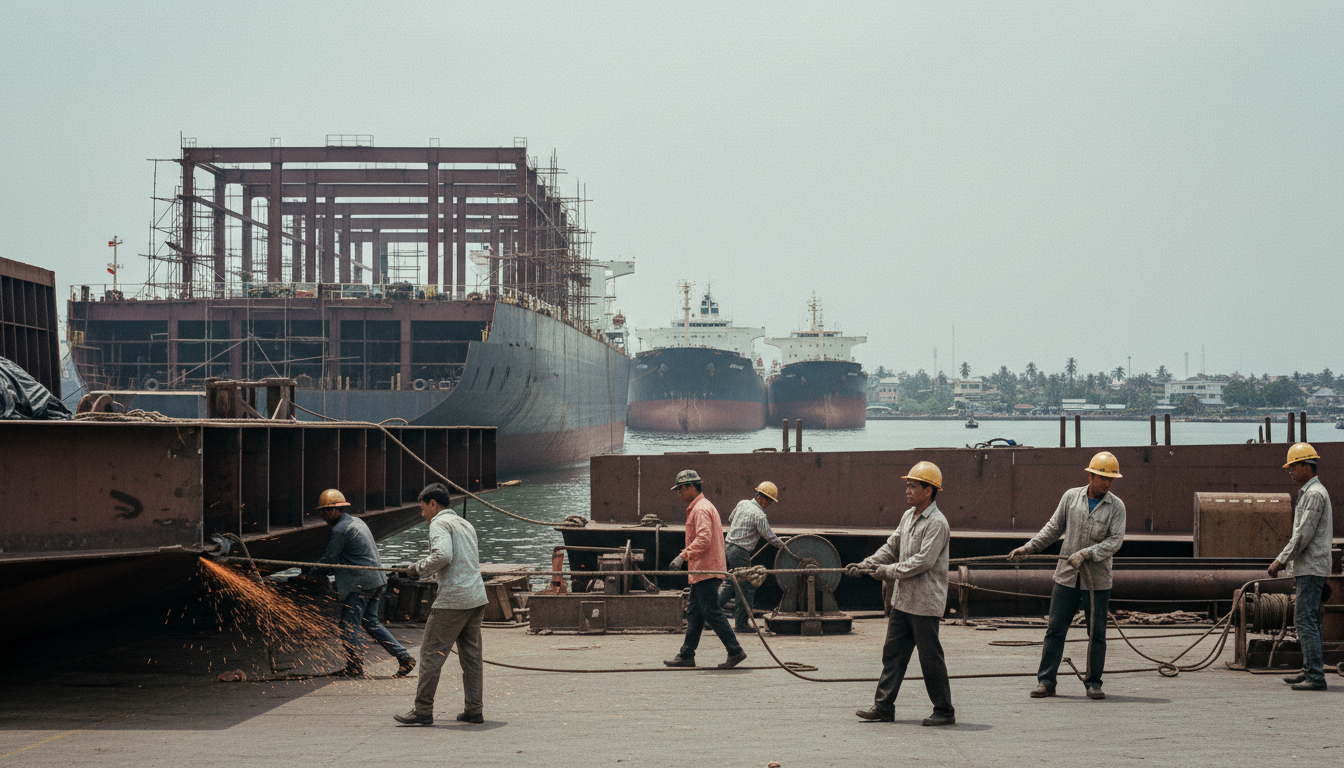
While the fund intends to bolster Japan’s position, its long-term effectiveness in the broader Asia-Pacific region is subject to existing market dynamics. Southeast Asian nations, including Thailand, have been developing their own shipbuilding and repair capabilities. Thailand, for instance, has leveraged its strategic location and lower labor costs to attract contracts, particularly in smaller vessel construction and maintenance. If Japan's fund focuses on high-value, technologically advanced vessels, it might not directly compete with all segments of Southeast Asian shipyards. It could, however, draw away regional orders for more complex ships. This also ties into Japan's updated 'Free and Open Indo-Pacific' strategy, which takes shape from Hanoi to Manila, implying a broader economic and strategic engagement across the region.
The initiative can be viewed as an attempt to reassert influence in a critical sector amid geopolitical considerations. An argument exists that this fund serves as a crucial element in Japan's broader economic statecraft, especially when considering the nation's efforts to stabilize relations with China and hedge against potential economic shifts influenced by countries like the U.S., as discussed in August. However, this strategy faces inherent limitations. Global shipping demand, the cost-effectiveness of new builds versus existing fleets, and the emergence of green shipping technologies all factor into a shipbuilding company’s bottom line, irrespective of national support. The fund could create a temporary advantage for Japanese shipbuilders, yet it might not fundamentally alter the underlying cost structures or labor availability that often favor other regional players.
The true impact of Japan's shipbuilding revival fund will likely emerge from how Japanese shipyards innovate and compete against established and growing capacities in other Asian nations. The outcome now depends on whether the fund triggers genuine technological advancement and efficiency gains that translate into competitive pricing and market share, particularly against the backdrop of an evolving global economic environment.
Sources
Newsletter
Pacific Daily
A curated briefing from Thailand, Asia-Pacific and the world.