Pulau Bukom's Echoes: A Persistent Stain on Asia-Pacific's Green Ambitions
The recent oil leaks on Shell’s Singaporean island operation expose a tension between industrial legacy and environmental aspiration, with implications for a region poised between growth and preservation.
SINGAPORE
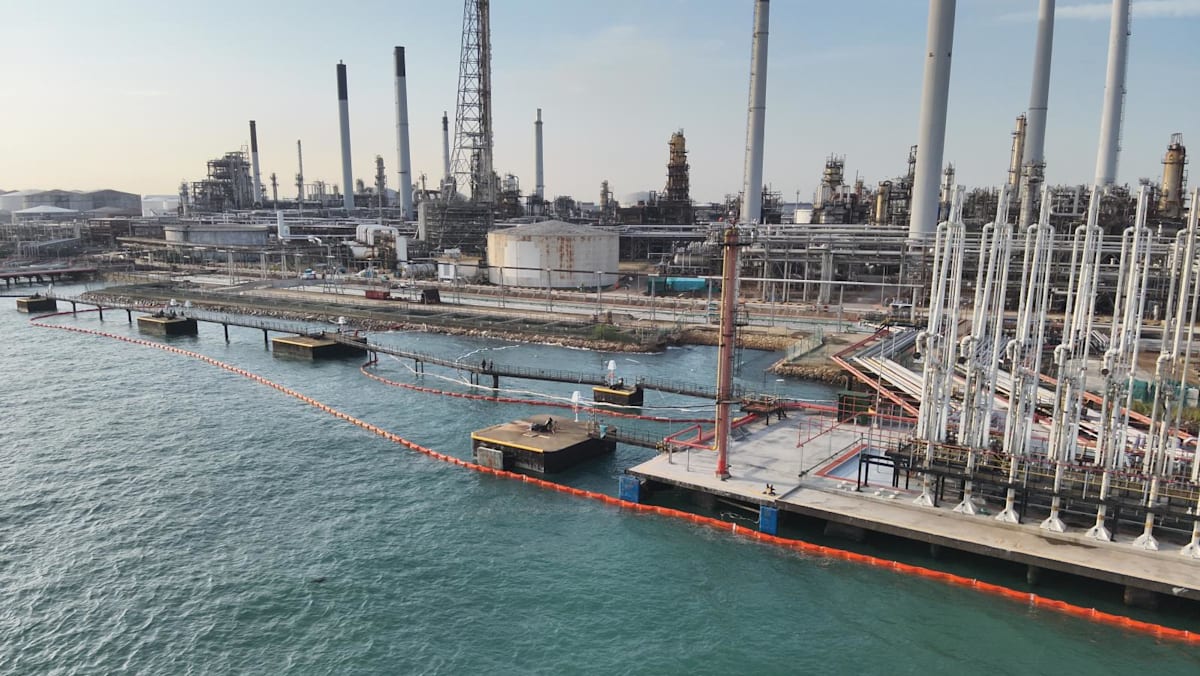
On Pulau Bukom, an island whose very name once whispered of the vast oil processing infrastructure that defined its existence, containment booms deployed in December 2024 sought to capture an oil mixture. This was not an isolated event. Earlier, in October 2024, approximately 40 tonnes of oily mixture had already discharged into the waters surrounding the island. Subsequently, between 485kg and 956kg of oil mixture leaked into Singapore waters over a few days in December.
Singapore, a city-state often seen as a bellwether for the Asia-Pacific, has long balanced its economic rise with an increasingly vocal commitment to environmental stewardship. For years, the narrative has included efforts to introduce sustainable aviation fuel and even a fully-electric ferry service by Shell. The company has also been named as a participant in a carbon capture and storage project in Singapore, a move that signals a future-facing intent. Yet, these developments stand in contrast to the persistent, tangible evidence of leakage.
The charges laid against Shell Singapore over these oil leaks, including a failure to report them immediately, place an uncomfortable spotlight on the practical realities of managing industrial operations at scale. An oil processing unit on Pulau Bukom, an island that has been a cornerstone of Singapore's energy sector for decades, presents a landscape where the old economy continues to exert its force. The imagery of containment booms in the channel around Pulau Bukom is a stark visual counterpoint to the often-touted ambition of green transitions.
For a region like the Asia-Pacific, where rapid development often comes with environmental compromises, the incident on Pulau Bukom offers a particular kind of lesson. Nations from the Gulf of Thailand to the archipelagos of Southeast Asia are navigating their own paths toward modernization, often reliant on industries with significant environmental footprints. The question these leaks pose is not merely about a single company's operational integrity, but about the broader vulnerability of these systems, even in highly regulated environments. If a leading global energy company, operating within Singapore's stringent regulatory framework, can face charges related to multiple leaks and reporting failures, it suggests a systemic challenge.
The challenge is how to reconcile the region's industrial past and present with its green aspirations. Many Asia-Pacific economies, including Thailand, face similar dilemmas: how to secure energy, facilitate trade, and drive economic growth without undermining the very natural resources that underpin their appeal and future sustainability. The clean-up image from Pulau Bukom remains, a testament not to a revolution, but to the enduring vigilance required as the world continues to extract and process its energy.
Sources
Newsletter
Pacific Daily
A curated briefing from Thailand, Asia-Pacific and the world.