Public Order Incidents Strain Thailand’s Everyday Hospitality
An attack on a restaurant owner in Buriram highlights the rising costs of maintaining public order in entertainment venues, potentially affecting operational budgets and customer experience.
SINGAPORE
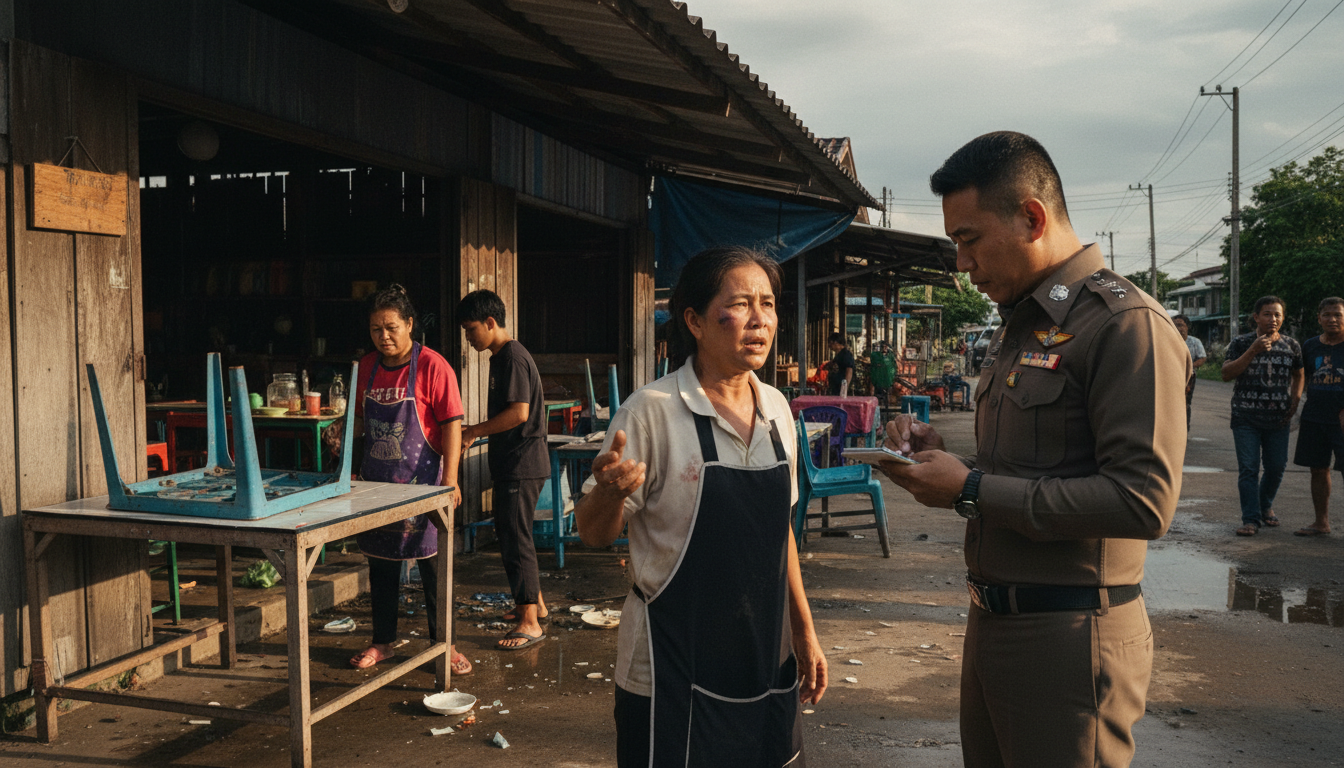
On October 2, a restaurant owner in Buriram, Somchai Kueapram, was attacked with a broken glass bottle after asking customers not to dance on a table. The incident, which occurred at his restaurant in Ban Gruad district, left the 29-year-old with a wound requiring 47 stitches. Somchai filed a complaint at Ban Gruand Police Station, providing CCTV footage as evidence. He identified the assailant as Anantasak, a 28-year-old customer. This event, where a business owner faced physical violence for enforcing house rules, illustrates an escalating challenge for Thailand's hospitality sector.
While this particular event might seem isolated, such confrontations can impose hidden costs on businesses, particularly smaller, local establishments. Restaurant owners must consider not only the potential for physical harm but also the financial burden of repairs, increased security measures, and the impact on staff morale and customer perception. A crowded restaurant, as Somchai described his venue that night, might offer higher revenues, but it also amplifies the risk of disorderly conduct and its consequences. This is a recurring operational concern that can erode profits.
For many Thai small businesses, especially those in the food and beverage industry, maintaining a safe and orderly environment is not merely about customer comfort; it is a fundamental aspect of their business model. When owners or staff must intervene in disruptive situations, it adds an unbudgeted layer of risk and labor. The question for businesses becomes: what level of investment is necessary to prevent such incidents, and how does that affect their pricing and overall sustainability? For a business like Somchai's, facing a cold snap in Buriram, as reported in November 2025 with a rush for used winter-wear, every operational cost becomes more significant. Such an environment requires customers to feel secure while also managing the expectations and behaviors of patrons.
The challenge is not just about isolated acts of violence. It points to a broader tension in public spaces where individual freedoms clash with community standards and business responsibilities. While some might argue that these are simply rare occurrences in an otherwise vibrant nightlife, the cost of even a single incident can be substantial for a small enterprise. The potential for such events adds to the existing pressures of running a business, from managing supplies to attracting and retaining staff. This situation ultimately affects the monthly budget of such establishments.
Furthermore, when patrons witness such disruptions, it can deter future visits, impacting a restaurant's reputation and long-term viability. The need for clear boundaries and their consistent enforcement, even at personal risk, becomes paramount. How this balance is struck between hospitality and maintaining order will shape the operational landscape for many businesses, and determine whether owners can continue to provide a welcoming environment without undue personal or financial burden.
Sources
Newsletter
Pacific Daily
A curated briefing from Thailand, Asia-Pacific and the world.