Philippine income disparities challenge regional stability assumptions
The persistent Luzon-Mindanao economic divide highlights a fundamental vulnerability for Southeast Asian development models, impacting trade and security beyond its borders.
SINGAPORE
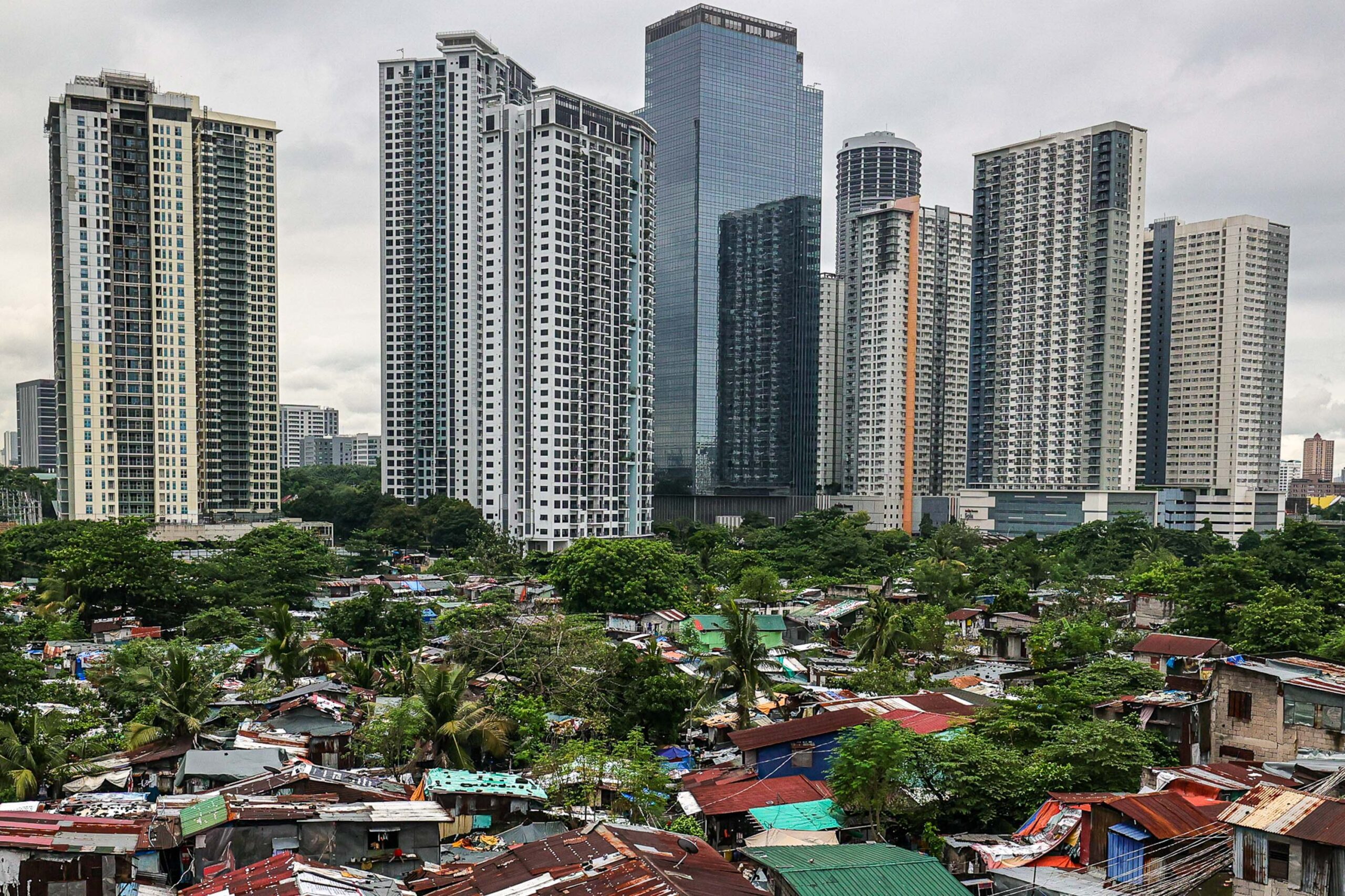
The latest Family Income and Expenditure Survey from the Philippine Statistics Authority (PSA), as reported by Rappler on August 28, 2026, reveals the average annual family income in the Philippines was P411,350 in 2025. This national average, however, masks profound regional imbalances that continue to define the archipelagic nation's economic landscape. Makati had the highest average income, while Zamboanga City had the lowest, highlighting a Luzon-Mindanao economic divide. This substantial gap is not merely an internal Philippine issue but a persistent structural challenge with regional implications.
The central claim that this income disparity represents a fundamental vulnerability for Southeast Asian development models is predicated on two key observations. Firstly, the concentration of economic activity and wealth in specific urban centers, exemplified by Makati's position at the top of the income scale, often correlates with the underdevelopment of peripheral regions. Ilocos Norte's income growth, noted as rising nearly 70% from 2021 to 2025, primarily due to reliance on overseas remittances and business income, demonstrates a dependence on external factors rather than diversified internal economic engines. Such growth, while locally beneficial, does not fundamentally alter the broader regional imbalance and can create new dependencies.
Secondly, the Luzon-Mindanao divide suggests a lack of cohesive national economic integration, a condition that historically impedes robust regional trade and investment flows. While other Southeast Asian economies may have internal development disparities, the Philippines' archipelagic geography often exacerbates such divisions, making infrastructure development and equitable resource distribution particularly challenging. The persistence of regions like Zamboanga City at significantly lower income levels indicates that a large segment of the population may remain outside the formal economy, limiting their purchasing power and their capacity to contribute to or benefit from regional economic initiatives.
A counterargument posits that such income disparities are a natural stage in developing economies, and that concentrated wealth in economic hubs ultimately generates a trickle-down effect. However, the sustained nature of the Luzon-Mindanao divide, evidenced by the PSA's findings, suggests that this trickle-down effect is either insufficient or structurally impeded. Furthermore, the fact that 2.7 million Filipino families experienced hunger in the first quarter of 2023, as reported by SWS and Rappler in May 2023, directly contradicts the notion of a broadly beneficial economic spread. Such high levels of food insecurity in parts of the population undermine the foundational stability necessary for sustained national and regional growth.
For the broader Asia-Pacific region, and specifically for economies like Thailand that seek to deepen regional supply chains and integrate labor markets, these internal disparities within the Philippines represent a constraint. A region with significant internal economic fragmentation struggles to present a unified, resilient market. From a geopolitical perspective, persistent economic grievance can also create fertile ground for internal instability, which may in turn complicate regional security postures. The ability of the Philippines to achieve more equitable distribution of wealth and opportunity is a capability, not a mere statistical observation, that directly influences the resilience and potential of ASEAN as a collective entity. The challenge remains to transform scattered economic gains into pervasive national prosperity, a task yet unresolved.
Sources
Newsletter
Pacific Daily
A curated briefing from Thailand, Asia-Pacific and the world.