Persistent Rainfall Patterns Challenge Urban Development in Southeast Asia
Ho Chi Minh City’s recurring heavy rain underscores regional infrastructure vulnerabilities against shifting climate dynamics.
SINGAPORE
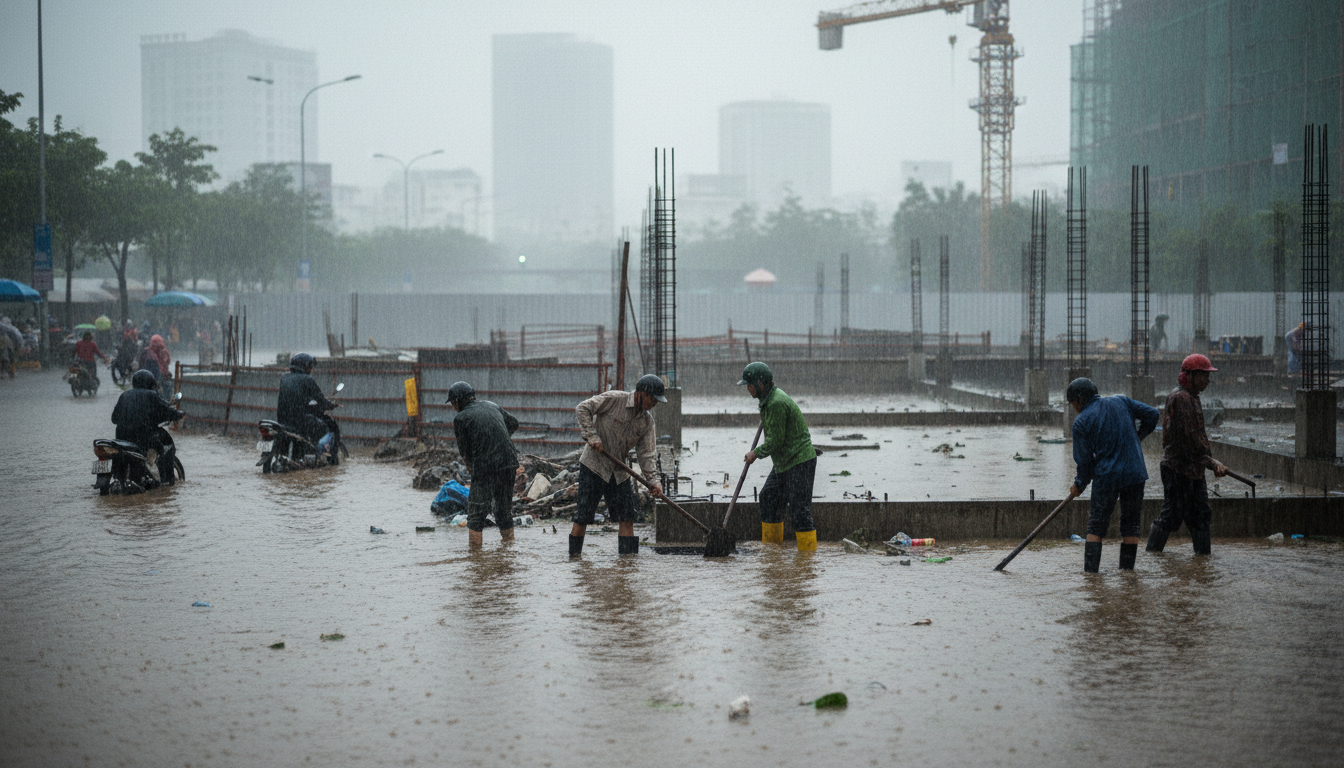
Ho Chi Minh City and southern Vietnam anticipate a five-day heavy rain spell starting September 17, attributed to a low-pressure trough driven by northern cold air. This follows a September 11 report by VnExpress International concerning Ho Chi Minh City’s wettest day of the year and subsequent anticipation of more rain. In May, thunderstorms were reported to have torn off roofs and toppled fences in the city. The pattern of significant rainfall events in Ho Chi Minh City suggests a broader regional challenge.
The occurrence of prolonged heavy rain is not isolated to Vietnam. Stuff.co.nz reported in July on heavy rains leaving five dead in China, with a tropical storm simultaneously affecting southern China and Vietnam. Reuters reported in November 2025 on Typhoon Kalmaegi causing dozens of deaths and downing an army helicopter in the Philippines. These events illustrate a regional vulnerability to intensifying weather systems.
For policymakers in Thailand and other coastal nations in the Asia-Pacific, the consistent reports of severe weather in densely populated areas like Ho Chi Minh City present a recurring problem. Urban centers, often developed inland from coastlines yet intrinsically linked to hydrological systems that extend from them, face direct consequences. The question is not simply how to manage individual events, but how to integrate a changing weather reality into long-term infrastructure and urban planning. The immediate response to a five-day rain spell focuses on drainage and immediate flood mitigation, yet the persistence of such phenomena implies a need for strategy beyond tactical measures.
The prevailing approach in many rapidly urbanizing Southeast Asian contexts has prioritized growth and expansion. While this has delivered economic benefits, it has also created a susceptibility where existing infrastructure is often inadequate for current precipitation levels. Without a fundamental shift in planning that accounts for altered weather patterns, the economic and social costs of these recurring events are likely to accumulate. A city like Bangkok, for example, shares similar geographical and developmental pressures, suggesting that Vietnam's experiences offer a relevant regional barometer. The current reporting of rain spells focuses on their immediate impact, yet the underlying tension remains between a historical development model and the present climatic conditions that disrupt it.
Sources
Newsletter
Pacific Daily
A curated briefing from Thailand, Asia-Pacific and the world.