Philippine Airlines and Manila's Struggle to Become a True Pacific Gateway
The flag carrier's long-haul ambitions depend on an airport that has long been one of Asia's most congested. Its redevelopment could change that.
MANILA
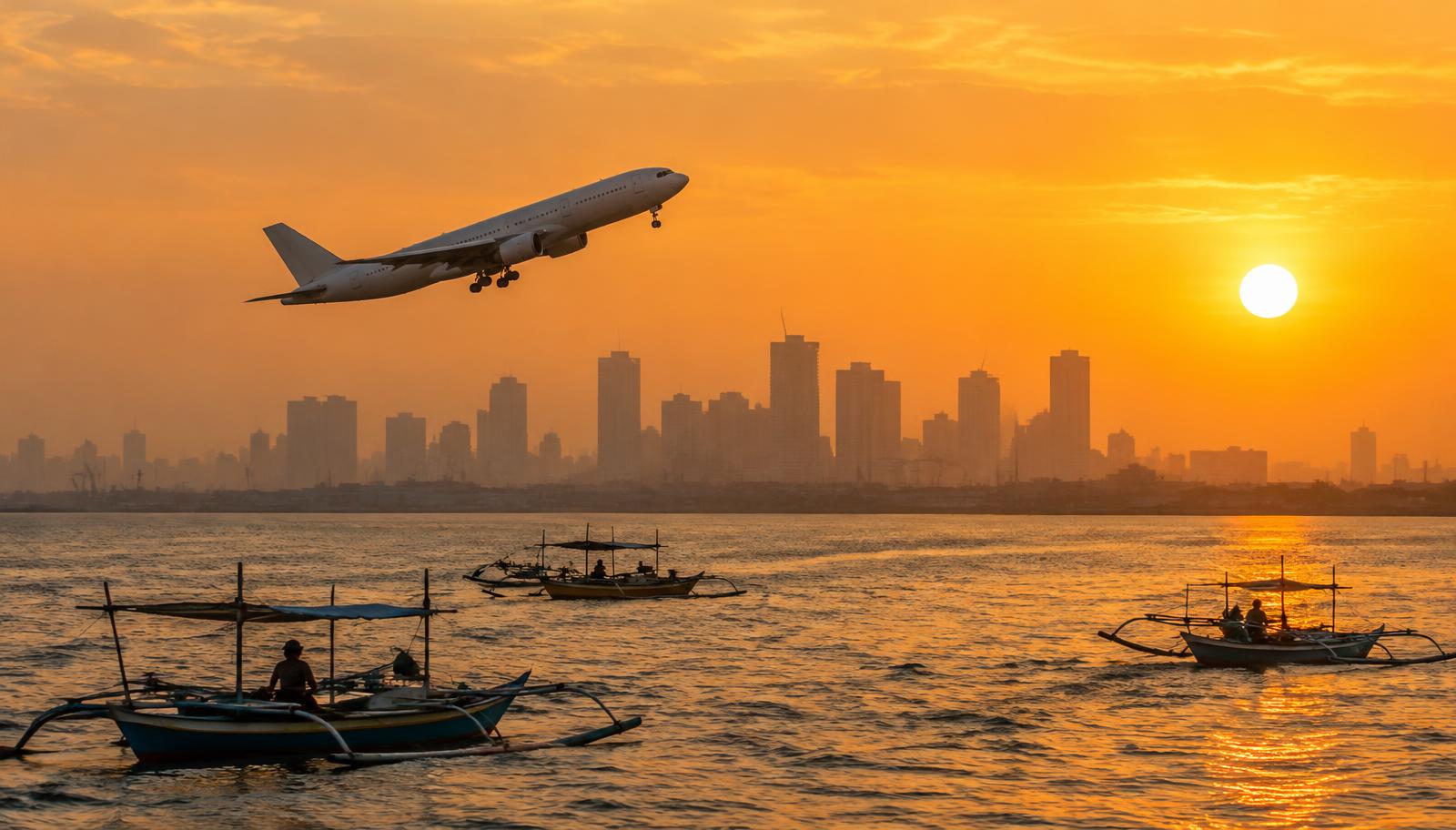
MANILA — As evening falls over Manila Bay, aircraft climb out over outrigger fishing boats and the city's hazy skyline. For millions of Filipinos, those flights are lifelines: to jobs in the Middle East, to family in California, to study in Australia. Philippine Airlines, the country's flag carrier and one of Asia's oldest airlines, sits at the centre of that movement, and its future is tied closely to the airport it calls home.
Ninoy Aquino International Airport has for years been one of the region's most criticised gateways, hampered by limited runway capacity, ageing terminals and frequent delays. Its location in the heart of Metro Manila leaves little room to expand. The government has therefore pursued two tracks: a privately led upgrade of the existing airport and a large new airport project in Bulacan, north of the capital.
For Philippine Airlines, better infrastructure matters because its strategy rests on long-haul routes across the Pacific and to Australia, where it competes with carriers that enjoy more efficient hubs. The airline has invested in newer Airbus A350 and Boeing 777 aircraft, refreshed cabins and expanded services to North America, home to a large Filipino diaspora.
The diaspora market
The Philippines has one of the world's largest overseas populations, and remittances form a major share of national income. That creates steady demand for travel during holidays such as Christmas, when overseas Filipinos return home in large numbers. It also means Philippine Airlines competes not only on price but on cultural familiarity: Filipino food, service and language on board.
Tourism adds another dimension. Destinations such as Palawan, Siargao, Bohol and Boracay attract international visitors, but many must connect through Manila. Smoother transfers and more direct international flights to regional airports such as Cebu and Clark are seen as key to growth.
Competition and recovery
The airline went through a court-supervised restructuring in the United States after the pandemic, reducing debt and fleet costs. Since then, demand has recovered, though the carrier faces strong competition from Cebu Pacific, Gulf carriers and other Asian airlines that connect Filipino travellers through their own hubs.
The broader question is whether Manila can become a genuine transit gateway between Southeast Asia and North America, as its geography suggests. The Philippines sits at the eastern edge of Asia, closer to the United States' West Coast than most of its neighbours. With modern airports, that location could become an advantage rather than a frustration.
For now, the planes keep climbing over the bay, filled with workers, families and tourists. If the airport projects deliver, the next decade could see Philippine Airlines move from surviving its home base to building on it.
Sources
Newsletter
Pacific Daily
A curated briefing from Thailand, Asia-Pacific and the world.