Panama Quake Prompts Renewed Pacific Tsunami Threat, Testing Regional Preparedness
A magnitude 8 earthquake off Panama has triggered warnings for Guam and the Northern Marianas, highlighting ongoing vulnerabilities across the Pacific.
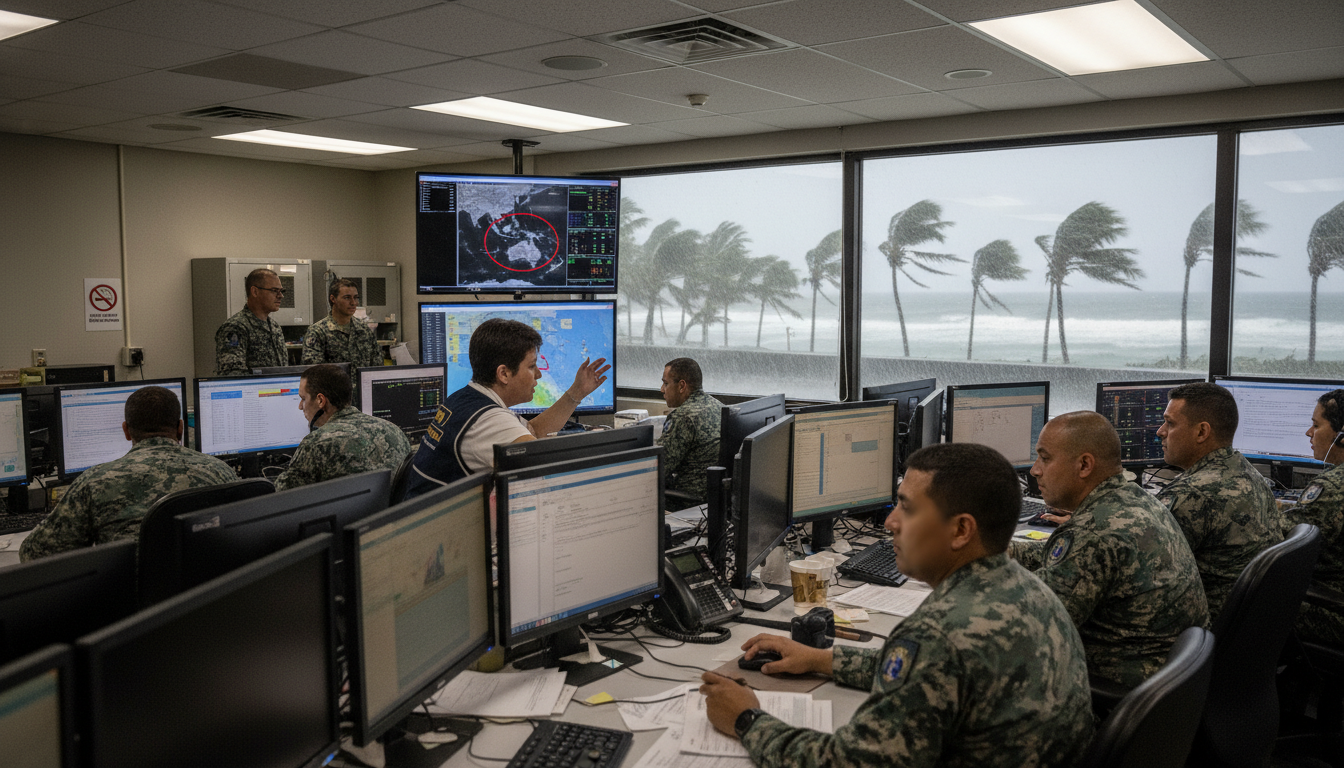
A powerful earthquake measuring magnitude 8, striking at a depth of 33km off the Central American country of Panama at 6.56am NZ time on October 9, 2026, has activated the U.S. Tsunami Warning Center. This led to a possible threat declaration for Guam and the Commonwealth of the Northern Marianas. The Center stated that a potential threat to American Samoa remains under investigation, following earlier concerns for areas closer to the earthquake's epicenter. This event underscores persistent seismic activity, an area repeatedly facing the risk of tsunamis.
The initial assessment from the U.S. Tsunami Warning Center focused on nearby Pacific regions before extending warnings further. This sequence of alerts reflects the layered approach to tsunami detection and communication, which must rapidly disseminate information across vast oceanic distances. However, the system's effectiveness relies not only on timely warnings but also on the infrastructure and readiness of distant island nations to receive and act upon them. A 2022 Washington Post report indicated a need for a major overhaul of the U.S. tsunami warning system, suggesting potential gaps in its broader regional impact.
The Pacific has experienced multiple significant seismic events in recent years that generated tsunami alerts. For instance, a 7.4 magnitude earthquake struck off the Japanese coast on April 20, 2026, and another 7.4 magnitude quake off the Russian coast on July 20, 2025, prompted brief tsunami alerts in Russia and Hawaii. Additionally, a major earthquake in the Philippines on June 8, 2026, placed Taiwan in a tsunami threat zone. These incidents demonstrate the frequent activation of warning systems and the ongoing exposure of diverse populations to potential tsunamis.
While the focus of the current warning from Panama is on specific U.S. territories, the broader implication for the Asia-Pacific region involves the preparedness of non-U.S. nations. The geological realities ensure that such threats are not isolated. The frequency of earthquakes capable of generating tsunamis necessitates consistent investment in early warning infrastructure, community education, and evacuation protocols across affected regions. For countries like Thailand, though geographically distant from Panama, the regional interconnectedness means that lessons learned and improvements made in one part of the Pacific can inform and strengthen defenses against future, more proximate threats.
However, a direct tsunami threat to mainland Southeast Asia from a Central American quake of this nature is not automatically implied by an alert for the Northern Marianas. The vast distances involved can attenuate tsunami energy over ocean expanses. The critical factor remains the specific characteristics of the earthquake – its magnitude, depth, and mechanism – and the bathymetry of the ocean floor, which dictate wave propagation. Nevertheless, the recent warnings serve as a recurring reminder of the dynamic nature of seismic hazards and the continuing need for vigilance and robust warning capabilities throughout the Pacific, even for threats that ultimately dissipate.
Sources
Newsletter
Pacific Daily
A curated briefing from Thailand, Asia-Pacific and the world.