Panama Quake Highlights Persistent Pacific Rim Tsunami Risk
A 7.7 magnitude earthquake near Panama briefly raised tsunami fears, underscoring ongoing seismic vulnerabilities shared by nations bordering the Pacific.
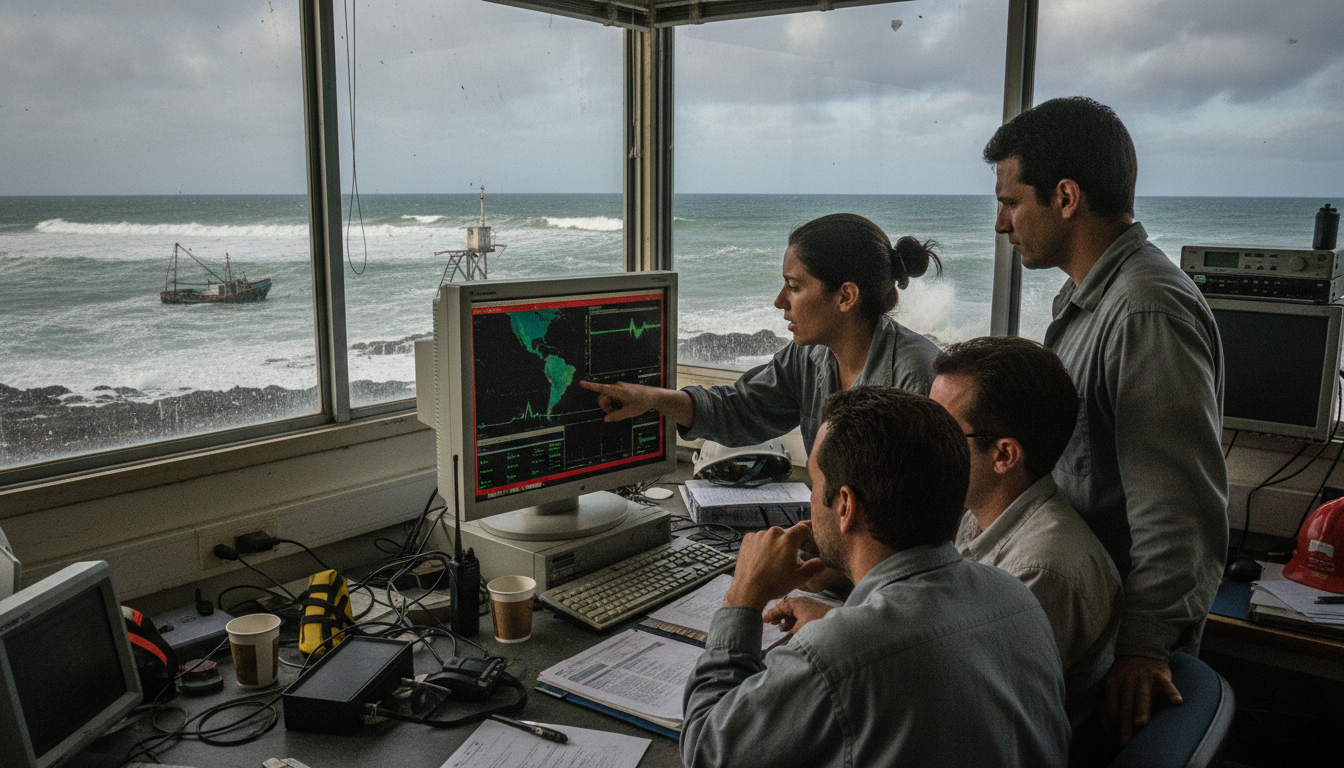
A strong earthquake, measuring magnitude 7.7 at a depth of 33km, struck off the Central American country of Panama at 6:56 AM NZ time on October 9, 2026. This event briefly prompted fears of a Pacific tsunami, reflecting the widespread nature of seismic events in this region.
Initial reports assessed the magnitude as 8, which was then downgraded to 7.6 before being adjusted to 7.7. This demonstrates the dynamic nature of early seismic data. The National Emergency Management Agency (NEMA) and GNS Science in New Zealand initially assessed whether the quake could generate a tsunami affecting their country. Subsequently, an unattributed statement indicated, "Based on current information, the initial assessment is that the earthquake is unlikely to have caused a tsunami that will affect New Zealand." Reuters reported no immediate damage in Panama.
While this particular event did not result in a destructive tsunami for the Asia-Pacific, its occurrence in a seismically active zone across the Pacific demands attention from all nations bordering this body of water. Past events demonstrate the tangible consequences of such tremors. For example, a massive 8.8 quake in Russia in July 2025 sparked a Pacific tsunami alert and evacuation warnings. An Indonesia earthquake in April 2026, measuring magnitude 7.4, killed one person. These instances underline the critical need for constant vigilance and robust early warning systems across the entire region, beyond areas immediately adjacent to a seismic event.
For Southeast Asian countries like Thailand, the Panama quake serves as a reminder of systemic risks. Although Panama is geographically distant, major seismic activity in the Pacific, particularly those with significant vertical displacement, has the potential to generate waves that can travel across vast distances, impacting distant coastlines hours later. The absence of immediate damage reports in Panama and the quick all-clear for New Zealand might suggest a limited impact for this specific event.
The challenge for Pacific nations lies in distinguishing between significant threats and events that quickly dissipate, all while maintaining preparedness for the former. The short-lived fear associated with the Panama quake points to systems effectively detecting and rapidly assessing potential threats. However, the recurring nature of these alerts, from Russia to Indonesia to Central America, highlights that the fundamental risk of trans-Pacific tsunamis remains unresolved. Future events will continue to test the responsiveness and accuracy of these systems, shaping the level of confidence in regional disaster preparedness measures.
Sources
Newsletter
Pacific Daily
A curated briefing from Thailand, Asia-Pacific and the world.