North-South Corridor Delay Extends Urban Friction
The prolonged construction of a major Singapore infrastructure project, now projected to conclude in 2031, underscores the enduring economic and social costs for urban businesses and residents.
SINGAPORE
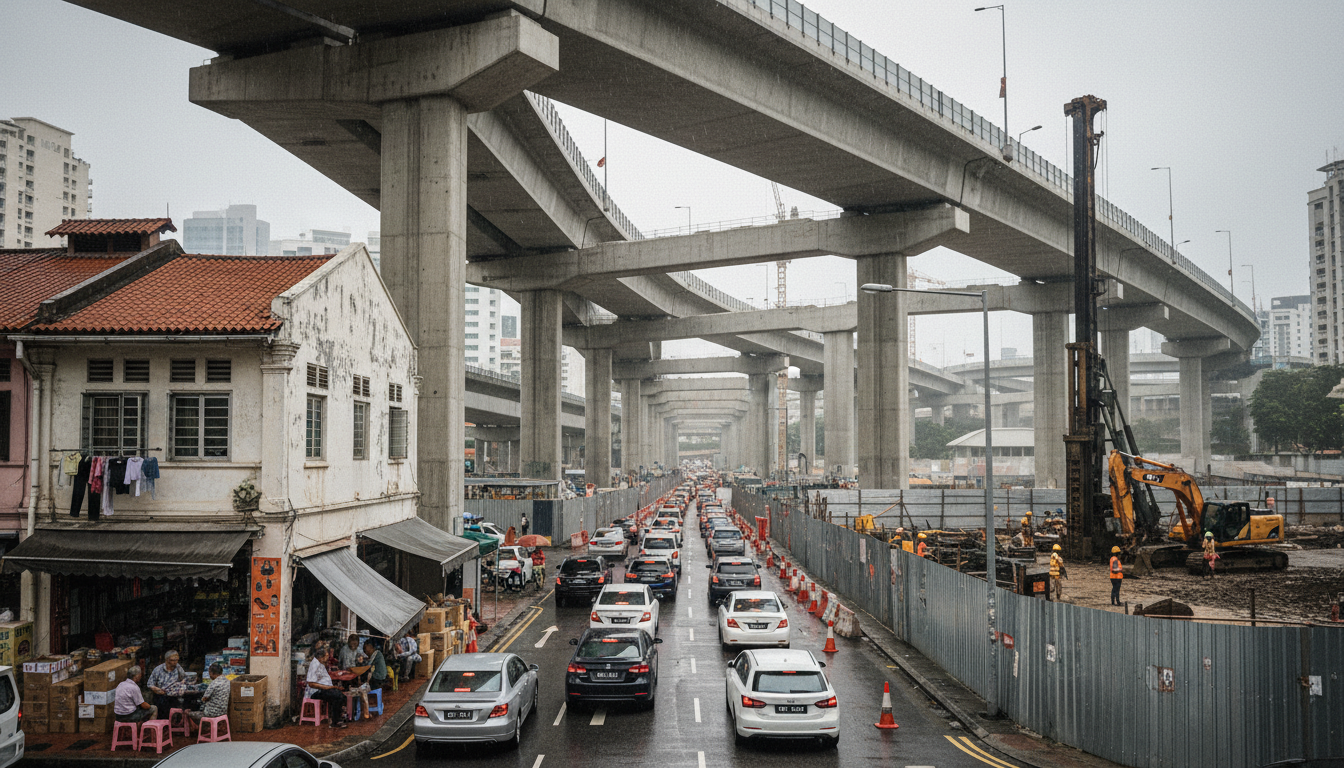
A significant infrastructure project in Singapore faces a two-year delay, with its opening now anticipated for 2031. Key construction elements, producing noise and dust, are expected to be completed by the end of 2027. This extended timeline means urban residents and businesses, including those along Braddell Hill, will experience prolonged disruption.
Transport Minister Jeffrey Siow stated on October 6, 2026, that eligible businesses affected by the work would continue to receive Housing & Development Board (HDB) rental rebates. This measure aims to alleviate direct financial burdens. However, the extension of construction until 2031 raises questions about the broader economic impact on the urban landscape, particularly for smaller enterprises and residents in the affected zones. The initial timeline projected an earlier resolution, and this lengthened period translates into extended operational challenges for these entities.
The project, once finished, is expected to enhance connectivity, yet the protracted construction itself imposes costs. Businesses, especially those in retail or services, rely on predictable access and a stable local environment. The Straits Times reported on September 18, 2026, that residents and businesses expressed 'concern' and 'resignation' regarding the prolonged works. This sentiment highlights the cumulative fatigue and economic pressure experienced by those directly affected.
While governmental commitment to support affected parties through rebates is evident, the core issue remains the extended duration of disruption. Large infrastructure developments frequently encounter unforeseen complexities, but the scale of this delay illuminates the inherent risks in major urban projects. The delay transfers operational burdens to local businesses and residents for a longer period, necessitating sustained compensatory measures and potentially altering local economic dynamics until completion. The capacity of existing support measures to fully offset these accumulating costs remains to be seen.
Future urban planning and infrastructure development across the Asia-Pacific region may derive insights from Singapore’s experience. The financial and social costs associated with project delays are substantial, requiring robust risk assessments and mitigation strategies from the outset. The outcome for affected businesses and residents in Singapore will indicate the effectiveness of managing such prolonged challenges.
Sources
Newsletter
Pacific Daily
A curated briefing from Thailand, Asia-Pacific and the world.