MRT Land Deals Reflect a Deeper Strain on Public Trust
The referral of public officers for police investigation, following property transactions near unannounced MRT stations, highlights the enduring challenge of safeguarding public interests amidst urban development.
SINGAPORE
Eight public officers have been referred to the police, following a review of 191 property transactions near future MRT stations that had not yet been announced. The government is continuing further checks and will examine the review's findings regarding potential gaps in existing safeguards, according to Coordinating Minister for Public Services Chan Chun Sing. This development, reported on October 6, 2026, concerns property purchases made between 2007 and 2011 by officers involved in rail planning.
While the immediate focus remains on the police investigation, the episode quietly illuminates the tension between individual opportunity and public responsibility within urban expansion. The House of Representatives was set to discuss claims that civil servants disproportionately acquired homes near these unannounced MRT stops. Such claims, regardless of their eventual substantiation, underscore a persistent public concern: that those privy to information intended for the greater good might use it for private gain.
Singapore's urban landscape is in constant motion, shaped by infrastructure projects designed to enhance connectivity and economic vibrancy. New MRT lines, in particular, reshape geographical value, transforming quiet neighbourhoods into hubs of activity. For residents, the announcement of a new station can mean increased property values and improved daily commutes. For those with advance knowledge, it presents a different kind of opportunity, raising questions about fairness and equitable access to information.
The review period, spanning 2007 to 2011, predates the public announcement of these specific MRT routes. This temporal gap is crucial. It creates a window where information asymmetry could theoretically be exploited. The very act of planning these vital public transport networks involves a select group of individuals. Their access to strategic layouts and timelines inherently grants them foresight into future urban shifts.
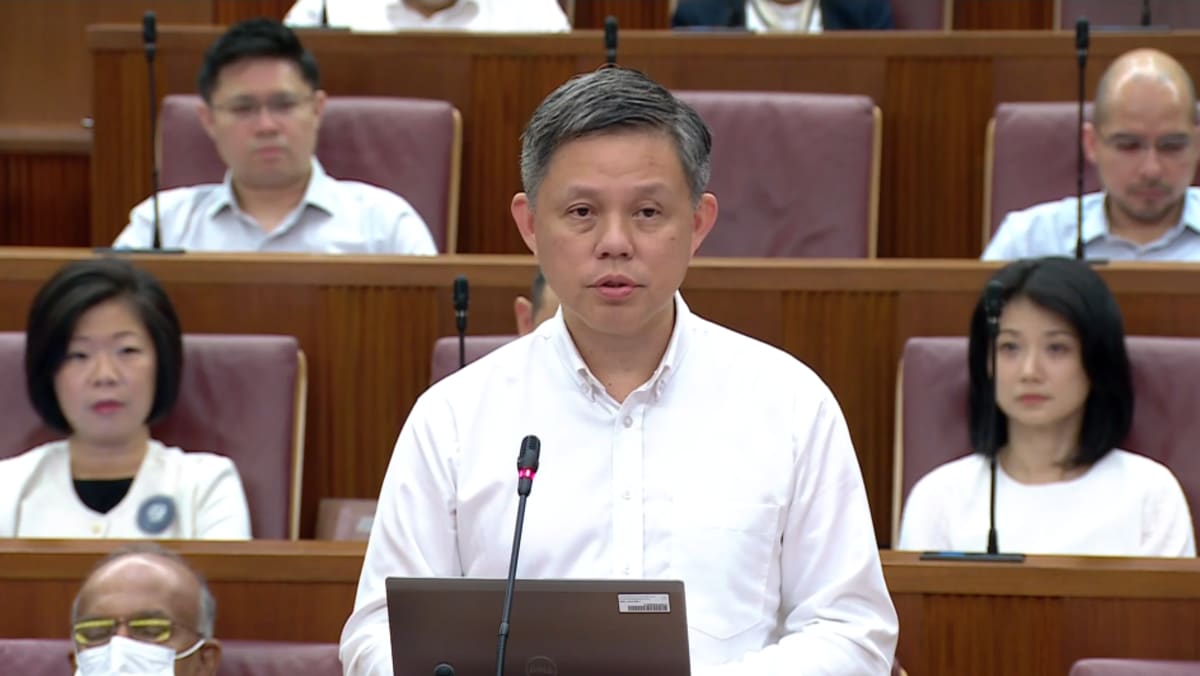
The government will study what the review shows about gaps in existing safeguards, says Coordinating Minister for Public Services Chan Chun Sing.
The official response, stating that checks are continuing and safeguards will be studied, acknowledges the seriousness of the issue. Yet, the challenge extends beyond legal breaches. It touches upon the less tangible aspects of public service: integrity and trust. When the planning of public goods intersects with private financial decisions, the perception of impropriety can be as damaging as actual wrongdoing. The question is not just whether laws were broken, but whether public confidence in transparent governance has been eroded.
This incident is not an isolated tremor but a recurring feature in rapidly developing urban centres across Asia, where vast infrastructure projects often outpace regulatory frameworks designed for older, slower-moving economies. From Jakarta to Ho Chi Minh City, similar concerns arise as new transport corridors redraw economic maps. The local effect of such a scenario is a quiet skepticism among citizens: are the benefits of development truly shared, or do they accrue primarily to an informed few?
The ongoing police referral indicates a commitment to upholding accountability. However, the deeper implication lies in the necessary re-evaluation of ethical boundaries and information protocols. The precise nature of these property transactions, and the extent to which they deviate from established norms, remains a matter for investigation. What is clear is that the pursuit of urban progress demands not only efficient planning but also unwavering vigilance against the misuse of positional advantage, ensuring that the promise of development benefits the many, not just those with privileged information.
Sources
Newsletter
Pacific Daily
A curated briefing from Thailand, Asia-Pacific and the world.