Maldives' Reclaimed Dream: Can Eco-Luxury Truly Thrive on Borrowed Land?
Daniel Okafor reports from Malé on the audacious, yet fraught, ambition to build sustainable opulence on artificial islands.
SINGAPORE
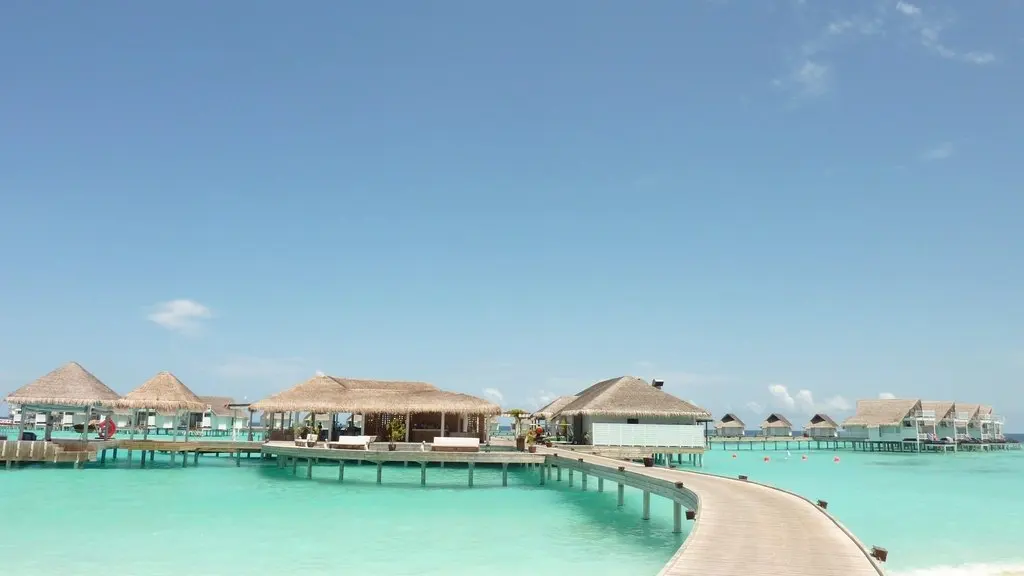
MALÉ, Maldives – From the window of my seaplane, the emerald chain of atolls shimmered below, giving way to a scene that both inspires and unnerves: islands meticulously sculpted from the ocean itself. This isn't just about expanding a tiny nation; it's about pushing the boundaries of luxury development, specifically through eco-luxury residences on reclaimed land.
The Maldivian narrative is one of adaptation. With an average elevation of just 1.5 meters above sea level, land is a precious, finite resource. Reclaiming land, therefore, isn't new, but its application to high-end, environmentally conscious residential projects is a relatively recent, and often contentious, frontier. My visit reveals a paradox: creating paradise on land that never naturally existed.
Driving through Hulhumalé, the nation's largest reclaimed island, the scale is immediately apparent. This isn't just an airport extension; it's a rapidly urbanizing city, complete with apartment blocks, mosques, and even tree-lined boulevards – all built on sand dredged from the surrounding seabed. The next evolution, however, is far more ambitious: boutique eco-luxury communities targeting the ultra-affluent.
Consider 'OZEN Reserve Bolifushi,' which, while not entirely reclaimed, extensively modified its natural island and is now eyeing adjacent reclaimed plots for future expansion of its ultra-villas. General Manager Ricardo Leal, during our discussion, was keen to highlight their solar energy integration and desalination plants. "Our guests expect not just exclusivity, but a profound respect for the environment," he stated, acknowledging the inherent tension. "The challenge is making that respect visible and authentic, especially when you're building on what was once open ocean."
The true innovation, and potential controversy, lies with projects like the envisioned 'Ocean Estates by Waldorf Astoria Maldives Ithaafushi'. While still largely conceptual for its reclaimed residential component, the proposals I reviewed outline a vision of overwater and beach villas built on newly formed landmasses, each designed with advanced energy efficiency, waste management, and even coral propagation initiatives. The sheer audacity of engineering an entire ecosystem is breathtaking.
"To truly embrace eco-luxury on reclaimed land, we must move beyond greenwashing and embed ecological resilience into the very foundations of our designs."
But feasibility is a tightrope walk. The primary challenge is, unequivocally, environmental impact. Critics, and indeed some rival developers I spoke with discreetly, argue that dredging devastates existing coral reefs and marine ecosystems. The plumes of sediment alone can choke vibrant underwater life for miles. While developers insist on advanced dredging techniques and mitigation efforts – such as relocating coral nurseries – the long-term ecological consequences are far from fully understood.
Take the case of some earlier reclamation projects, where infrastructure often outpaced ecological considerations. The Maldives has learned hard lessons. Now, the Environmental Protection Agency (EPA) mandates rigorous Environmental Impact Assessments (EIAs), though enforcement remains a critical point of contention for local NGOs. My own observations near Hulhumalé's newer extensions show signs of coral regrowth, albeit slowly, on strategically placed artificial reefs – a testament to deliberate effort, but a small concession for the scale of disruption.
Financial viability is another hurdle. Developing on reclaimed land is astronomically expensive. Beyond the initial dredging, there’s the need for robust erosion protection, often involving complex seawalls and revetments, and the creation of entirely new infrastructure for water, power, and waste. A single high-end villa on such a plot could easily command prices upwards of $15 million, reflecting the premium for novelty, exclusivity, and the sheer engineering marvel.
Yet, the demand persists. Asia-Pacific's ultra-high-net-worth individuals are increasingly seeking properties that offer both unparalleled luxury and a perceived commitment to sustainability. The Maldives, with its iconic status, is uniquely positioned to capitalize on this. As I depart Malé, watching the shimmering, artificial horizons recede, it's clear: the dream of eco-luxury on reclaimed land is audacious, expensive, and profoundly challenging. But for this island nation, perpetually battling the rising tides, it may well be seen as a necessary, if delicate, act of defiance against an uncertain future.
Newsletter
Pacific Daily
A curated briefing from Thailand, Asia-Pacific and the world.