The Dry Land Reality Behind Maersk's Vietnam Rail Ambitions
A non-binding freight terminal pact highlights how deep-water container capacity still outpaces inland infrastructure.
SINGAPORE
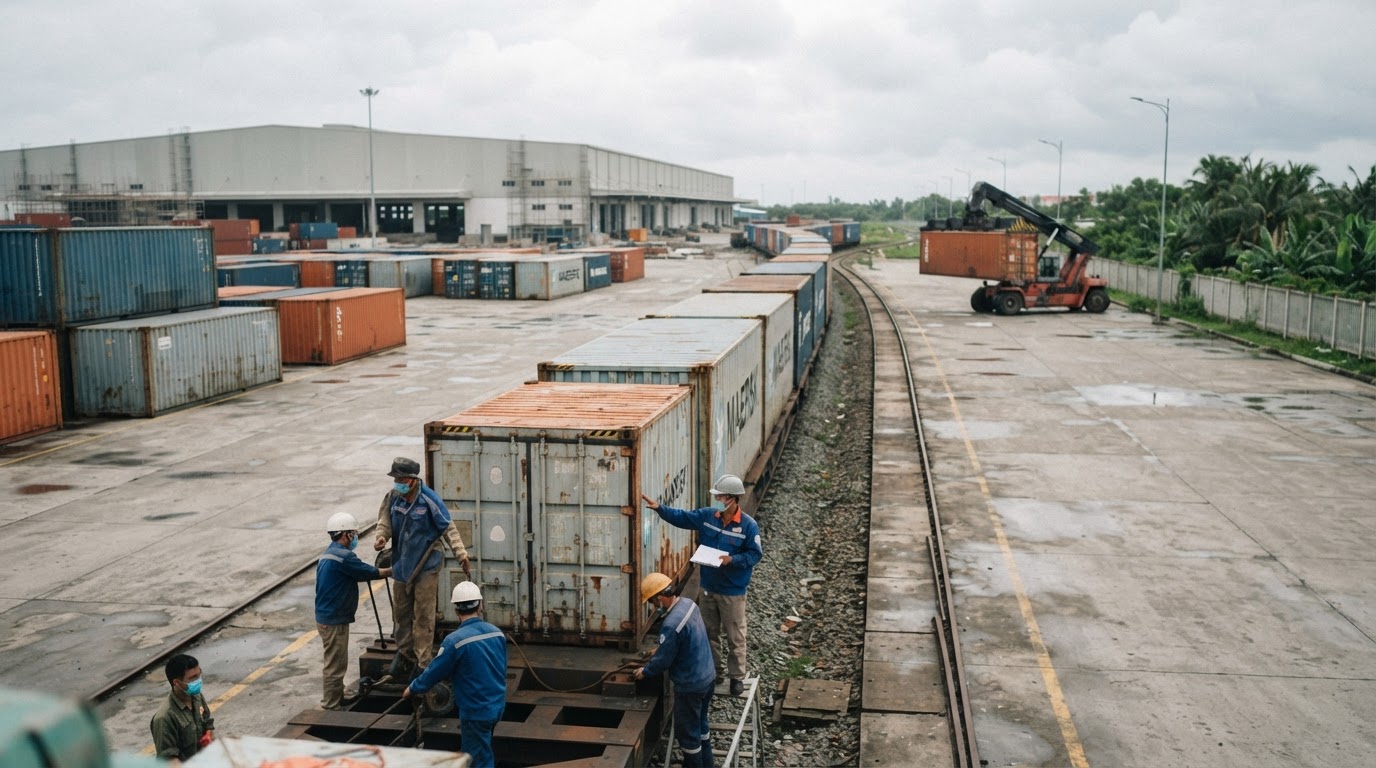
Global shipping lines have mastered moving standardized cargo across oceans, but moving the same freight ten miles inland remains remarkably stubborn. In Copenhagen, APM Terminals and Vietnamese conglomerate Hateco Group entered a non-binding memorandum of understanding to plan a network of railway freight terminals across Vietnam. The agreement, signed on a Tuesday during a state visit to Denmark by General Secretary and President To Lam at the Vietnam-Denmark Business Forum, extends an established relationship between the two operators.
Yet the diplomatic backdrop cannot disguise the mechanical distance between preliminary corporate intentions and functional industrial corridors. APM Terminals, the port operating arm of Maersk, already partners with Hateco to run northern Vietnam's largest deep-water container terminal in Hai Phong. Both groups are also advancing a second major maritime facility farther south in Da Nang. Adding rail freight linkages across the Southeast Asian nation is an attempt to integrate these coastal assets into a cohesive logistical system.
The Bottleneck Behind the Berth
Maritime investment in the region has consistently moved faster than terrestrial transit. Ocean carriers have been ordering new container ships at a pace not seen since 2009, pouring capital into oceanic capacity as multinational manufacturing diversifies across Southeast Asia. High-value manufacturing depends entirely on precision scheduling and low transit variability. When coastal quays expand without synchronized rail connectivity, the efficiency gains achieved on the water evaporate at the terminal gate.
Preliminary corporate agreements do not lay track, nor do they guarantee commercial viability across disjointed provincial corridors.
The logic driving APM Terminals toward inland rail rests on rational operational defense. Deep-water docks in Hai Phong and Da Nang risk severe terminal congestion if container offloading relies predominantly on regional roadways. Coordinating rail corridors promises predictable inland transit times, lower dwell costs, and uninterrupted connectivity between northern export factories and marine quays. Linking the hinterland directly to container cranes creates defensible geographic advantages that competitor ports cannot easily replicate.
Paper Commitments and Fixed Realities
Turning an intermodal concept into functioning steel tracks faces structural friction. The Copenhagen document remains explicitly non-binding. Outlining an inland rail terminal blueprint on paper is fundamentally different from acquiring right-of-way, securing provincial land approvals, and funding specialized rail freight rolling stock across varied terrain. Port operations generate steady commercial yields under private concessions, whereas domestic freight rail networks rarely generate comparable standalone margins without substantial public coordination.
Regional supply chains are often described as nimble, yet physical freight networks are rigid, capital-intensive, and slow to alter. Hateco brings regional development influence to the venture, while Maersk provides international terminal expertise and container volume. However, the commercial distribution of capital expenditures between the Danish operator, its local partner, and state rail authorities remains undefined. Building deep-water marine berths has proven manageable; retrofitting a sovereign transport network to serve them efficiently remains entirely unresolved.
Sources
Newsletter
Pacific Daily
A curated briefing from Thailand, Asia-Pacific and the world.