Malaysian School Closures Reflect Lingering Haze Challenge
Persistent unhealthy Air Pollutant Index levels in Malaysia, leading to widespread school closures, underline the annual economic and social costs of regional air quality issues.
SINGAPORE
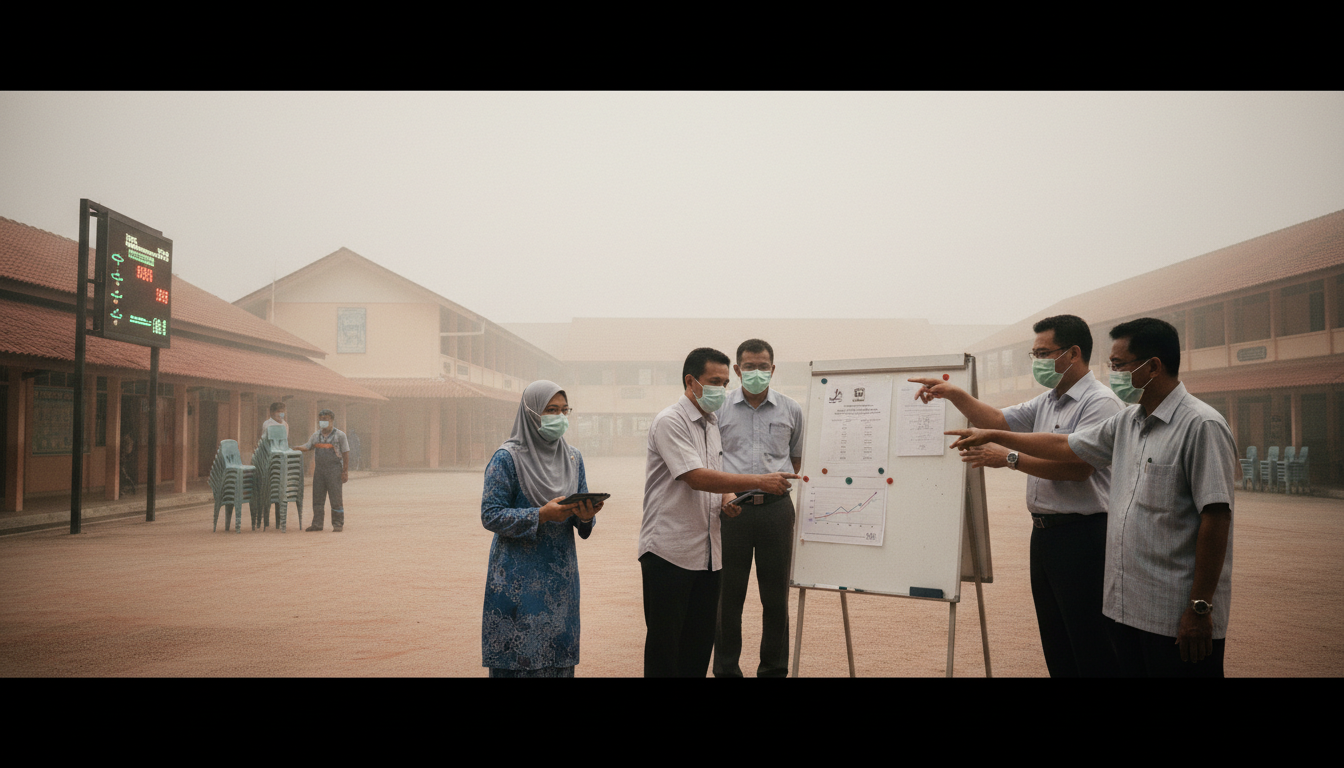
Sweeping school closures across Malaysia on Friday provided a tangible measure of the region’s recurring air quality challenge. According to government data, 37 areas in Malaysia recorded unhealthy Air Pollutant Index (API) levels on Friday morning. This prompted Education Minister Fadhlina Sidek to announce the closure of schools in several states, including Johor, Malacca, Negeri Sembilan, and Selangor, alongside the capital Kuala Lumpur and its administrative centre, Putrajaya. Schools in the Rompin district in Pahang were also affected.
While the immediate impact is on student attendance and educational continuity, such widespread closures carry broader implications. The disruption to daily routines for families, the need for alternative childcare, and the cumulative loss of learning hours represent an annual, unquantified burden on the Malaysian economy and society. The decision to close schools reflects a direct response to hazardous environmental conditions, specifically when API readings suggest health risks. An API between 101 and 200 is deemed unhealthy, while readings from 201 to 300 are classified as very unhealthy. Though specific API values for the affected areas were not provided beyond the 'unhealthy' classification, the scale of closures indicates a significant deterioration of air quality.
The problem of transboundary haze is not new to Southeast Asia. Each year, particular dry seasons bring a return of the issue, typically linked to agricultural burning practices in various parts of the region. Despite years of discussions and agreements among ASEAN member states, the effectiveness of mitigation strategies continues to be tested. The recurring nature of these incidents suggests that current regional frameworks or their implementation may not be sufficient to prevent widespread impacts like those seen in Malaysia.
For Malaysia, these closures coincide with a period of significant national policy focus. Prime Minister Anwar Ibrahim was scheduled to table Budget 2027 on the same Friday, with promises of resilience, reforms, and relief for Malaysians. The ongoing haze and its consequences, including the school closures, add an unbudgeted layer of complexity to these national priorities. The allocation of resources for public health responses, educational recovery, and long-term haze prevention forms an implicit challenge to budgetary planning. The repeated disruptions, in turn, can affect productivity and foreign investment perceptions, particularly if they become an entrenched annual occurrence.
The regional relevance of Malaysia’s situation extends beyond its borders. While Malaysia directly bears the costs of school closures, the underlying causes of haze often originate elsewhere, highlighting the interconnectedness of air quality across Southeast Asia. Addressing this requires not only domestic policy adjustments but also enhanced regional cooperation and enforcement mechanisms for environmental protection. Without a more robust collective approach, the cycle of school closures and public health advisories is likely to persist, making annual haze a predictable, if unwelcome, fixture on the regional calendar. The unresolved constraint remains the persistent gap between regional policy discussions and the effective enforcement required to curtail the sources of transboundary pollution. The outcome now depends on whether regional commitments translate into measurable reductions in haze-producing activities.
Sources
Newsletter
Pacific Daily
A curated briefing from Thailand, Asia-Pacific and the world.