Kipchoge's Melbourne Victory Points to Shifting Marathon Power in the Pacific
Eliud Kipchoge’s first marathon win in three years, achieved in Melbourne, suggests a structural rebalancing in elite athletics towards Australia, creating new dynamics for other Asia-Pacific nations.
MELBOURNE
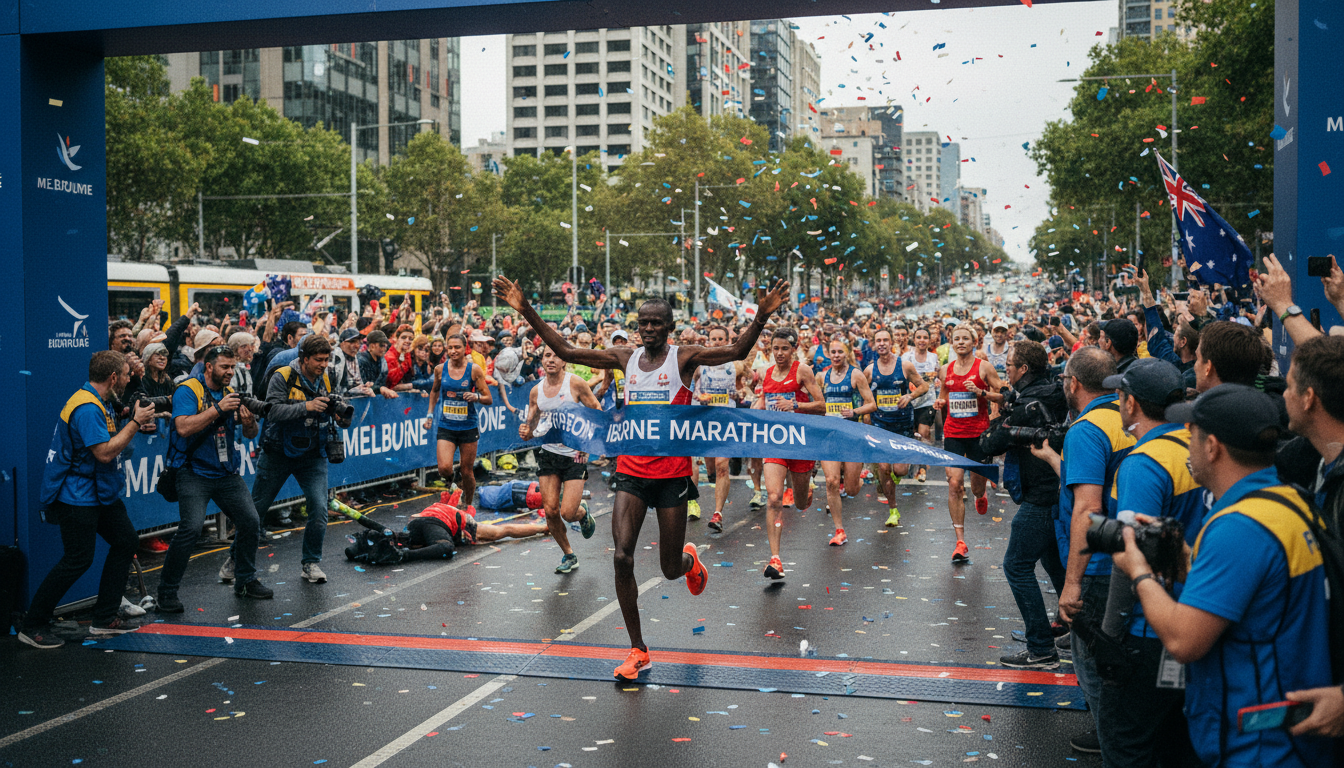
Kenya's twice Olympic champion Eliud Kipchoge won the Melbourne Marathon on Sunday, running a course record of 2 hours, 9 minutes, and 10 seconds. This victory, his 17th over the distance, marks his first marathon win in three years. At 41 years old, Kipchoge stated, “I believe that my body is still peaking – still able to compete with the next generation.” He previously won Berlin in 2023, securing his 11th title at the majors.
Kipchoge is currently attempting to run a marathon on all seven continents over two years, a campaign he launched at the Cape Town Marathon in May. His record-setting performance in Melbourne is not merely an individual achievement but indicates a structural shift in the global marathon circuit. The participation of a figure of Kipchoge’s stature in Australia points to a growing draw and investment in Pacific sporting events.
This event follows the Sydney Marathon's debut as a major, noted by The Guardian in August 2025. While separate events, Kipchoge’s Melbourne win contributes to the narrative of Australia solidifying its position within the international running calendar. The presence of top-tier athletes generates increased media attention, attracts sponsorship, and boosts participant engagement. Such high-profile participation can redefine the international standing for national athletics bodies across the Pacific region.
The implication for other Asia-Pacific nations, including Thailand, centers on how they will engage with this changing competitive landscape. Attracting elite athletes requires substantial infrastructure, significant prize money, and capable logistical support. Bangkok hosts its own marathon, but its global standing and ability to draw world champions like Kipchoge remain distinct from events now hosted in Melbourne or Sydney. The structural change is evident not only in an athlete's personal quest but also in the perceived value and opportunities offered by different global sporting locations. For Kipchoge, Melbourne provided an opportunity to advance his continental goal and secure a win after a three-year interval. For Australia, it offered validation of its capacity to host significant athletic events.
One perspective suggests that Kipchoge's win is primarily a personal achievement, integral to his unique seven-continent challenge. His statement, “I believe that my body is still peaking – still able to compete with the next generation,” underscores a focus on individual longevity and drive. From this viewpoint, his Melbourne appearance might be seen as an isolated event, driven by his personal schedule rather than a conscious endorsement of the region’s growing athletic gravitas. However, even an athlete's personal ambition operates within a framework of available and attractive opportunities. His choice to race in Melbourne, and his subsequent course record, contribute to the city’s and continent’s rising visibility, regardless of his primary motivation.
The unresolved constraint for many Asia-Pacific nations remains the substantial investment required to consistently host events that can attract athletes of this caliber. The outcome now depends on whether national and regional sporting bodies can leverage these high-profile moments to build sustainable, internationally recognized events that compete for the attention of the world's best.
Sources
Newsletter
Pacific Daily
A curated briefing from Thailand, Asia-Pacific and the world.