IRGC Allegations Highlight Broader Geopolitical Strain on Global Security
British Prime Minister Andy Burnham's attribution of a UK air base incident to Iran's Islamic Revolutionary Guard Corps connects a regional actor to global security infrastructure.
SINGAPORE
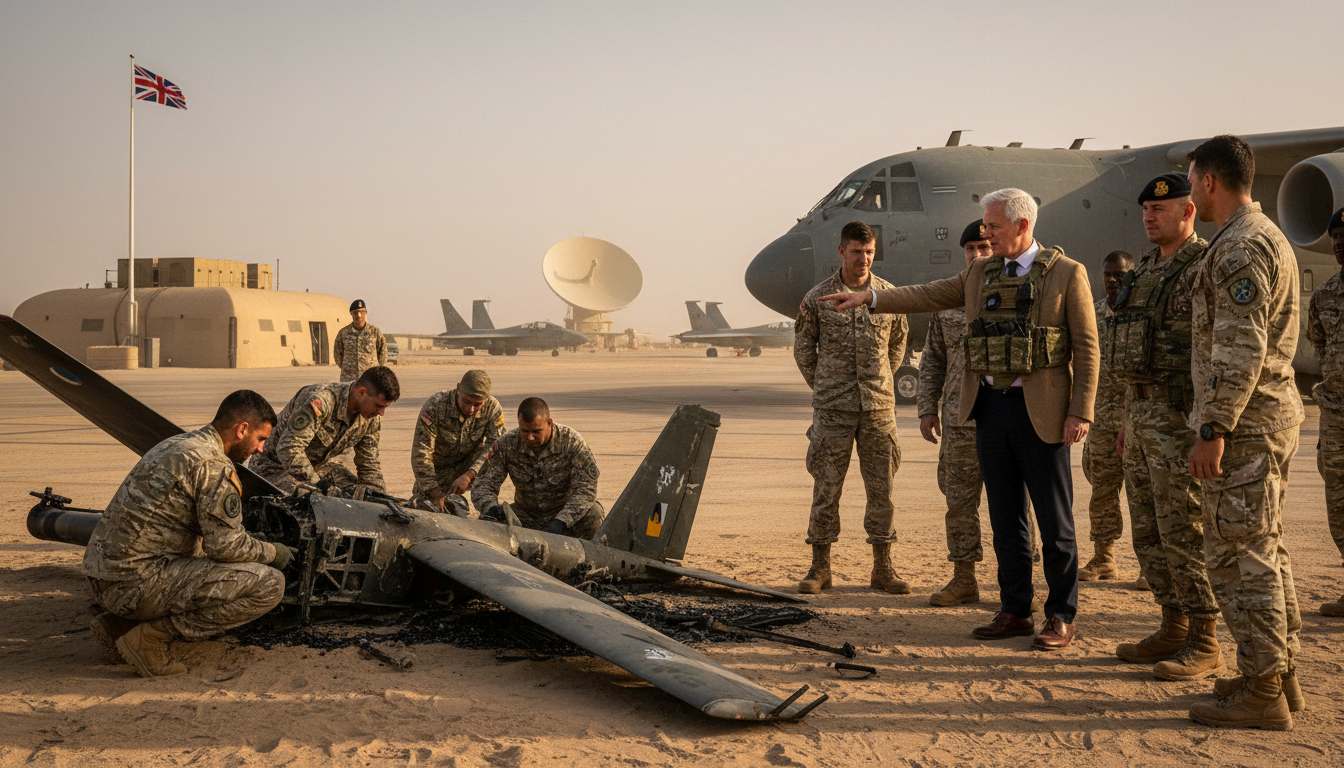
British Prime Minister Andy Burnham stated on October 12, 2026, that an incident targeting RAF Fairford, a UK air base hosting US Air Force personnel, was “highly likely” to have been coordinated in Iran and “almost certainly directed by Iran's Islamic Revolutionary Guard Corps.” This assertion shifts focus from the localized event in Gloucestershire, England, to a question of state-sponsored actions with wider implications.
The RAF Fairford base, located in southwest England, is a point of intersection for British and US military assets. The claim of Iranian involvement, specifically naming the Islamic Revolutionary Guard Corps, suggests a reach extending far beyond the Middle East. While US President Donald Trump commented on September 28, 2026, that men arrested at a UK air base used by the US were looking to do “big damage,” the current British prime minister's statement is more specific in its attribution of responsibility.
The identified involvement of a specific state entity in a security incident on another continent raises questions about the scope of geopolitical tensions. For the Asia-Pacific, such an event, though geographically distant, underscores the complex and interconnected nature of security challenges. Naval routes, energy supplies, and diplomatic alignments throughout the Asia-Pacific region are all sensitive to disruptions or perceived threats emanating from distant flashpoints. The declared intention behind such an action, whether to disrupt operations or send a message, can have ripple effects on international shipping lanes or the stability of trade relationships that span continents.
Attributing the incident to Iran’s IRGC signals a potential escalation in the diplomatic and security discourse between Western nations and Iran. This framework of indirect, rather than direct, confrontation has become a characteristic of modern geopolitical maneuvering. How such allegations are substantiated, and the subsequent responses from affected nations, will define the perceived risk landscape for states maintaining strategic alliances globally.
The primary constraint in assessing the implications for the Asia-Pacific region remains the precise nature of the alleged threat against RAF Fairford and the evidence supporting the British Prime Minister's claim. While the incident itself is localized, the suggested involvement of a state-affiliated force in an act against another state’s military infrastructure introduces a layer of complexity for all nations engaged in global security partnerships.
Sources
Newsletter
Pacific Daily
A curated briefing from Thailand, Asia-Pacific and the world.