Hobart's 'Boats Afloat' Oversubscription Signals Regional Maritime Shifts
An overwhelming response to a Tasmanian boat event reflects broader trends in Asia-Pacific marine leisure and infrastructure, with implications for regional economies.
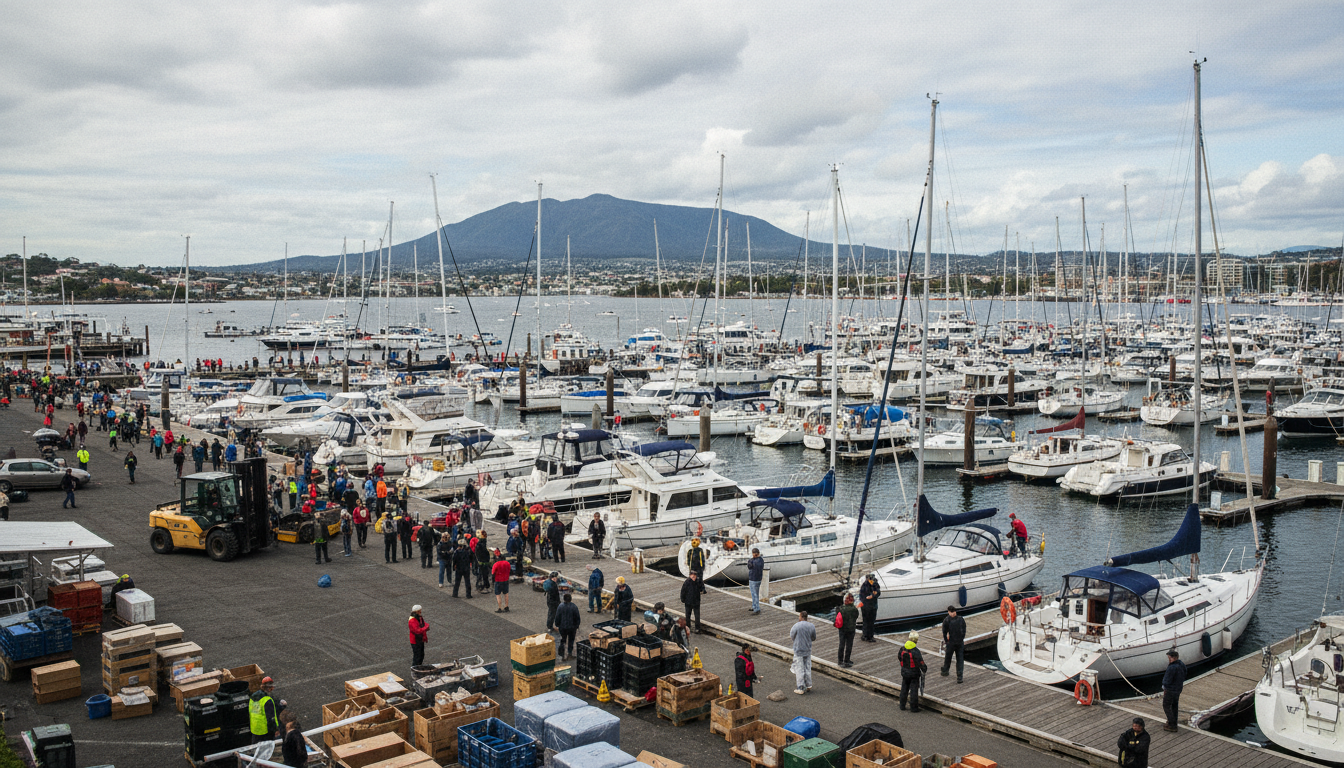
Hobart’s upcoming boat event has received hundreds of applications from boat owners keen to join its 'Boats Afloat' segment. Marine Business World described this response, reported on October 1, 2026, as extraordinary, signaling significant interest for next February’s gathering on Hobart’s waterfront. While a localized event, the volume of interest merits examination for its potential reflection of trends within the wider Asia-Pacific marine sector.
Such demand for event participation suggests a robust underlying market for maritime leisure. Owners are committing resources for travel and exhibition, which can be interpreted as a positive signal for sectors reliant on yachting activity. This includes marina development, maintenance services, and marine tourism. The exact financial data confirming this market buoyancy is not available, but the sheer number of applications implies a notable willingness to spend among boat owners.
However, interpreting this solely as a boom for luxury boating might be an oversimplification. The specific focus of the event on wooden vessels introduces a nuance. It could also point to a growing appreciation for traditional craftsmanship and heritage, potentially a counter-trend to mass-produced vessels. This segment typically involves investment in restoration and bespoke construction, potentially drawing a different demographic than those seeking new production yachts. This presents both opportunities and challenges for regional marine industries, particularly those in Southeast Asia known for skilled boatbuilders and competitive operating costs, such as Thailand.
For the Asia-Pacific, including Thailand, the implications extend beyond direct participation in Australian events. Increased boat ownership and activity create pressure on existing marina infrastructure. The demand observed in Hobart could be mirrored in other desirable cruising grounds if adequate facilities are not developed or expanded. Simultaneously, it highlights a potential gap in regional supply, should the growth in vessel numbers outpace the growth in berthing capacity. The focus on wooden boats might also stimulate traditional boatbuilding techniques and materials, offering economic niches to countries with rich maritime heritage.
The challenge remains in quantifying this anecdotal demand into concrete investment signals. Without specific figures on the number of applications or the economic value associated with these applications, a precise financial forecast is not possible. Moreover, geopolitical factors, such as the China-Taiwan friction noted in the Bangkok Post on September 1, 2026, or broader economic shifts, could influence future investment and participation in such events. The sustained development of marine infrastructure and skilled labor in key regional hubs like Thailand will determine if this demand translates into broader economic benefit.
Sources
Newsletter
Pacific Daily
A curated briefing from Thailand, Asia-Pacific and the world.