Haze Returns: The Ritual of Regional Adaptation
As Singapore's air quality hits seasonal highs for unhealthy levels, the annual haze season underscores how routines shift and behaviors adjust across the region, reflecting a wider pattern of living with, rather than resolving, environmental challenges.
SINGAPORE
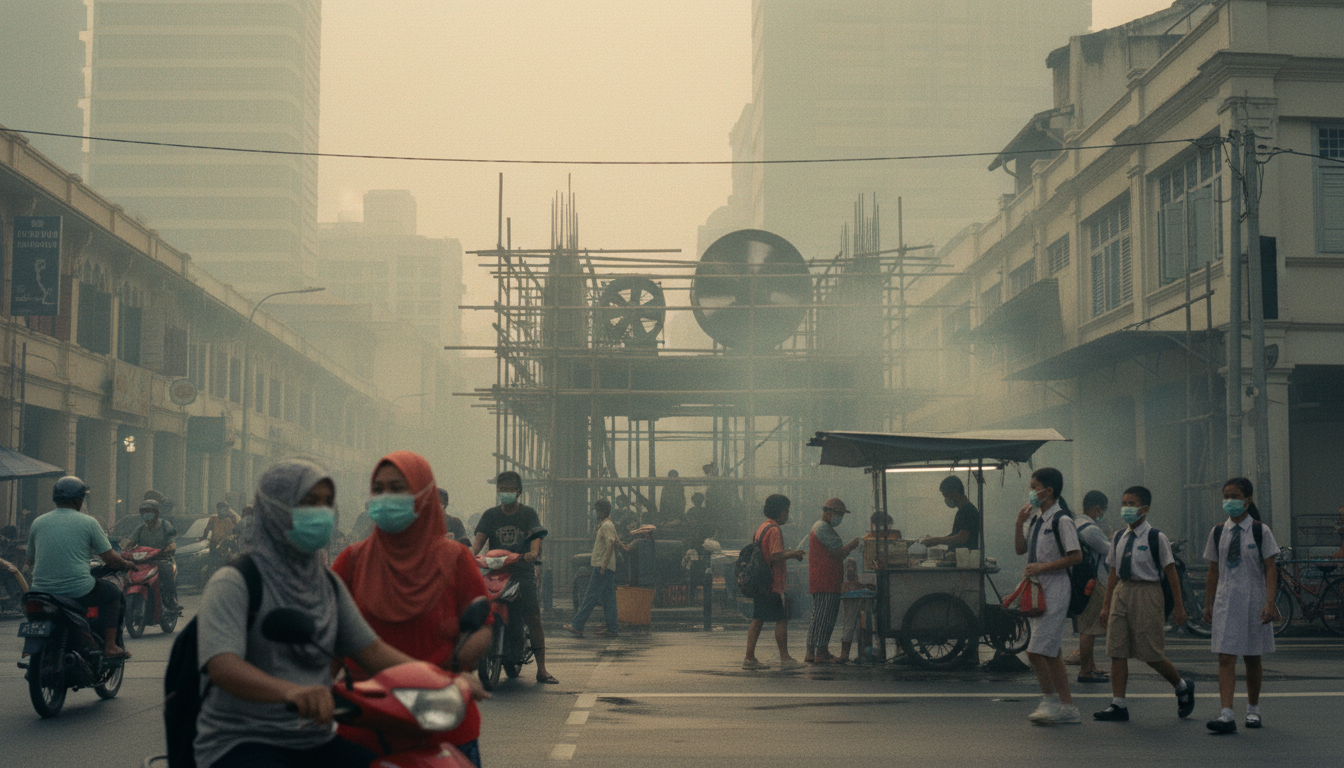
The sky above Pasir Ris on October 9, 2026, veiled by haze, presented a familiar tableau across Singapore. The 24-hour Pollutant Standards Index (PSI) in the central region reached 184 at noon, marking the highest reading of this haze season. Unhealthy air has become a recurring element in the regional narrative, compelling residents to adjust how they navigate their immediate surroundings. This routine alteration, from Singapore to areas in Malaysia, highlights an underlying tension between immediate coping mechanisms and the broader, unaddressed drivers of environmental change.
The persistent haze, with elevated PM2.5 levels across various regions and PSI figures consistently in the unhealthy range, necessitates visible modifications in daily life. In Singapore, air quality continued in the unhealthy range across the island on Friday, October 9, as reported by CNA Lifestyle. Malay Mail noted on October 7 that three regions had recorded unhealthy air for over 24 hours. The Star further reported on October 9 that 38 areas across Malaysia also showed unhealthy API readings. These numbers quantify the scale of the atmospheric intrusion, but the cultural signal resides in the quiet changes people adopt: altered outdoor plans, the widespread use of air purifiers, and a general awareness that each October brings with it this obscured existence.
Yet, this annual cycle of adaptation, while practical for individuals, normalizes the problem. Children’s playtime moves indoors, morning jogs are postponed, and even the simple act of breathing without concern becomes a luxury. This year's haze season, with its peak PSI of 184, is not an anomaly but a data point in a continuum. The Business Times noted that Singapore's air quality largely maintained moderate levels, but PM2.5 spikes occurred in most regions as haze persisted. The cumulative effect of these repeated events shapes urban rhythms and consumer choices, reinforcing a reactive stance rather than a proactive one.
The constant return of unhealthy air reveals a region adept at living with environmental challenges, but less so at dismantling their origins. The question is not whether the air will clear, but how long it will take, and what new adjustments will emerge next year. The haze over Singapore, and the unhealthy API readings across Malaysia, indicate a pattern of widespread resignation. This implies a silent agreement to live within these altered conditions, affecting daily habits and long-term well-being without fundamentally altering the environmental trajectory. This annual atmospheric curtain, while dictating the pace of life from one October to the next, highlights the collective ability to adjust to a problem, rather than the collective will to prevent it.
Sources
Newsletter
Pacific Daily
A curated briefing from Thailand, Asia-Pacific and the world.