Guadalajara's Water Crisis: A Federal Test Amidst Urban Unrest
As Mexico's Pacific coast contends with a hurricane, the federal government intervenes in Guadalajara's water issues, highlighting tensions between local governance and federal oversight in managing public dissent.
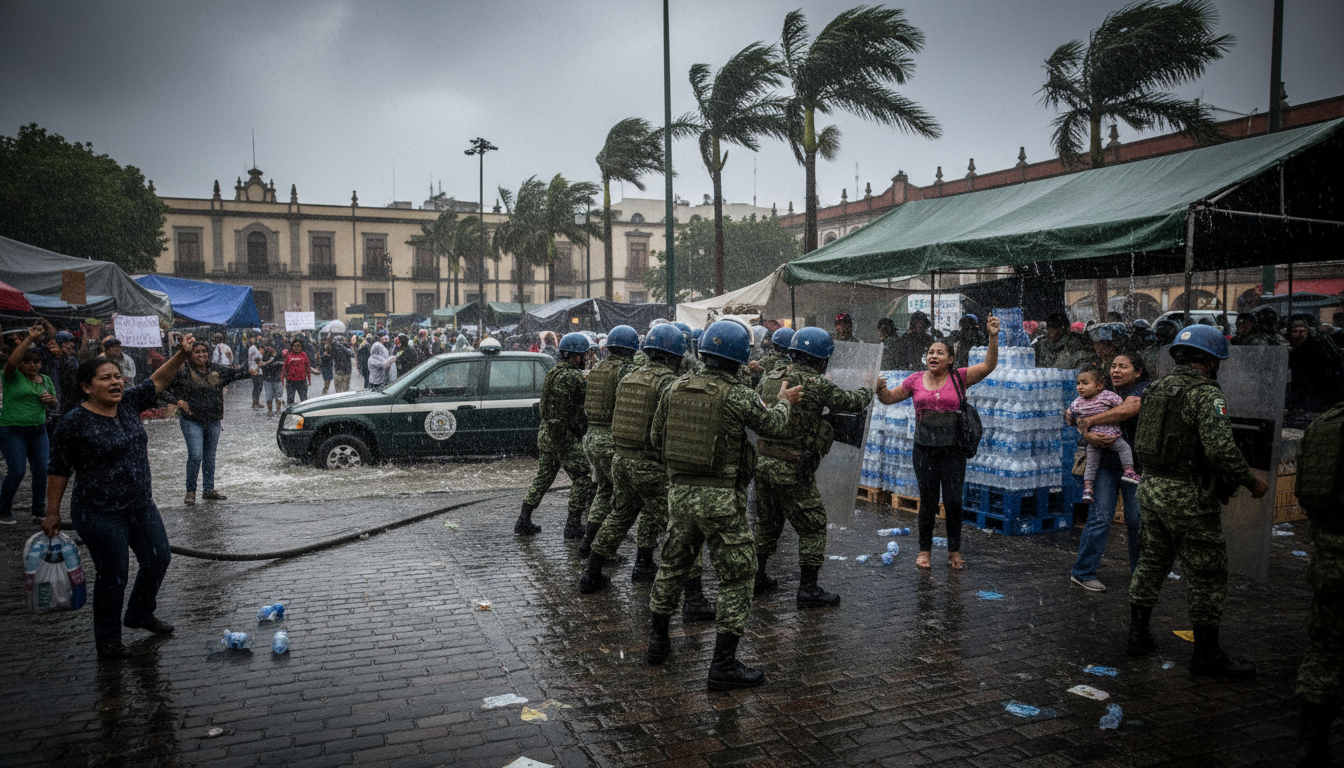
Guadalajara, a city known for its historic core and cultural vibrancy, became a focal point for public grievances this past Sunday. Thousands of people gathered outside Casa Jalisco, the official residence of Governor Lemus, for a "Mega Marcha por Agua Limpia." They sought solutions to a water contamination problem that has persisted for a long time. According to media reports, police used water cannons and tear gas against the protesters. This scene of unrest occurred as Hurricane Simon, though weakened to a Category 3, continued to impact resorts and vulnerable towns along Mexico’s Pacific coast.
On Monday, President Sheinbaum addressed both the natural disaster and the urban crisis. She committed federal help for Guadalajara's water issue, announcing that federal water officials would meet with Governor Lemus's team to formulate a plan. At the same time, President Sheinbaum publicly pressed Jalisco authorities to explain their use of force against the Sunday protesters. This dual response reveals a potential friction point: the immediate need for federal intervention in a critical urban service, alongside a federal rebuke of how local governance handled public demonstration. The president's statement suggests a broader concern than merely water supply; it touches on the social contract within a major city.
Cities across the Pacific Rim, from Manila to Bangkok, often face infrastructure strains due to rapid urbanization and shifting climate patterns. Guadalajara’s long-running water contamination problem is not unique in this regard. However, the federal government's swift move to both offer aid and publicly question a regional authority's response to public demonstration is notable. This situation elevates a local utility crisis into a litmus test for the new presidential administration's approach to regional autonomy and civil liberties. President Sheinbaum’s focus on water and renewable energy, mentioned during her campaign for the presidency, now faces a tangible challenge on the ground.
What might appear as an isolated incident of water scarcity and protest in a Mexican city carries broader implications for urban centers throughout the Asia-Pacific. Many large cities experience similar pressures on resources, especially water, with varying levels of local government capability and transparency in addressing citizen concerns. The immediate and public pressure from the federal level on Jalisco’s handling of the protests, particularly after media reports of police deploying water cannons and tear gas, indicates a federal commitment to accountability. This could resonate regionally by shifting the perception of a local issue into a national priority, demonstrating how central governments can assert influence and establish standards for local responses to civil unrest linked to essential services.
While the President’s intervention offers a pathway to resolve Guadalajara’s water crisis, it also introduces a layer of political tension. Governor Lemus and his team must now address the practicalities of water provision while also contending with a federal inquiry into their public order management. This situation points to an evolving dynamic in how national leadership interacts with regional governance during times of environmental stress and public discontent. Whether this federal oversight will lead to sustained improvements in urban resilience or merely a temporary alleviation of immediate pressures remains to be seen. Guadalajara's ongoing struggle provides a reminder of how urban growth, resource scarcity, and state power can collide on city streets.
Sources
Newsletter
Pacific Daily
A curated briefing from Thailand, Asia-Pacific and the world.