Fukushima's Silent Loom: A New Rhythm of Life in Traditional Craft
While global consumer habits shift towards instant connection, a remote Fukushima village quietly fosters a different kind of engagement: deep, solitary work that draws women to a traditional craft.
SINGAPORE
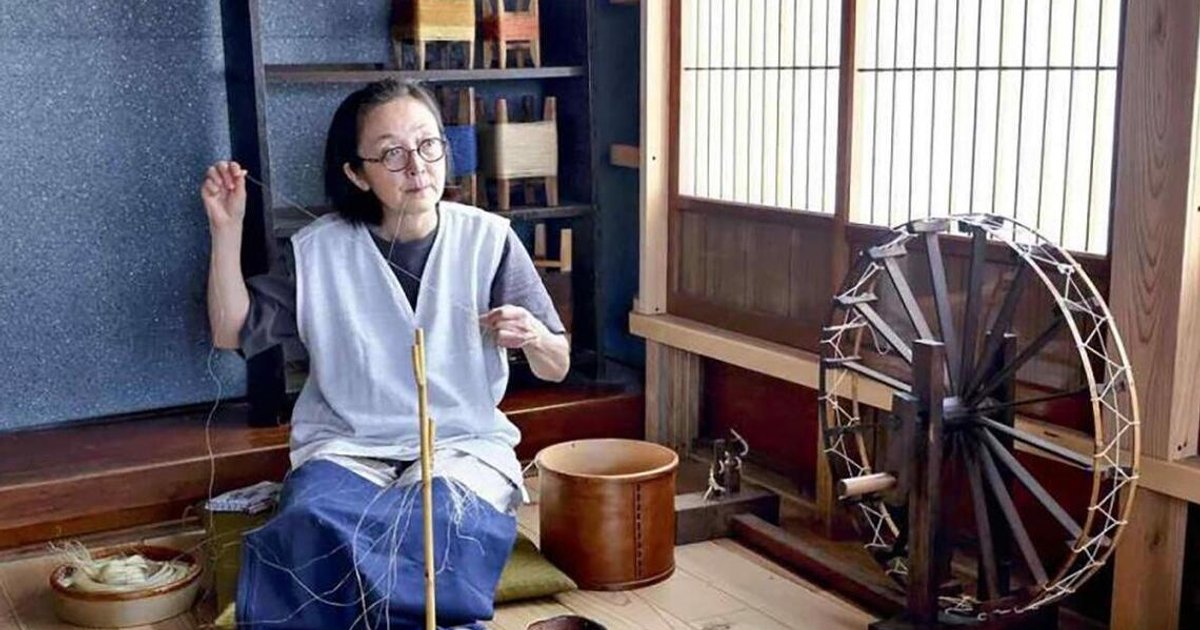
In the quiet environment of Showa, Fukushima Prefecture, where birdsong marks the hours, Eriko Yamauchi is among those who practice karamushi-ori, a traditional textile art. This craft demands patience, reflecting the weaver's mood in threads created from karamushi plants, with practitioners handling every step from cultivation to the final weave.
The village has operated an apprentice program for karamushi-ori since 1994, primarily attracting women from outside the local area. Over 135 participants have completed training, with many choosing to settle in Showa to continue their work. This deliberate relocation suggests a draw beyond mere skill acquisition, hinting at a desire for a particular rhythm of life.
Such an inclination towards solitary, careful work stands in contrast to observable trends elsewhere. Reuters reported in 2026 on a “companionship economy” in China, valued at $7.4 billion, driven by lonely consumers seeking connection through activities from hiking to hotpot. This economic phenomenon highlights a growing consumer demand for social interaction, even if commercially facilitated.
The weavers in Fukushima, however, embrace a lifestyle integrated with nature and seasonal cycles, producing lustrous fabrics through their quiet commitment. This is a choice for deep focus, not for digital distraction or curated social experiences. The practice requires sustained presence, a stark counterpoint to the fragmented attention typical of many contemporary urban lives.
While safety tests in 2026 cleared Fukushima seafood, and discussions continue regarding regional perceptions, the karamushi-ori program offers a different narrative for the prefecture: one of quiet revival and cultural preservation. It represents a subtle but significant cultural movement, a shift towards slower, more deliberate forms of engagement for those seeking it. This movement suggests that amidst an accelerating world, pockets of sustained, focused craft are not just surviving but attracting new practitioners, offering an alternative model for meaning and community.
The choice to pursue such a demanding, solitary craft in a rural setting, often by individuals moving from elsewhere, underscores a particular human dimension: a quiet rebellion against the pace of modern life, a search for purpose in tangible creation, and a community built around shared dedication rather than immediate proximity. The sounds of birdsong and the tactile feel of karamushi fiber offer a different kind of connection, deeply personal and patiently cultivated.
Sources
Newsletter
Pacific Daily
A curated briefing from Thailand, Asia-Pacific and the world.