Forestry Waste Biofuel Grants Signal Policy Redirection for Wood Resources
New Zealand’s $3.7 million initiative to convert low-grade wood into energy highlights a policy shift that could redefine forestry's economic and environmental equations in Asia-Pacific markets.
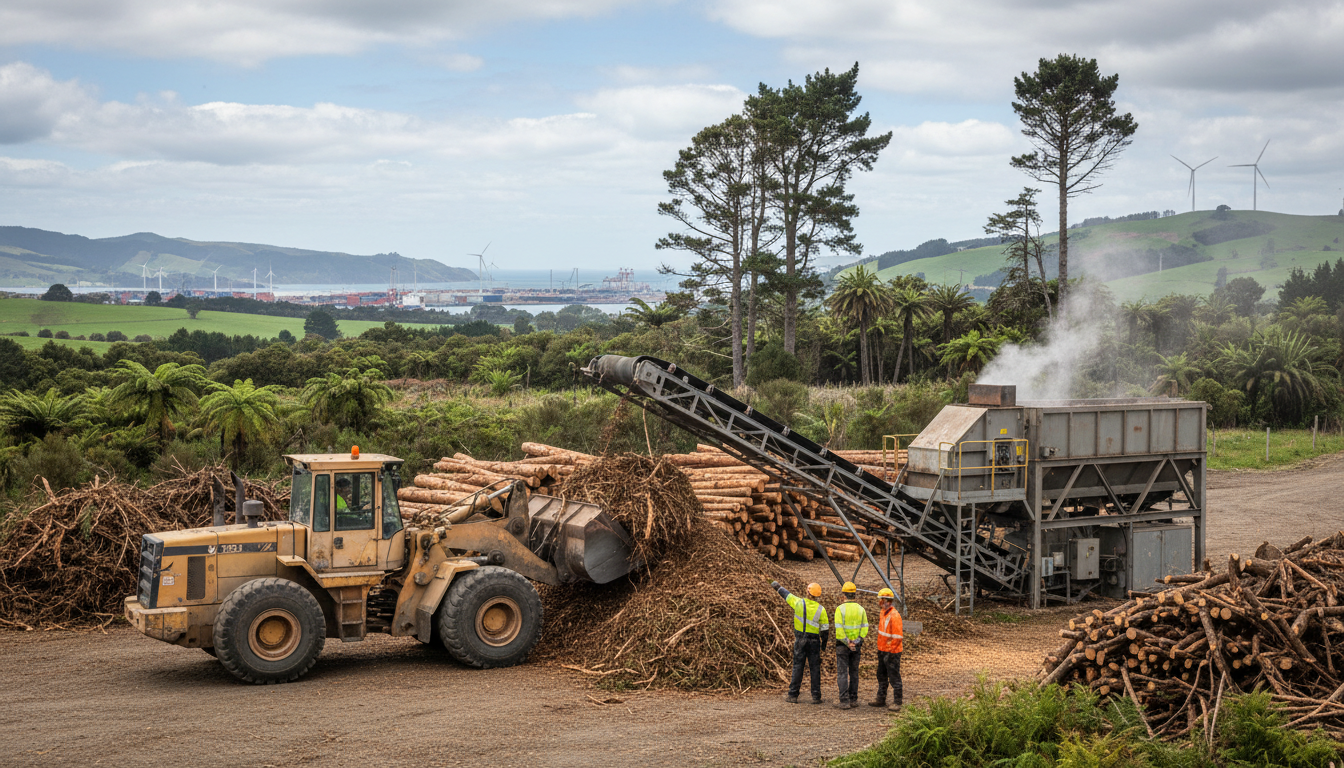
Five companies across the country will receive grants totalling $3.7 million to set up collection points for forestry waste. The Energy Efficiency and Conservation Authority (EECA) announced this funding, directed at companies located near commercial forestry operations. These companies will aggregate low-grade wood that would otherwise remain unused or be left in the forest as slash, converting this material into biofuel.
Once operational, the five sites are projected to process 200,000 tonnes of wood chip fuel annually. Richard Briggs, EECA delivery and partnerships manager, stated that this volume could generate enough energy for 10 to 20 industrial energy users each year. This funding represents a strategic move to derive economic value from a resource previously considered waste.
This development suggests a re-evaluation of forestry byproducts, moving beyond traditional timber uses. For economies like Thailand, which possesses significant forestry resources, the New Zealand model offers a framework for monetizing waste streams. Current forestry practices often leave substantial biomass unutilized, impacting environmental health through decomposition or combustion while foregoing potential energy generation.
However, the concept of extracting more from forests carries historical complexities. Decades of intensive logging, such as the 1950s afforestation projects in Japan, led to widespread environmental issues and unforeseen consequences, including mass allergies attributed to specific tree species. More broadly, global reports like the 2019 UN assessment indicate an accelerating decline in species and damage to nature, often linked to resource extraction. Policy decisions in other nations, such as the 2026 US administration’s moves to expand logging and construction in national forests, illustrate ongoing debates about forest management and conservation.
While the grants are framed as an energy efficiency measure, they simultaneously increase the utilization pressure on forested land. This approach extracts residual value from existing operations, but it also establishes a precedent for viewing all biomass as a potential commodity. This could encourage further intensification of forestry, potentially extending harvest cycles or impacting biodiversity if not managed with strict environmental safeguards. The fundamental question remains whether the regulation of this enhanced extraction will adequately match the ecological realities and long-term sustainability requirements of local forest ecosystems.
Sources
Newsletter
Pacific Daily
A curated briefing from Thailand, Asia-Pacific and the world.