Fame's Quiet Recessions: The Retreat of the K-Drama Star
An actress's second child points to a changing rhythm in celebrity lives, and how we watch them.
SINGAPORE
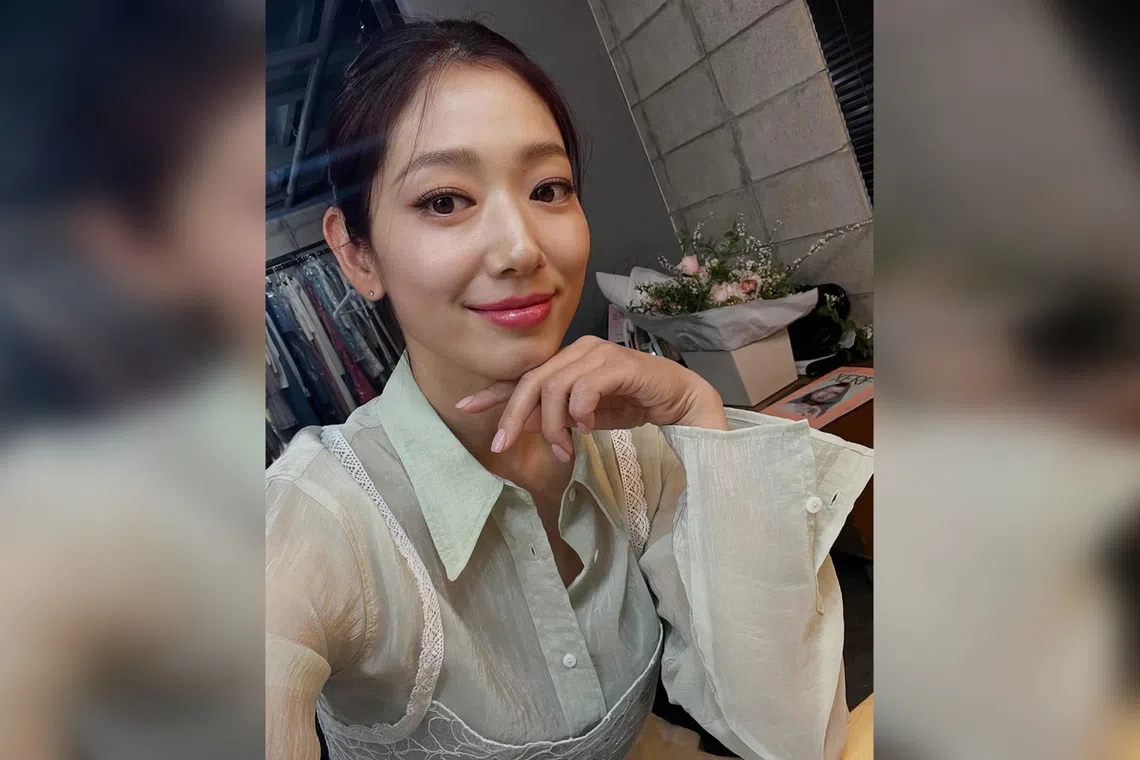
The image of Park Shin-hye, a South Korean actress known to many from dramas like Stairway To Heaven and The Heirs, recently spotted in Singapore with her family, carries more weight than a typical holiday snapshot. It follows the September 22 news of her giving birth to her second child, a daughter, as reported by The Straits Times Life and Yonhap News Agency. This event, occurring four years after her first child, a son, and two years after her marriage to actor Choi Tae-joon in 2022, quietly marks a shift in the perceived trajectory of a prominent East Asian cultural figure.
For decades, the life of a popular actress in Asia often followed a well-trodden, if unspoken, path: intense public visibility, often years spent navigating a demanding production schedule, followed by a quiet, sometimes abrupt, withdrawal upon marriage or motherhood. The return to the screen, if it happened, was frequently a measured re-entry into a supporting role, or a shift towards less strenuous projects.
What is notable in the case of Park Shin-hye is not the act of starting a family itself, but the public's access to this process. Her initial pregnancy and birth of her son were reported in 2022 by outlets like the South China Morning Post and Yonhap News Agency. The recent announcement of her daughter’s birth provides a bookend to this period of domesticity. Crucially, the visibility during these life events has been controlled. While her agency, S.A.L.T. Entertainment, confirmed the good health of mother and child, and media outlets reported on family vacations, these are curated glimpses, not the relentless, project-driven scrutiny that defined her earlier career.
This pattern suggests a new negotiation between celebrity and public, where periods of intense work are punctuated by longer, more private phases. The traditional narrative of an actress's career arc often implied a decline in marketability with motherhood, particularly for those whose appeal rested heavily on romantic leads. However, the sustained, albeit reframed, public interest in figures like Park Shin-hye suggests that the audience's relationship with these stars may be deepening beyond just their on-screen personas. They are viewed not merely as performers, but as individuals whose life stages become part of a shared cultural tapestry, albeit observed from a distance.
Consider the contrast: an earlier generation of stars might have faced more pressure to either remain single to preserve an image of availability, or disappear entirely to embrace domesticity without public interference. Today, the choice appears to be a managed oscillation between professional and personal visibility. The fact that Park Shin-hye’s family was 'recently seen vacationing with other celebrities' indicates a continued, albeit softened, engagement with the public sphere, not an outright retreat. This suggests that the 'retreat' is not from public life, but from the relentless, singular focus on performance and production. It is a recession of one kind of fame, making space for another.
This observation applies beyond individual careers. It reflects a broader cultural shift in how 'success' and 'relevance' are defined for women in the public eye across the Asia-Pacific. The capacity to sustain an engaged audience through personal milestones, rather than solely through professional output, signals a more mature and perhaps less demanding relationship between stars and their fans. The question then becomes: what forms of cultural production emerge from these quieter periods? And for whom do these moments of domestic focus resonate most deeply?
Sources
Newsletter
Pacific Daily
A curated briefing from Thailand, Asia-Pacific and the world.