European Bear Sanctuaries Offer Contrast to Asia-Pacific Wildlife Challenges
A New Zealander's work with rescued bears in Germany highlights structural differences in animal welfare and conservation efforts compared to the Asia-Pacific region.
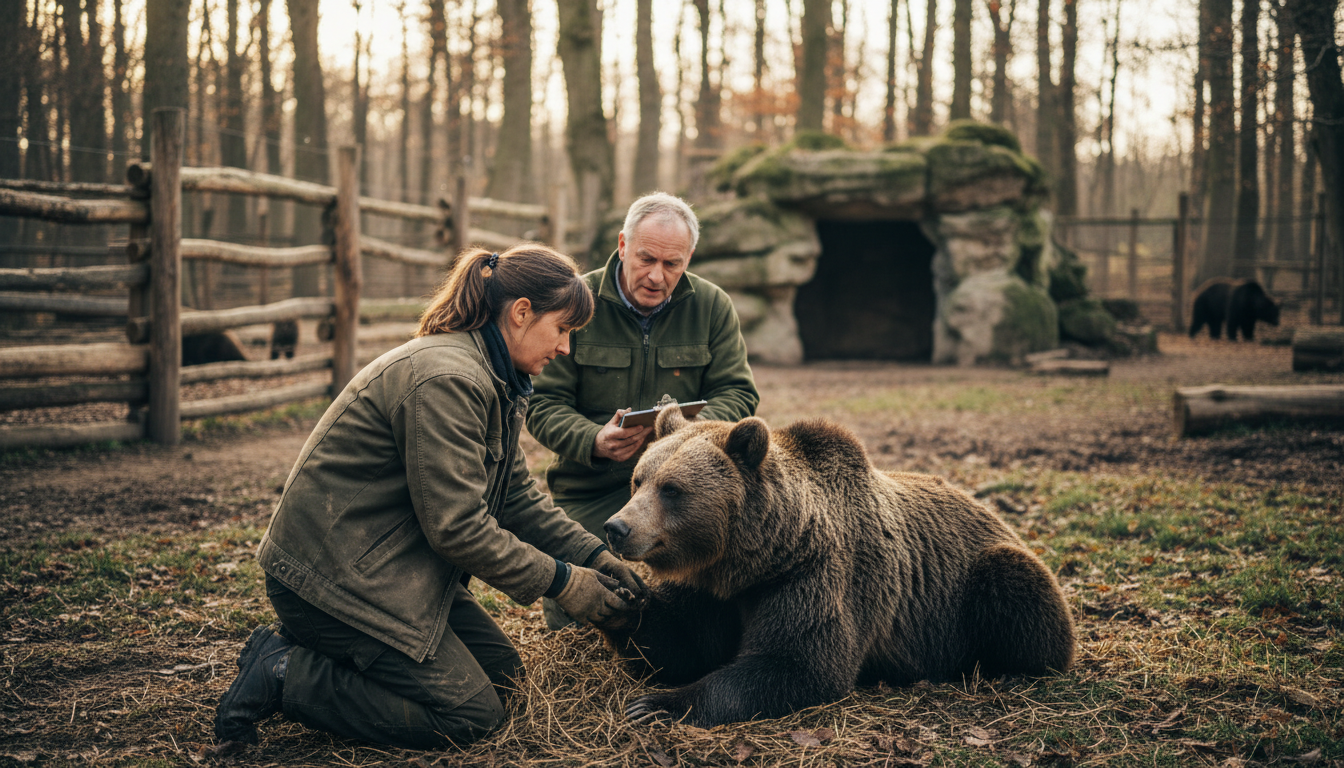
A former Wellington zookeeper, John Pickard, is currently assisting rescued bears in Bavaria, Germany, a role that illustrates a specific approach to animal welfare. Pickard works at a sanctuary operated by the German charity Gewerkschaft für Tiere eV, where 11 bears occupy 11 hectares within fenced enclosures. The site, a reforested block, previously served the German Army during the Cold War era. Many of these bears are ex-circus animals, while others arrived from nations where they were used for income after a significant political shift. Pickard noted to Country Life that these animals had been kept in "terrible little cages, boxes, even cages in the corner of restaurants."
His observation, as conveyed to Country Life, indicates that the number of bears needing rescue is declining within Germany. This suggests a structural change in how animal welfare issues, particularly those arising from past exploitation, are addressed and potentially mitigated. Such a trend points toward the efficacy of a system where non-governmental organizations, alongside broader societal shifts, can reduce the demand for interventions.
Differing Regional Priorities
The European experience with rehabilitating individual animals from specific past abuses, such as those endured by circus bears, provides a point of comparison for the diverse conservation challenges faced in the Asia-Pacific. While Europe can focus on the aftermath of historical animal use, many Asia-Pacific nations confront ongoing, fundamental threats to biodiversity. These threats include habitat loss, environmental degradation, and the illegal wildlife trade. UNESCO reports from 2026 and 2025 emphasize the need for Pacific countries to advance climate-smart and life skills education and strengthen regional collaboration to bolster education in Pacific Island countries, reflecting the foundational nature of these environmental concerns.
The decline in the need for bear rescues in Germany, if sustained, suggests a level of policy and enforcement maturity that allows for the amelioration of past cruelties. This contrasts with regions where resources are frequently directed towards preventing species extinction and combating immediate illicit practices. For many Asia-Pacific nations, the challenge remains the consistent implementation of robust policies and the allocation of sufficient resources to stem biodiversity loss and address ongoing animal exploitation. The focus often centers on the survival of entire species rather than the recovery of individual animals from past mistreatment.
This Bavarian initiative, therefore, does not present a direct model for the Asia-Pacific but rather serves as an illustration of differing stages in animal welfare and environmental governance. While the universal principle of animal protection holds, the immediate priorities and the structural changes required vary significantly. The unresolved constraint for many in the Asia-Pacific involves establishing comprehensive policy frameworks and ensuring their effective enforcement to protect diverse wildlife populations from persistent threats. The outcome for the region’s biodiversity now depends on addressing these systemic challenges through sustained policy development and regional cooperation.
Sources
Newsletter
Pacific Daily
A curated briefing from Thailand, Asia-Pacific and the world.