Electric Vehicle Promises: The Enduring Static of Infrastructure
Rapid charging is presented as the solution to EV adoption, yet the underlying system merits closer examination.
SINGAPORE
A recurring theme in the discourse surrounding electric vehicles is the notion of range anxiety. Manufacturers and commentators frequently highlight two perceived hindrances to broader EV adoption: the distance between charging points and the duration required for charging. Modern navigation systems, whether integrated into vehicles or accessed via smartphones, address the first concern by factoring an EV’s state of charge into route planning.
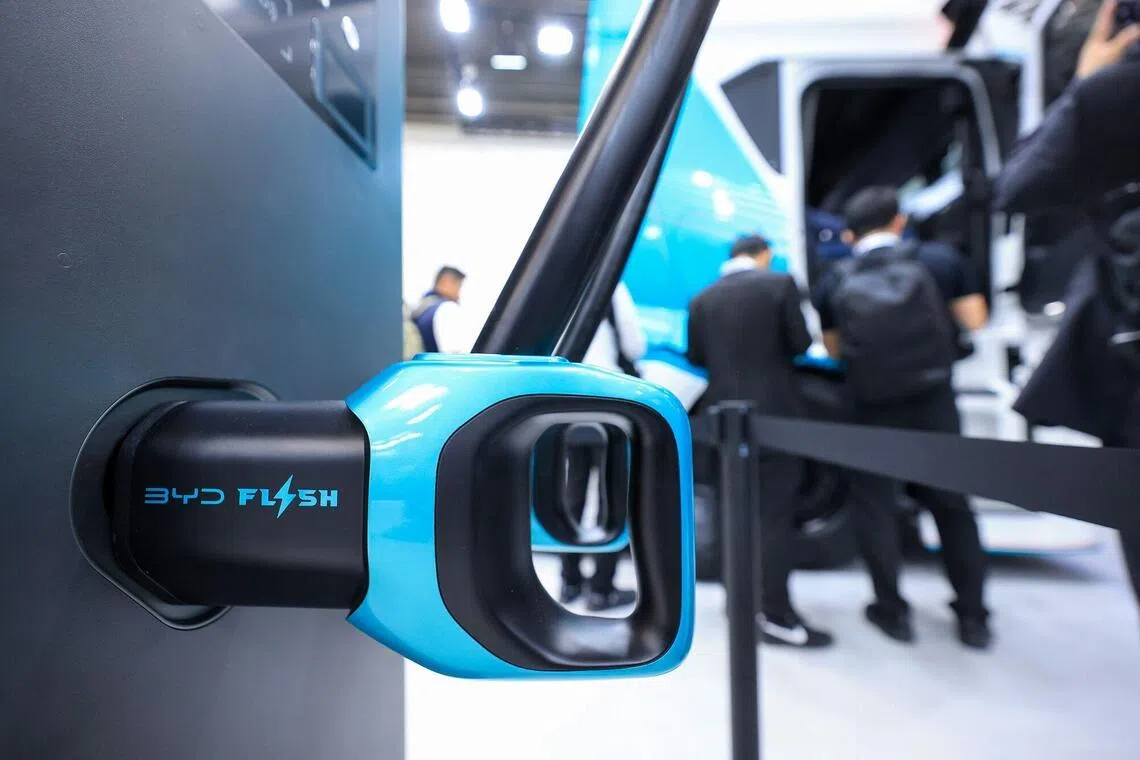
Now, the second concern — the time spent tethered to a charger — is being framed as solvable. The Straits Times Life reported on September 18, 2026, on BYD’s Flash Charger, which is said to add 400km of operating range in five minutes. This capability, described as adding 2km of range per second, translates to what proponents suggest is “very little downtime.” The Financial Times, on March 19, 2025, questioned if such advancements signal that “time is running out for electric-vehicle rivals.” Taken at face value, these rapid charging figures suggest a future where the inconvenience of recharging an electric vehicle approaches that of refueling a conventional one.
Yet, the focus on individual vehicle charging speed, while technologically impressive, sidesteps a more fundamental and less tractable issue. While an EV might gain 400km of range in five minutes, the critical question remains: where does this charging capacity originate? The power grid itself, particularly in the Asia-Pacific region, faces increasing strain. Reuters noted on April 1, 2026, that a “fuel crisis powers surge in EV interest,” with The Japan Times also reporting on an “oil shock accelerating Asia’s EV revolution.” This surge in demand, while ostensibly a positive development for emissions, translates directly into a greater burden on existing electrical infrastructure.
Rapid charging stations, by their nature, draw significant amounts of power in short bursts. The ability of a single vehicle to charge quickly does not automatically imply the grid’s capacity to support numerous such vehicles charging simultaneously. As more consumers shift to EVs, driven by fuel crises and technological advancements, the cumulative demand on power generation and distribution networks will intensify. The promise of near-instantaneous charging becomes conditional on an infrastructure robust enough to deliver that power at scale, consistently, and reliably. Without this, the “very little downtime” for the individual EV driver could translate into significant systemic downtime or, at best, a significant draw on peak load capacity that demands substantial investment and upgrades. The speed of the charger itself, in this context, is secondary to the stability and capacity of the supply that feeds it. The conversation about EV adoption, therefore, must shift beyond the car itself and towards the power network it relies upon. The speed at which an EV can charge is only as relevant as the grid’s capacity to deliver that charge without consequence. This tension between accelerating vehicle technology and the inertia of utility infrastructure remains. The question is not only how fast a car can charge, but whether the grid can keep up.
Sources
Newsletter
Pacific Daily
A curated briefing from Thailand, Asia-Pacific and the world.