The Pacific Solar Corridor
Grid interconnection projects are quietly redrawing regional energy politics.
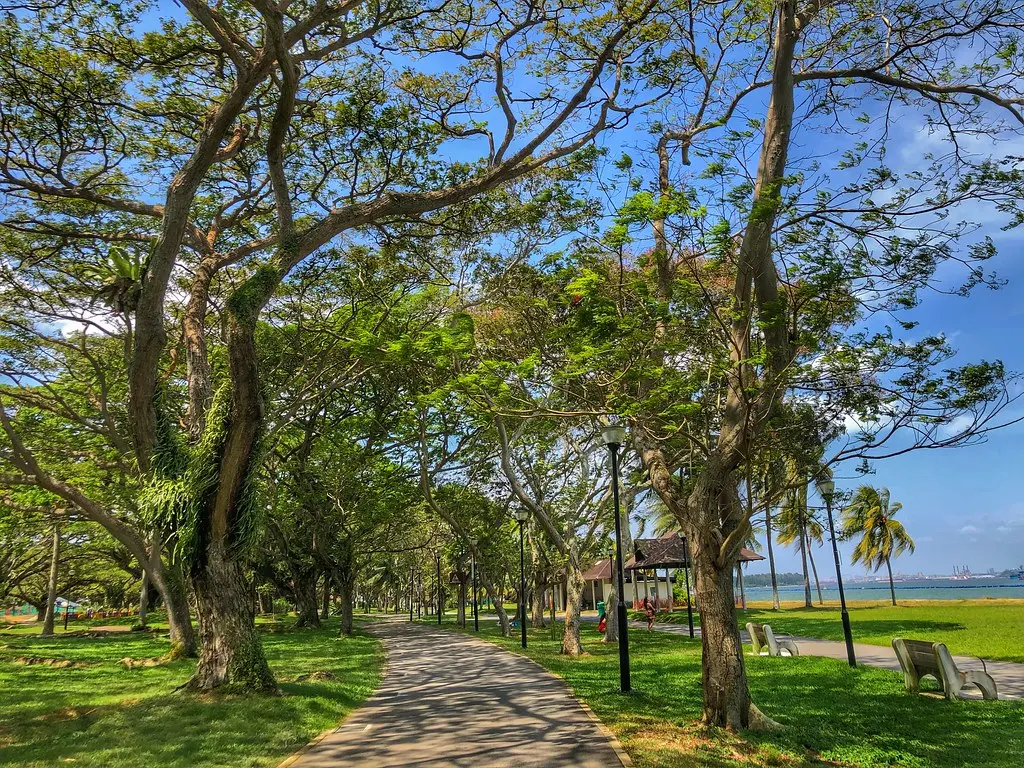
SINGAPORE
The map that hangs in the Jakarta offices of the ASEAN Power Grid secretariat is deceptively simple: a series of dotted lines linking Sumatra to Peninsular Malaysia, Peninsular Malaysia to Singapore, and — the line that draws the most attention from visiting delegations — a proposed subsea corridor connecting northern Australia's solar-rich Pilbara region to Singapore via Indonesian and Timorese waters. Most of those lines do not yet carry a single watt. But the negotiations behind them are becoming one of the most consequential, and least reported, stories in regional energy politics.
The most advanced of these projects, Sun Cable's Australia-Asia PowerLink, has already survived one near-death experience — a 2023 collapse into administration after its two billionaire backers fell out over funding — and re-emerged under new ownership with a construction timeline pushed to the early 2030s. Its ambition is undiminished: a 4,200-kilometre high-voltage direct current cable intended to deliver Australian solar power to Singapore, bypassing the archipelagic states in between except as transit territory.
Interconnection as leverage
What makes these projects politically sensitive is not the engineering, formidable as it is, but the leverage that interconnection creates. A country that hosts a transit cable, or that becomes a net exporter of renewable power to its neighbours, accumulates a form of influence that has nothing to do with military basing rights or trade tariffs and everything to do with the mundane fact that someone else's lights depend on your grid staying up.
Laos has understood this for two decades, positioning itself as "the battery of Southeast Asia" through hydropower exports to Thailand and Vietnam, with mixed results for its own rivers and downstream neighbours. The solar corridor now being negotiated is a more diffuse, multipolar version of the same logic, and it is drawing in players who were marginal to the original ASEAN grid conversation — Timor-Leste, whose maritime boundary agreements with Australia now carry unexpected relevance to cable routing, and the Pacific Islands Forum states, several of which are separately negotiating smaller-scale interconnection and green-hydrogen export deals with Japanese and South Korean utilities.
Interconnection creates a form of influence that has nothing to do with basing rights and everything to do with whose lights depend on your grid.
Singapore's calculated dependence
Singapore's willingness to countenance importing up to a third of its electricity needs from abroad — a marked departure from decades of energy self-sufficiency doctrine — is the linchpin decision making the entire corridor commercially plausible. The city-state has capped import approvals under a conditional licensing scheme run by the Energy Market Authority, granting provisional licences to projects from Cambodia, Indonesia and Vietnam alongside the Australian cable, a hedging strategy that avoids overreliance on any single supplier or route.
Diplomats involved in the technical working groups describe a negotiating atmosphere unusually free of the sovereignty anxieties that dog South China Sea talks, precisely because transmission infrastructure, unlike fishing rights or reef features, can be metered, taxed and renegotiated without anyone needing to redraw a maritime boundary. That pragmatism has its limits: Indonesia has been notably cautious about approving cable routes through its exclusive economic zone, wary of ceding what officials in Jakarta privately describe as strategic transit control to a project in which Indonesia itself holds no equity.
A test of regional appetite
Whether any of this delivers power by the early 2030s depends on financing that remains only partially secured and on political durability across at least four governments with different electoral cycles. But the corridor's real significance may lie less in the electrons it eventually moves than in the diplomatic infrastructure — technical committees, cross-border regulatory harmonisation, shared metering standards — that has to be built to move them at all. That infrastructure, once established, does not disappear if a single project stalls. It becomes the scaffolding for the next one.
Sources
Newsletter
Pacific Daily
A curated briefing from Thailand, Asia-Pacific and the world.