A New Climate Reality: Singapore's Mandate Reflects Regional Adaptation Necessity
The decision to require cool water and breathable clothing for outdoor workers in Singapore, effective December, offers more than a localized safety measure; it underscores a shifting climate reality for the entire Asia-Pacific.
SINGAPORE
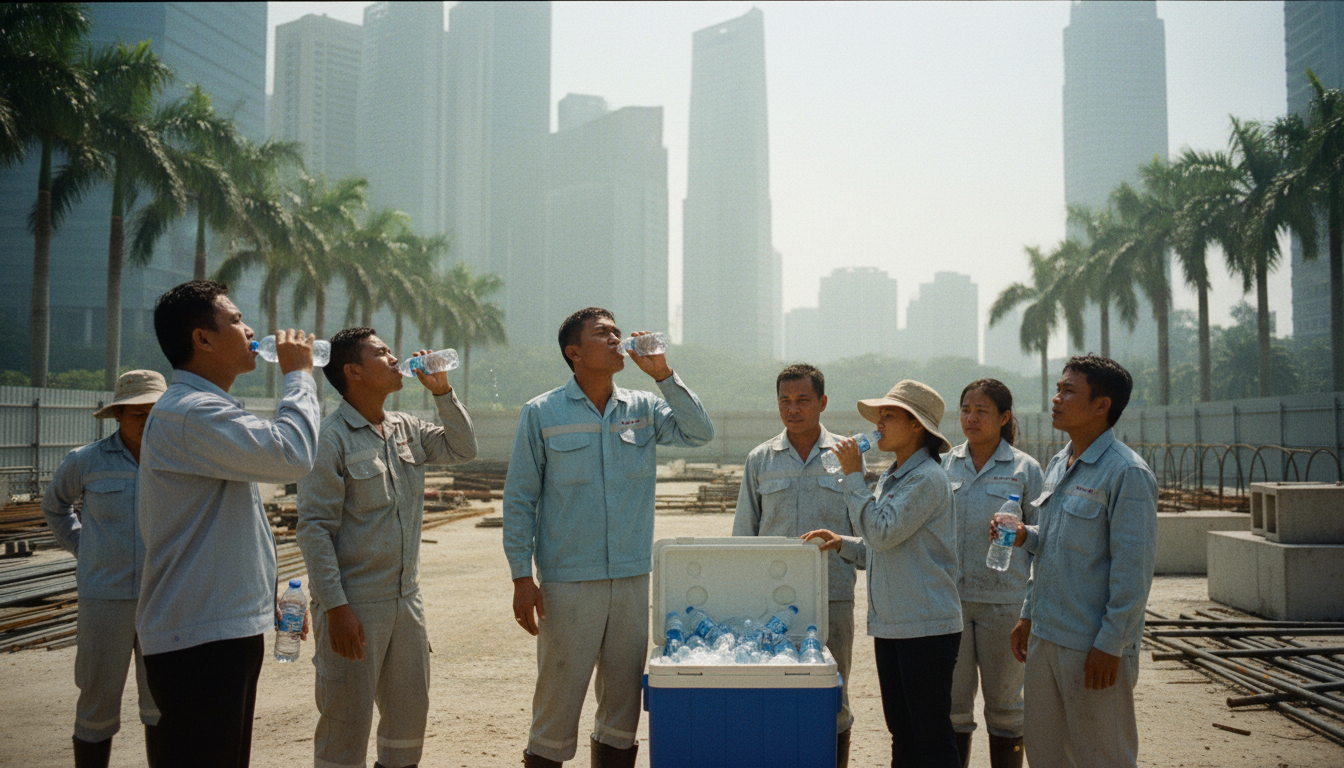
The low-slung, uniform structures of Singapore's industrial zones, or the exposed work sites that punctuate its urban landscape, present a consistent visual in the tropics. From December, this scene will integrate a specific detail: outdoor workers, many visible from the city's thoroughfares, will be required to have access to cool water and wear breathable clothing. This mandate, reported by CNA Lifestyle on August 28, 2026, goes beyond a simple health recommendation; it is a regulatory response to an environmental condition.
Minister of State for Manpower Dinesh Vasu Dash was observed taking a drink from a cool water dispenser, which CNA Lifestyle reported as an item slated for mandatory provision. This action, alongside a recommendation for shaded, well-ventilated, or cooled rest areas, reflects a concrete legislative acknowledgement of climate challenges. Singapore’s approach signals an emerging pattern across the Asia-Pacific region, where the necessity of adaptation, rather than just mitigation, becomes central to economic activity and public policy. While Singapore, with its developed infrastructure and administrative capacity, can implement such measures, the broader implications for countries like Thailand, with significant agricultural and outdoor labor sectors, are substantial.
The immediate benefit for worker safety is clear. However, the requirement for employers to provide these conditions also introduces new operational costs and logistical considerations. For businesses operating with tight margins, especially in labor-intensive industries, this regulatory change requires a re-evaluation of current practices and investments in new equipment or facilities. The originating report did not detail the cost implications, or how these might be absorbed, which leaves a significant question for implementation across diverse economic landscapes. The specific directive for employers to ensure these provisions places the burden of adaptation directly on industry.
While this mandate focuses on immediate worker well-being, its broader significance lies in its implicit recognition of the long-term impact of climate on daily life and economic productivity. It shifts the discussion from abstract environmental concern to tangible, actionable policy affecting human capital. For countries like Thailand, where agricultural output and construction often rely on extensive outdoor labor, Singapore's move might serve as a precursor. The question is not if, but when, similar mandates will become necessary across the region as climate patterns continue to intensify outdoor conditions.
The specific image of a worker, now mandated to be cooler and better hydrated, stands as an emblem of a larger regional recalibration. The mandate is a recognition that the physical environment, not merely market forces or policy debates, dictates the terms of labor. The shift reflects a move from voluntary best practices to compulsory standards, signaling a new era for labor regulations in a changing climate across Asia.
Sources
Newsletter
Pacific Daily
A curated briefing from Thailand, Asia-Pacific and the world.