A Rare Bird, A Common Challenge: Funding Conservation in the Asia-Pacific
Ecuador's experience with a newly identified species offers insights for regional conservation efforts.
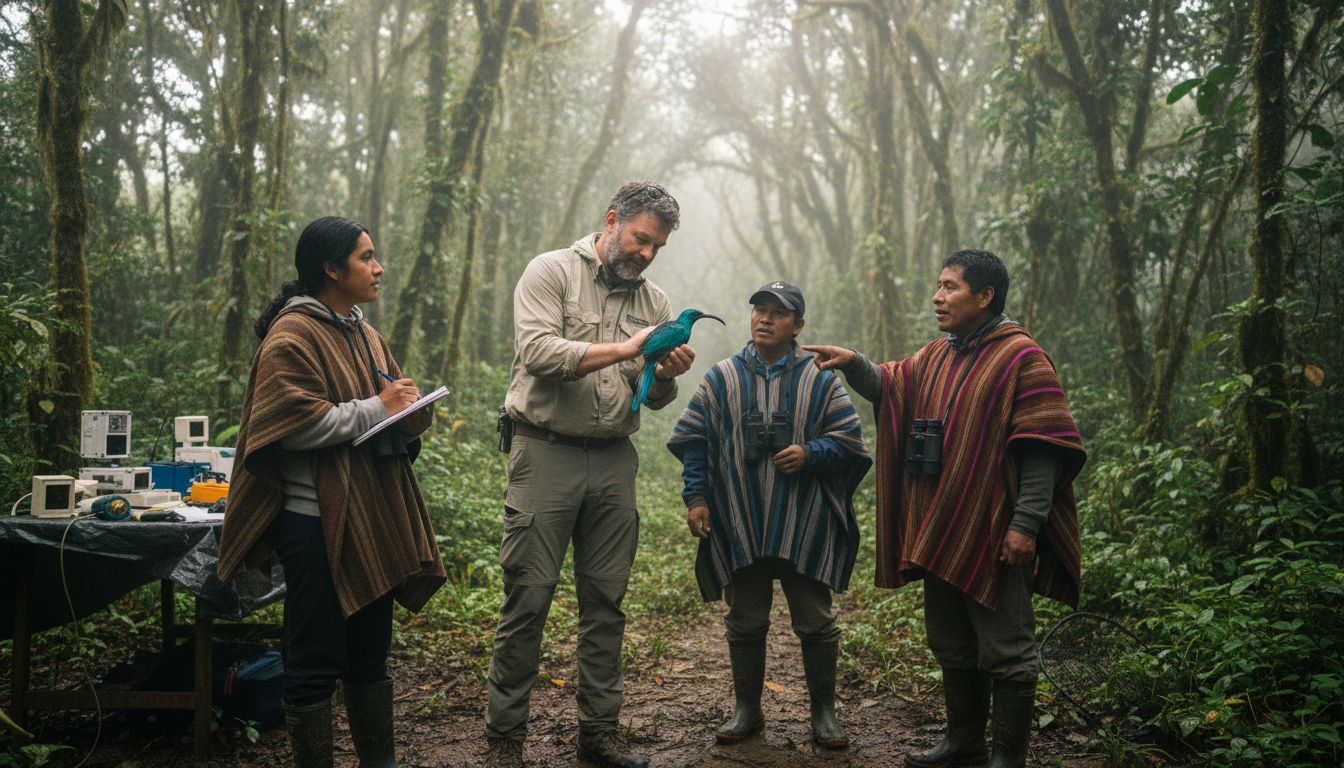
The reported discovery of an Ecuadorian hillstar, a hummingbird native to the Andes, highlights how a single species can redirect conservation efforts and funding. This finding in a montane cloud forest, noted on September 15, 2026, by Cuenca High Life, focuses on a 'rare species' and its potential to 'save many more.' The context provided for this discovery involves a guide, Juan Carlos Crespo, and a local ranger, Fredy Ramón Castillo, navigating a challenging environment. The Guardian, in a report on September 13, 2026, described this event as 'The bird that changed Ecuador.' This framing suggests that the immediate impact of such discoveries often extends beyond scientific interest to influence national narratives and policy decisions.
For the Asia-Pacific, such specific biological findings carry implications for how conservation is funded and perceived. The region, rich in biodiversity, frequently faces the challenge of balancing economic development with ecological preservation. When an individual species gains prominence, it can act as a catalyst, drawing attention and resources to broader habitat protection. This phenomenon is not new; a previous report by The Guardian noted the discovery of a 'Supersized stick insect in high-altitude trees in Australia,' illustrating how an unusual finding can generate wider interest and potentially unlock new conservation avenues.
The economic consequences for local communities around such sites can be significant. The presence of a rare, celebrated species can boost ecotourism, creating jobs and providing an economic incentive for preservation. However, this also introduces a reliance on external interest and the potential for unequal distribution of benefits. The initial account from Cuenca High Life indicates the difficulty of birding in these cloud forests, suggesting that the effort to observe such species requires dedicated resources. This can be a barrier for widespread local engagement in tourism, limiting who benefits directly.
There is a risk that focusing intensely on a 'flagship' species might divert attention from less charismatic but equally important ecological components or broader systemic issues. A region might champion one unique discovery while other critical habitats face neglect. Moreover, the economic uplift from ecotourism, while beneficial, can be vulnerable to external shocks. Events such as significant natural disasters can severely disrupt tourism infrastructure and flow, impacting communities reliant on it. The long-term stability of an economy tied to a specific, delicate ecosystem requires careful planning that acknowledges such vulnerabilities.
Ultimately, the value attributed to a rare species, whether an Ecuadorian hummingbird or an Australian stick insect, often becomes a determinant in conservation funding and public engagement. For countries in the Asia-Pacific, the question is how to leverage these individual discoveries to foster comprehensive, resilient conservation strategies that benefit both biodiversity and the communities living alongside it, rather than depending solely on isolated, high-profile findings.
Sources
Newsletter
Pacific Daily
A curated briefing from Thailand, Asia-Pacific and the world.