Extended Heat in Asia: A Regional Disruption Beyond Climate Models
The prospect of more extreme heat days across Asia-Pacific demands a re-evaluation of national adaptation strategies, particularly for economies reliant on outdoor labor and agriculture.
SINGAPORE
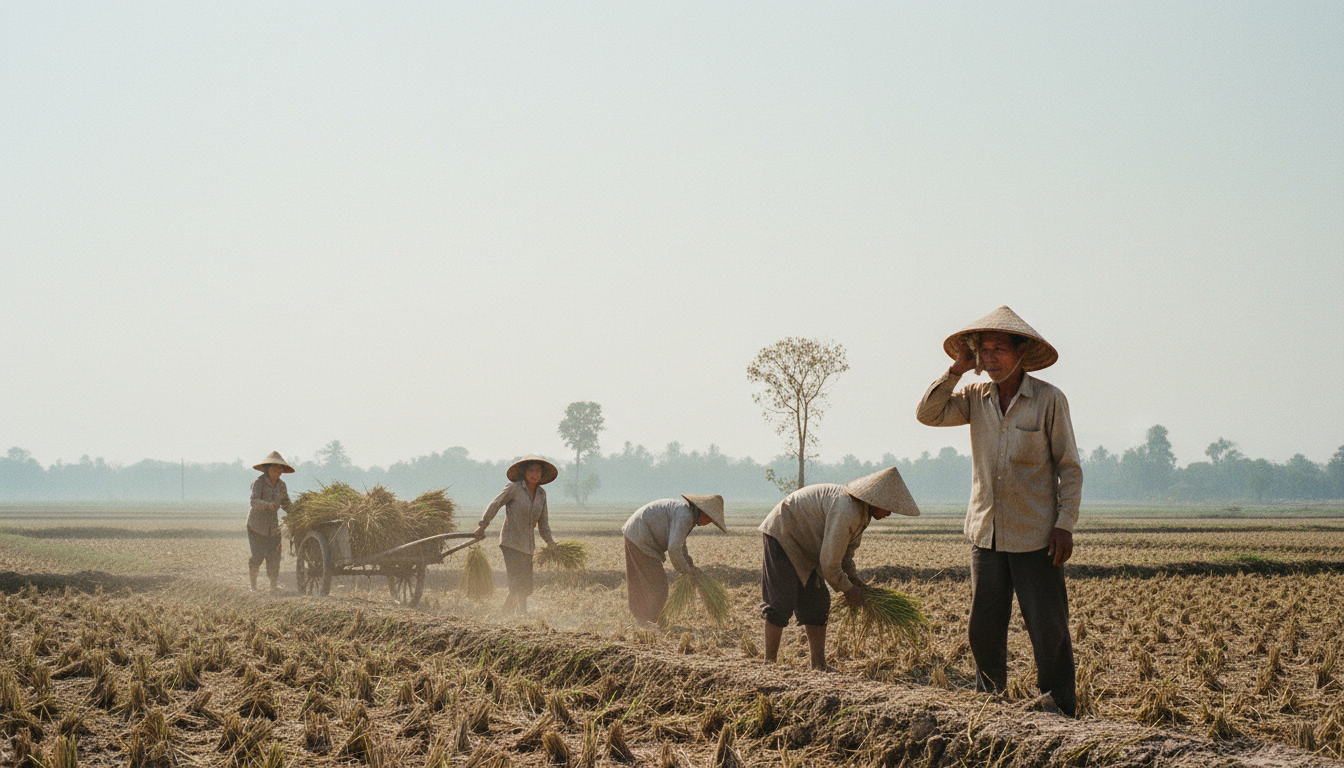
The consistent projection of increased extreme heat days across the Asia-Pacific region by the end of the century signals a fundamental shift in environmental conditions, one that extends beyond individual weather events. While climate models have long indicated rising temperatures, the specific implication of more frequent and intense heat for diverse regional economies warrants closer scrutiny. This is not merely a statistical increment but a potential reordering of economic and social patterns, particularly in nations like Thailand where agricultural output and outdoor workforces are central.
Historically, seasonal variations, including periods of heat, have been integral to agricultural planning and public health responses. However, the anticipated frequency and severity of future heat days suggest a departure from these historical norms. The impact will not be uniform. For Thailand, a nation where a significant portion of the workforce is engaged in agriculture and other outdoor sectors, prolonged extreme heat directly threatens productivity and public health. This contrasts with more industrialized economies in the region, where a larger proportion of the workforce operates in climate-controlled environments, although even these face challenges to infrastructure and energy demand.
The current El Niño event, described by some as potentially the 'strongest in living memory' [2] and likely to 'turbocharge extreme weather' [3], offers a contemporary example of how such climatic shifts manifest. While El Niño is a cyclical phenomenon, its amplified intensity in recent years, as reported in August 2026 [1, 2], illustrates the potential for more severe and prolonged heat conditions. This immediate pressure point underscores the broader, long-term trend of increasing extreme heat days. The challenge for regional governments is to distinguish between cyclical weather patterns and a sustained, escalating environmental reality.
One perspective suggests that technological advancements and increased awareness will enable populations to adapt. Urban planning can incorporate more green spaces, and agricultural practices can shift towards heat-resistant crops or protected cultivation. However, such adaptations require significant capital investment and policy coherence that may not be uniformly achievable across the region, especially in developing economies. Furthermore, the vulnerability of younger populations to heat-related deaths, as highlighted by a December 2024 study [5], indicates that demographic shifts will interact with climatic changes to produce complex public health outcomes. The capacity of public health systems to manage these compounded risks remains a critical unknown.
The economic consequences of sustained extreme heat could manifest as reduced agricultural yields, increased healthcare burdens, and diminished labor productivity in outdoor sectors. For regional supply chains, particularly those reliant on agricultural commodities or manufacturing processes sensitive to temperature, this represents a systemic risk. While some nations may have the fiscal capacity to invest in mitigation and adaptation, others may face exacerbated socio-economic disparities. The unresolved tension lies in how individual national strategies, often focused on immediate economic growth, will reconcile with the transboundary and long-term implications of fundamentally altered climate patterns across the diverse Asia-Pacific landscape.
Sources
Newsletter
Pacific Daily
A curated briefing from Thailand, Asia-Pacific and the world.