Britain Maintains East Jerusalem Presence Despite Israeli Closure Order
The United Kingdom asserts its mission will continue in East Jerusalem, serving Palestinians, even after Israel's directive to close its consulate.
SINGAPORE
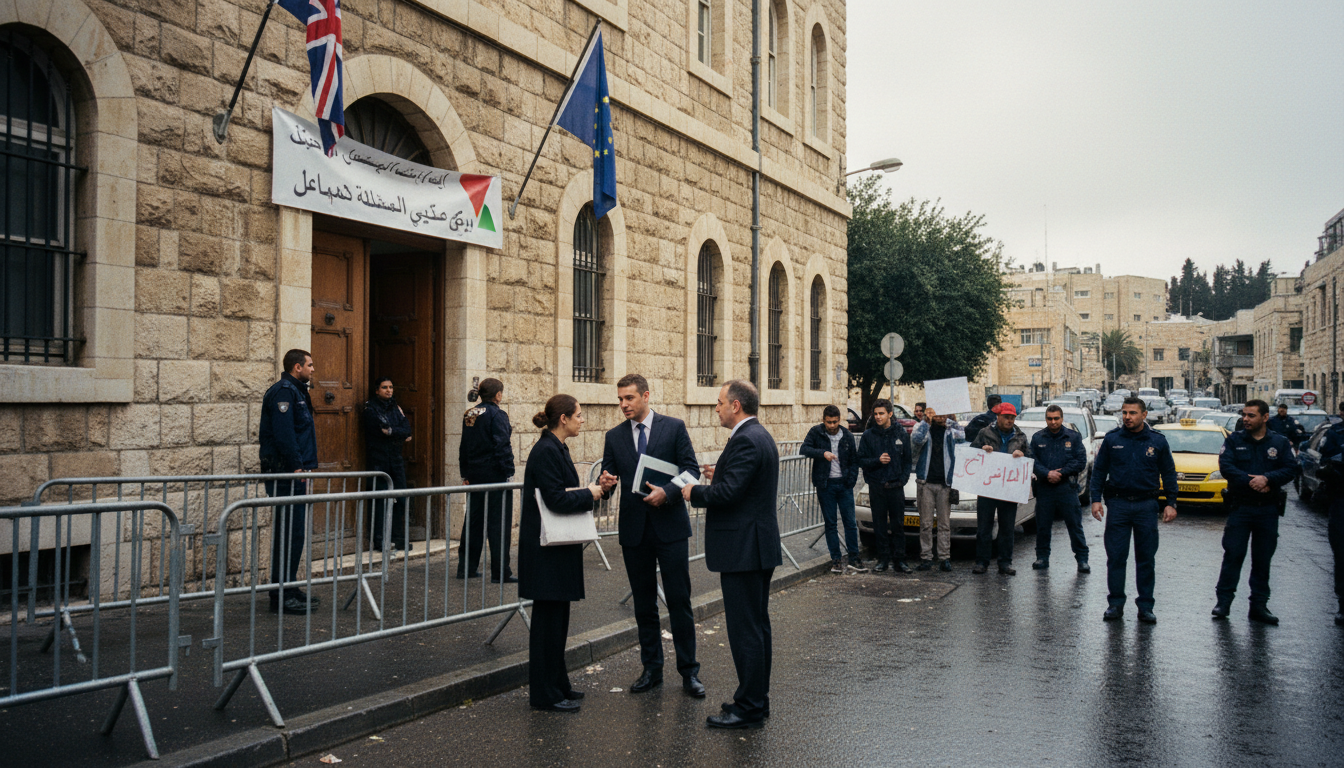
The United Kingdom has affirmed that its consular building in East Jerusalem will continue to function as an independent and operational UK Mission, serving the Palestinian people. British foreign minister Ed Miliband stated on Thursday, October 8, that this mission remains open despite an Israeli order to close it. The order followed London's announced plans to impose sanctions on settlements in the West Bank.
Israel ordered the British consulate in East Jerusalem to close on Thursday, October 8. This directive emerged after the UK declared its intention to sanction West Bank settlements. The UK Foreign Office had received advice indicating Israel does not possess the right to close the Jerusalem consulate, according to a report. This foundational disagreement over legal authority underpins the ongoing diplomatic friction between the two nations.
The UK's stated intent is to continue providing services to the Palestinian people from the East Jerusalem location. This position signals a diplomatic stance prioritizing sustained engagement with the Palestinian population, even as relations with Israel grow strained over settlement policy. The operational continuity, despite the Israeli order, underscores a determination to uphold this direct channel. While Ed Miliband acknowledged that a number of staff had been withdrawn, he maintained that "vital services" would continue, as reported by the BBC.
The immediate impact centers on the continued provision of services to Palestinians from the East Jerusalem office. Longer-term, the situation tests the limits of diplomatic recognition and sovereignty claims in East Jerusalem. The British government's decision to maintain its presence, albeit with staff reductions, could be interpreted as a calibrated defiance of the Israeli order. This action aims to preserve the UK's policy position regarding the Palestinian territories. The efficacy of these services and the daily operations of the facility will depend on practical considerations and further diplomatic exchanges between the UK and Israel.
For the Asia-Pacific region, this situation demonstrates the complexities of international diplomacy in contested territories. It highlights how nations balance their relationships with sovereign states against commitments to specific populations or principles. While no regional actors are directly involved, the precedent of a global power navigating an explicit closure order holds relevance. This dynamic is observed in various regional contexts where territorial claims or human rights are central. The outcome will depend on the practical implementation of the UK's decision and Israel's subsequent responses, determining the effective status of the mission.
Sources
Newsletter
Pacific Daily
A curated briefing from Thailand, Asia-Pacific and the world.