Border Minerals: Thailand's Permitted Pollution From Myanmar
The trade of antimony from Myanmar into Thailand highlights how regional resource demands translate into localized environmental burdens and contested sovereignty over shared waterways.
SINGAPORE
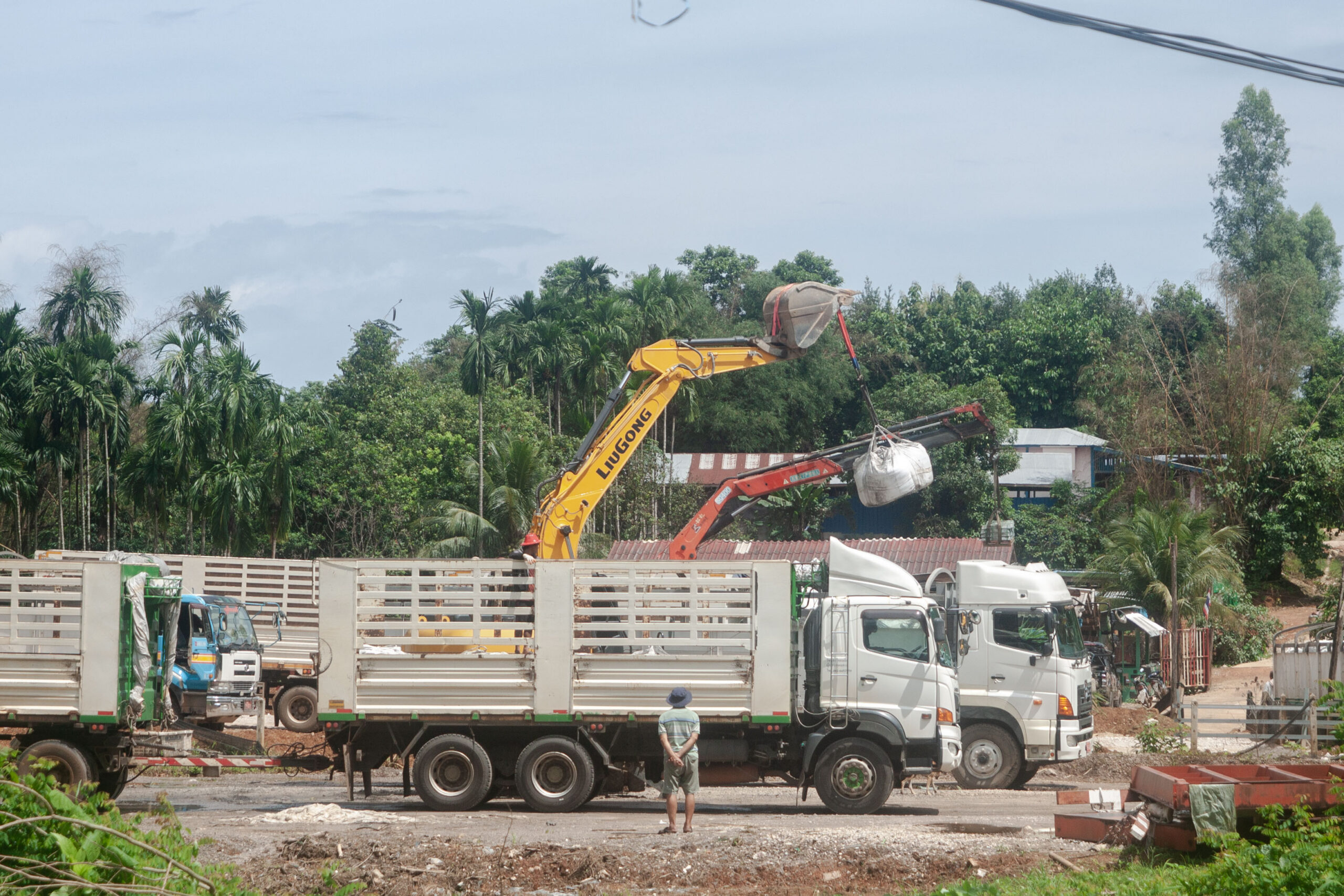
The Pheung Khleung border crossing in northern Thailand, a designated legal transit point for minerals from Myanmar, saw at least 13 double-trailer trucks loaded with antimony on June 26. These vehicles awaited passage, a scene of daily commerce facilitated by Thai military personnel. The minerals, frequently sourced from Myanmar’s Karen state, often traverse Thailand’s Tak province and then meet demand from China, as multiple reports indicate.
This established trade route, however, obscures a more complex regional dynamic: the downstream environmental and social costs. Reports from the Washington Post, CNA, Reuters, and the South China Morning Post, published between late 2025 and mid-2026, consistently highlight severe environmental degradation linked to mining operations in Myanmar. These operations include those run by Chinese entities. The Washington Post reported in April 2026, for example, that rare earth mining poisoned Mekong River tributaries. Similarly, Thai PBS World stated in June 2025 that China's lead mining plans in Myanmar raise concerns about tribal communities.
The situation illustrates a pattern where resource-rich yet less regulated upstream nations, such as Myanmar, become sites of intensive extraction. Neighboring countries, including Thailand, then function as transit hubs, formalizing the transfer of these resources to global markets. Critically, these downstream nations simultaneously bear the ecological consequences. The core issue is not illicit trade, but rather a legally sanctioned system concentrating pollution in shared ecosystems, particularly river systems vital to regional food security and public health.
The Mekong River system, frequently termed “the world's kitchen,” faces ongoing threats from these activities. CNA reported in June 2026 that Thailand's struggle with toxic rivers connects directly to fallout from Myanmar’s mines. This raises a fundamental question about regional strategy: which coastlines and communities bear the cost for policies formulated inland, far from the direct impact zones? The economic benefits of mineral trade are diffuse, yet the environmental liabilities often remain highly localized.
The trade at Pheung Khleung is legal and generates revenue. Yet the unaddressed externalities of upstream mining present a significant regional policy challenge. The continuous movement of minerals across borders demands a more holistic assessment of its true cost, particularly for the communities and ecosystems reliant on shared waterways. This dynamic reflects an unresolved tension between economic opportunity and environmental stewardship.
Sources
Newsletter
Pacific Daily
A curated briefing from Thailand, Asia-Pacific and the world.