Auckland's Discounted Waste Sorting: A Tactical Gain Amidst Systemic Underinvestment
Auckland Council's incentive for waste sorting offers immediate benefits but highlights the persistent challenge of achieving ambitious zero-waste targets without substantial investment in staff and infrastructure, a common regional tension.
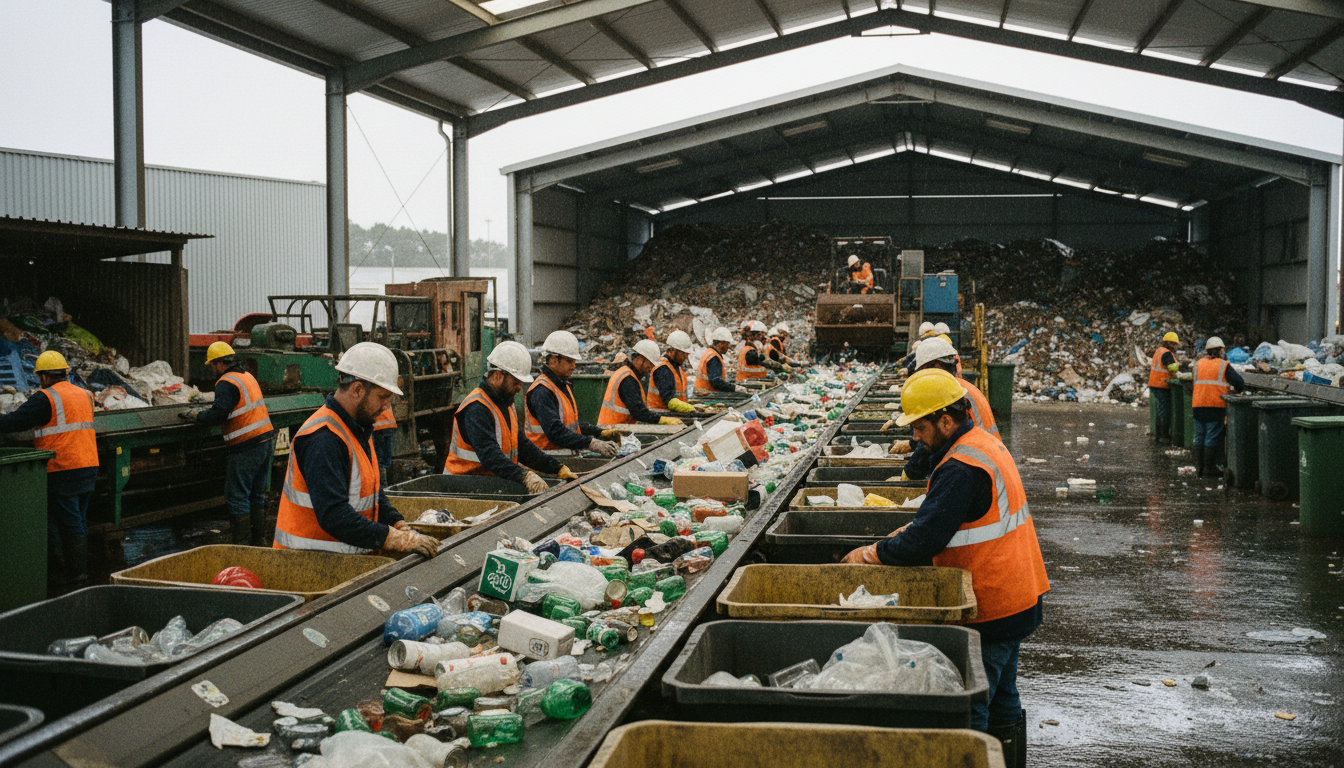
Auckland Council introduced a discount system at Waitakere Resource Recovery Park, encouraging residents to sort their waste for a reduced fee. This initiative, reported on 2026-10-10, aims to improve waste diversion rates without expanding staffing. Auckland Council refuse manager Dick Fong stated that participants appreciate the financial incentive and the perceived positive environmental impact. "They love the discount, but they also love the fact that they're actually doing something that's actually helping save resources," Fong noted, acknowledging both motivations.
This approach directly responds to a constraint identified by Fong: improving waste diversion proves challenging without additional personnel. The council's aspirational goal of zero waste by 2040 highlights a long-term commitment that currently relies on tactical adjustments. The discount scheme represents an attempt to bridge the gap between this ambition and the operational realities of limited resources. By incentivizing public participation in sorting, the council effectively shifts some operational labor to citizens, securing progress towards environmental targets without increasing its direct workforce.
While the scheme may lead to an immediate improvement in diversion figures, it underscores an underlying tension in municipal sustainability efforts. Relying on behavioral nudges, even effective ones, addresses only a part of systemic waste issues. The fundamental question for any enduring waste strategy is whether such incentives complement or substitute for direct capital investment in infrastructure, technology, and dedicated waste management staff. Without a more comprehensive capital plan, the effectiveness of the discount could plateau, potentially limiting its impact to those already predisposed to sorting, rather than fundamentally altering wider waste streams.
Waste Management in a Regional Context
The Auckland initiative offers a case study relevant to urban centers across the Asia-Pacific. Many municipalities, including those in Thailand, confront increasing waste volumes and often insufficient waste management infrastructure. Budgetary constraints frequently make direct investment in comprehensive waste sorting and processing facilities a significant hurdle. Strategies like Auckland's, which leverage public participation through financial incentives, might appear attractive as cost-effective solutions for these regions.
However, their long-term efficacy depends on consistent public engagement and a clear understanding of whether these interventions genuinely reduce overall waste generation or primarily improve the sorting of existing waste. The objective extends beyond moving waste from landfill to recycling; it involves designing systems that prevent waste generation or fully integrate recovered materials into new production cycles. Earlier policy discussions, such as suggestions for organic rubbish collection, indicate a long-standing interest in comprehensive solutions. The current discount model, while creating employment at the recovery park, might defer more substantial, costlier decisions about expanding processing capacity or enforcing stricter waste separation at the source. This raises questions about how much responsibility for waste management can realistically be transferred to individual citizens before limitations in existing municipal infrastructure impede further progress.
This situation reflects a broader challenge for Pacific cities aiming for ambitious environmental targets. Without commensurate investment in dedicated resources, policy relies heavily on public cooperation. The unresolved tension lies between aspirational goals and the financial commitment required to meet them comprehensively, a dynamic observable across many urban administrations.
Sources
Newsletter
Pacific Daily
A curated briefing from Thailand, Asia-Pacific and the world.