Annie Dillard's Pacific Echo: A Disappearing Craft in the Age of Digital Noise
The passing of a literary giant highlights a quiet shift in how we perceive and articulate the natural world, particularly in Asia's evolving urban landscapes.
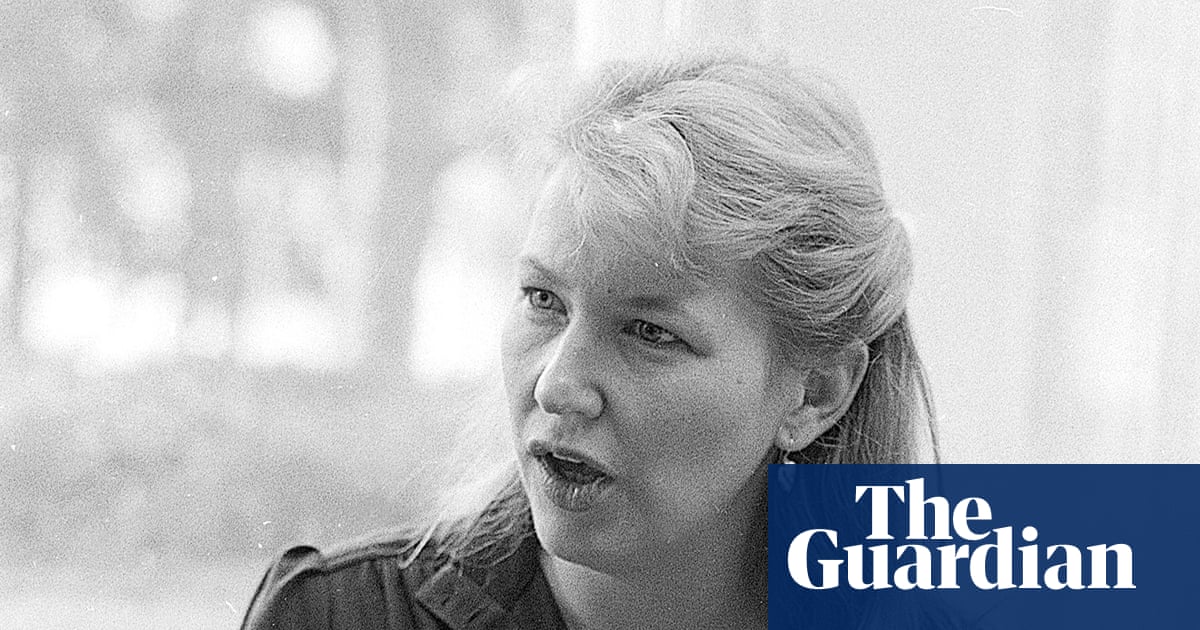
A life defined by sharp observation of the natural world has concluded. Annie Dillard, the Pulitzer Prize-winning author of "Pilgrim at Tinker Creek," died aged 81 at her home in South Wellfleet, Massachusetts, on Tuesday. Her literary editor, Maggie Nelson, confirmed her death. Dillard's work, which "skyrocketed her to become one of the most prominent nonfiction writers of her generation" when "Pilgrim at Tinker Creek" was published, articulated a particular way of seeing that is increasingly rare.
Her writing chronicled a deep engagement with the immediate environment, often in a contemplative, precise manner. This form of slow, deliberate observation, once central to understanding one's place in the world, finds a strange echo in the rapidly changing landscapes of Asia. As cities expand and digital life permeates, the habit of extended, focused attention on the subtle rhythms of nature—a hallmark of Dillard's craft—appears to recede. The physical spaces for such contemplation shrink, and the mental frameworks for it seem less cultivated.
Consider the rapid urbanization across Southeast Asia, where ancient patterns of life are being reshaped by infrastructure projects and digital connectivity. In places like Bangkok, the canals that once defined a way of life are increasingly hemmed in by concrete and commercial development. The intricate ecological narratives that Dillard found in a creek, or a mountain range, are still present in Asia, but they are often overlaid by layers of human intervention and accelerated pace. The question is not whether nature exists, but whether the capacity to observe it with such intensity and patience remains a valued cultural practice.
The challenge for contemporary cultural producers, particularly those working across the Pacific, is to cultivate this Dillardian gaze amidst a constant flow of information. The act of sitting, watching, and meticulously detailing the minute changes in a tidal pool or the flight of a heron, as Dillard did, demands a quiet resistance to the immediate gratification of digital media. Her passing serves as a moment to reflect on what is lost when this particular form of intellectual and sensory discipline diminishes. The precise, unhurried examination of ecological detail, free from hyperbole, offers an antidote to the broad generalizations and speed inherent in many contemporary narratives.
One might argue that interest in nature writing and environmental observation persists, perhaps even flourishes, through new forms like eco-tourism or digital nature documentaries that bring remote wildernesses into homes. This is true; the desire to connect with nature is demonstrably present. However, these forms often prioritize spectacle or information dissemination, rather than the sustained, personal, and deeply internalised observation that defined Dillard's work. The engagement becomes mediated, perhaps less direct, and arguably less transformative on a personal level. The habit that changed first, then, was the collective willingness to simply _be_ with nature, without interpretation or immediate broadcast.
Her passing invites us to ask: What happens when the culture of attentive observation, the very foundation of Dillard’s literary achievement, finds fewer practitioners in our increasingly digitised and urbanised world? The ability to see the world with such clarity and precision, to draw profound meaning from the mundane, is a craft that requires deliberate cultivation. Its quiet diminishing might be one of the more significant, if less heralded, shifts in how we understand our place within the natural order of things, leaving us with a world observed, perhaps, but not always deeply seen.
Sources
Newsletter
Pacific Daily
A curated briefing from Thailand, Asia-Pacific and the world.