Against the Tide: Southeast Asia's Floating Future Rises from the Waves
As sea levels creep relentlessly higher, a 'Pacific Perspective' explores innovative conceptual designs for resilient, water-borne communities from Bangkok to Manila.
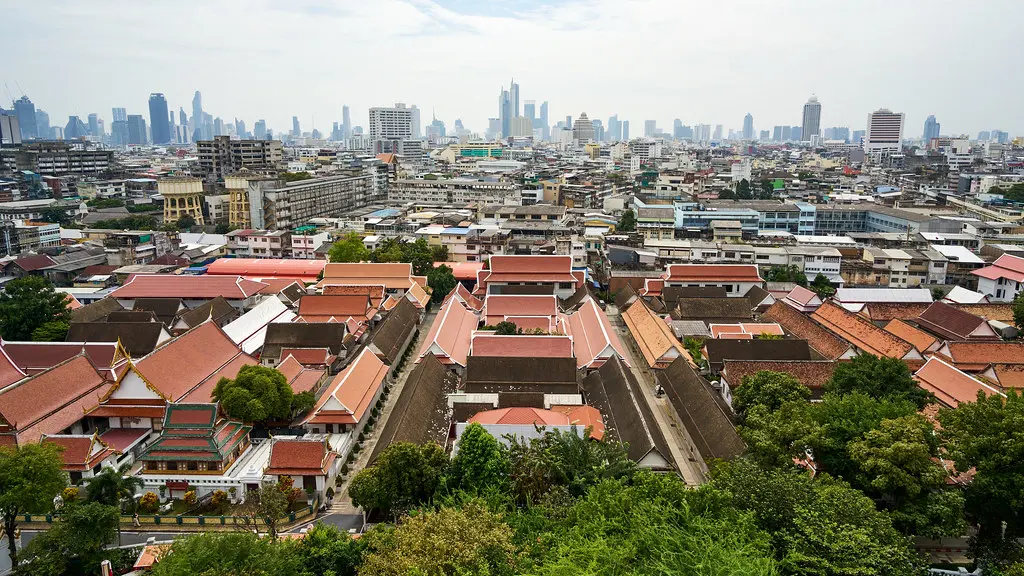
BANGKOK
The air in Bangkok always carries a humid weight, but today, standing on the edge of the Chao Phraya River, it feels heavier, laden with the unspoken anxieties of millions. The low-lying delta, home to over ten million souls, is sinking—a geological fact compounded by an encroaching sea. My conversation with Dr. Anchalee Prachuabmoh, a hydrologist at Chulalongkorn University, is sobering. “We are losing up to 2.5 centimeters a year in some areas,” she tells me, gesturing towards the water. “Protection walls are temporary bandages. We need systemic resilience.”
This isn't merely a Thai predicament. From the verdant deltas of Vietnam's Mekong to the sprawling archipelagos of the Philippines and Indonesia, coastal Southeast Asia faces an existential crisis. The Intergovernmental Panel on Climate Change (IPCC) paints a grim picture: a global mean sea level rise of 0.2 to 0.7 meters by 2100 under moderate emissions. For densely populated, low-elevation coastal zones here, this translates to devastating displacement and economic ruin.
But within this challenge, a remarkable vision is taking shape: floating architecture, not as an emergency stop-gap, but as a fundamental shift in how we inhabit these vulnerable landscapes. My journey brought me to the Singapore-MIT Alliance for Research and Technology (SMART) lab, where I saw conceptual models that transcended mere houseboats. Dr. Lim Wei Jie, leading their “Aqua-Urbanism” project, demonstrated designs for entire communities—interconnected modules with integrated water purification, renewable energy systems, and even vertical farms. “The goal is self-sufficiency and adaptability,” he explained, pointing to a rendered image of a multi-story floating structure with mangrove-like roots absorbing wave energy. “Imagine a primary school that rises and falls with the tide, never needing to relocate.”
This is a radical departure from traditional land-based development. Critiques have surfaced, arguing that floating cities are elitist fantasies, detached from the realities of informal settlements and economic disparity. A recent article in The Jakarta Post, for instance, dismissed such concepts as “architectural escapism” for the wealthy. My observation, however, suggests a more nuanced reality. The conversations I had with architects like Tran Van Loc in Ho Chi Minh City revealed a deep commitment to affordability and local material sourcing. His firm, Mekong Delta Designs, is exploring modular bamboo and recycled plastic pontoons for housing clusters in Ben Tre province, where salinity intrusion is already destroying livelihoods. “It’s about democratizing resilience,” Loc stated emphatically. “Not just building an ark for the rich, but empowering those most at risk with adaptable homes and livelihoods.”
Rethinking Infrastructure
The implications extend beyond residential units. Consider the logistical nightmare of maintaining land-based infrastructure in areas prone to inundation. Imagine roads that become canals, schools that flood every monsoon, hospitals rendered inaccessible. Floating infrastructure offers a pathway to continuity. Concepts presented by the Royal University of Phnom Penh’s Urban Planning department included floating marketplaces and modular, expandable healthcare clinics designed to dock at various community hubs. One particularly striking rendering depicted a floating agricultural platform, capable of cultivating salt-tolerant crops, directly addressing food security concerns in a region where rice paddies are increasingly threatened by saltwater. The sheer adaptability of these designs—their ability to connect, detach, and reconfigure—presents a compelling argument for a dynamic, rather than static, urban future.
"We are not just designing buildings; we are designing ecosystems that co-exist with water, not fight against it. This is the new Pacific frontier."
The Human Element
Yet, the technical marvels must align with human needs. Community engagement, I learned, is paramount. In discussions with local leaders in Palawan, Philippines, where numerous coastal barangays face relocation, the primary concern wasn’t the engineering, but the preservation of social fabric. How do traditional fishing communities maintain their close-knit relationships when their homes are spread across water? This is where the cultural sensitivity of the architects comes into play. Designs often incorporate communal spaces, shared docks, and layouts that encourage interaction, drawing inspiration from traditional stilt houses and fishing villages. The aim is not to erase heritage but to evolve it, leveraging traditional knowledge of living with water into modern, resilient forms. What began as a defensive posture against climate change is rapidly transforming into a bold redefinition of urban life, a truly Pacific solution to a global challenge.
Newsletter
Pacific Daily
A curated briefing from Thailand, Asia-Pacific and the world.