A Shifting Playbook: Athletes as Cultural Guides in Southeast Asia
Former national footballer Aleksandar Duric's post-retirement role in Singapore points to an emerging narrative in the region's cultural landscape, where athletic discipline informs community engagement.
SINGAPORE
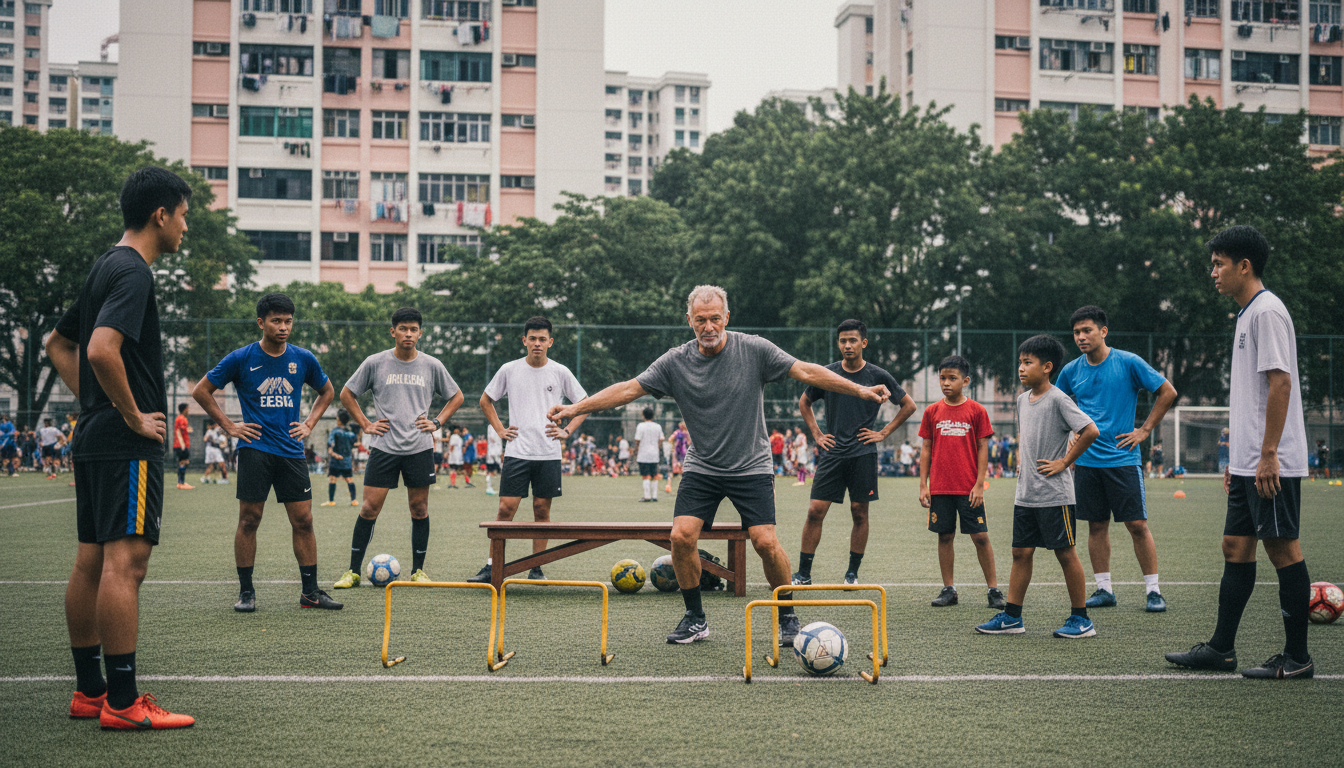
A Singaporean sports figure is described leading a national delegation at an international competition, not on the field, but from the sidelines. Aleksandar Duric, a former national footballer, will help lead Team Singapore at the 2026 Asian Games. The CNA Lifestyle report from September 16, 2026, highlights his experiences as an athlete shaping his work with the next generation. This particular observation — an athlete transitioning from competitive sport to a role influencing youth — signals a subtle but notable shift in how public figures are perceived and utilized within the cultural sphere of Southeast Asia. It suggests that the sustained discipline and public visibility of sports careers are increasingly being leveraged for broader social impact, beyond the immediate confines of athletic achievement.
Historically, the figures who bridge public life and youth development have often come from established academic, artistic, or political backgrounds. Duric's trajectory, as presented by CNA Lifestyle, indicates a different kind of cultural capital at play. His involvement with the 2026 Asian Games delegation implies that the attributes of a seasoned athlete—resilience, teamwork, and long-term commitment—are now seen as transferable assets for mentoring and leadership within national representations. This is not merely about a celebrity endorsing a cause; it is about a professional sports background being framed as a direct qualification for shaping collective identity and aspiration, particularly among younger populations.
Yet, the full extent of this shift remains to be fully observed. While the narrative frames Duric's work as 'giving back to Singapore,' it does not detail the specific mechanisms or the scale of this intergenerational engagement. The report focuses on the individual's journey rather than the broader systemic changes that might support such transitions across the region. For instance, whether similar programs or roles are emerging for other athletes in neighboring countries, or if this represents a unique case for Singapore, is not made explicit. The question arises whether this is a consistent pattern or an isolated example of an athlete whose personal story particularly resonates.
Nevertheless, the emphasis on his athletic experiences as foundational to his current work suggests a re-evaluation of what constitutes valuable guidance for young people in the public eye. In a region where success is often narrowly defined, the elevation of an athlete's 'journey' into a model for civic leadership offers a compelling alternative. It implies a recognition that the rigorous, often publicly scrutinized path of a sportsperson can cultivate virtues beyond physical prowess—qualities that are now deemed essential for navigating the complexities of modern civic life. The image of a former footballer leading a national team off the field suggests a quiet reshaping of cultural expectations around public service and mentorship in Southeast Asia, where the lessons learned in competition find new applications in community building.
Sources
Newsletter
Pacific Daily
A curated briefing from Thailand, Asia-Pacific and the world.