Seoul's Influx of Students: A Regional Imbalance in Cultural Capital
South Korea's record foreign student numbers suggest an increasing concentration of soft power benefits, with implications for neighboring economies.
SEOUL
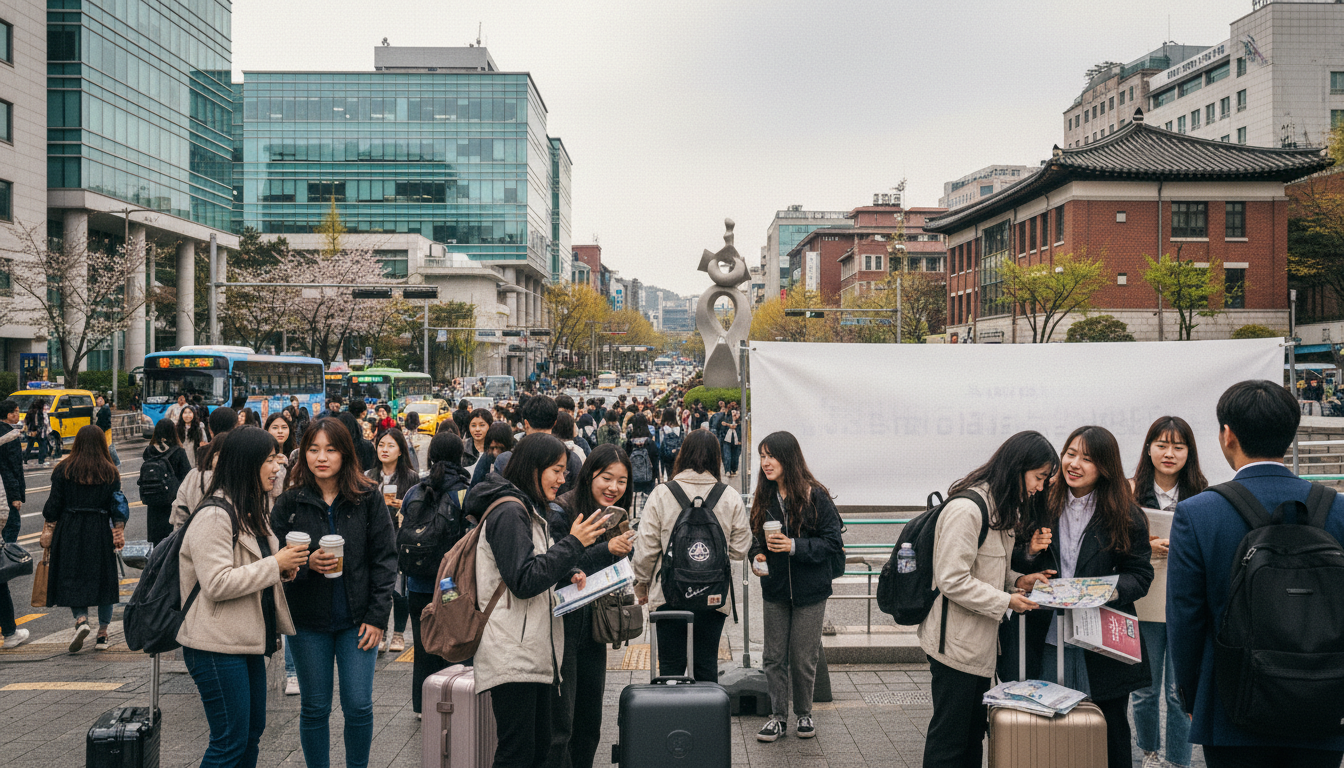
The reported surge of foreign students entering South Korea for study and training, surpassing 500,000 in 2025, marks a significant shift in regional educational and cultural flows. This figure represents more than a sixfold increase since 2021, a trajectory attributed by VnExpress International and Yonhap News Agency to the global expansion of Korean pop culture. While such a development is often framed as a national success, its broader regional implications warrant examination, particularly for countries like Thailand.
The phenomenon reflects a strategic concentration of cultural and educational resources, drawing talent and financial investment into one regional hub. This pull is not merely academic; it is explicitly linked to the pervasive influence of Korean popular culture. While South Korea gains an influx of international students and trainees, the underlying dynamics suggest a potential redistribution of regional soft power influence rather than a general rise benefiting all Asia-Pacific nations equally. The country's ability to attract 500,000 students, some of whom will likely remain to contribute to its economy, creates a specific advantage.
This narrative suggests a region where cultural influence is increasingly polarized. South Korea's military reportedly faces shrinking numbers, as reported by BBC in 2025, yet its educational sector is experiencing growth through external appeal. This contrast highlights a reliance on external engagement to offset internal demographic pressures, transforming cultural exports into demographic and economic assets. For countries like Thailand, which possesses its own distinct cultural industries, the challenge lies in understanding how this concentrated gravitational pull impacts their own aspirations for regional cultural and economic leadership.
While the specific number of Thai students contributing to South Korea’s 500,000 is not detailed in the provided reports, the overall trend implies a significant diversion of human capital and cultural engagement towards Seoul. The question is not whether Korean culture is popular, but rather what the policy response should be from other regional players. The concentration of educational and cultural capital in one state, driven by a globally dominant cultural export, represents a competitive dynamic. Neighboring nations might find their own cultural soft power initiatives facing a higher bar for attracting international talent and attention, as the established flow directs many towards South Korea. The financial resources spent by these students, and the intellectual and professional capital they represent, could be seen as an opportunity cost for other regional economies.
This trend underscores a critical tension: the benefits of a robust regional cultural economy are not automatically distributed. Instead, they appear to be accumulating in specific nodes. As Seoul continues to cultivate its role as a magnet for international students, the strategic challenge for other Asia-Pacific capitals is to articulate and implement policies that reinforce their unique cultural value propositions, or risk seeing their own coastlines pay for a policy written inland.
Sources
Newsletter
Pacific Daily
A curated briefing from Thailand, Asia-Pacific and the world.