A K-Drama's Cross-Border Story Mirrors a Complex Regional History
Netflix's 'The Blue Road' connects South Korea and Japan, reflecting deeper currents in cultural exchange.
SINGAPORE
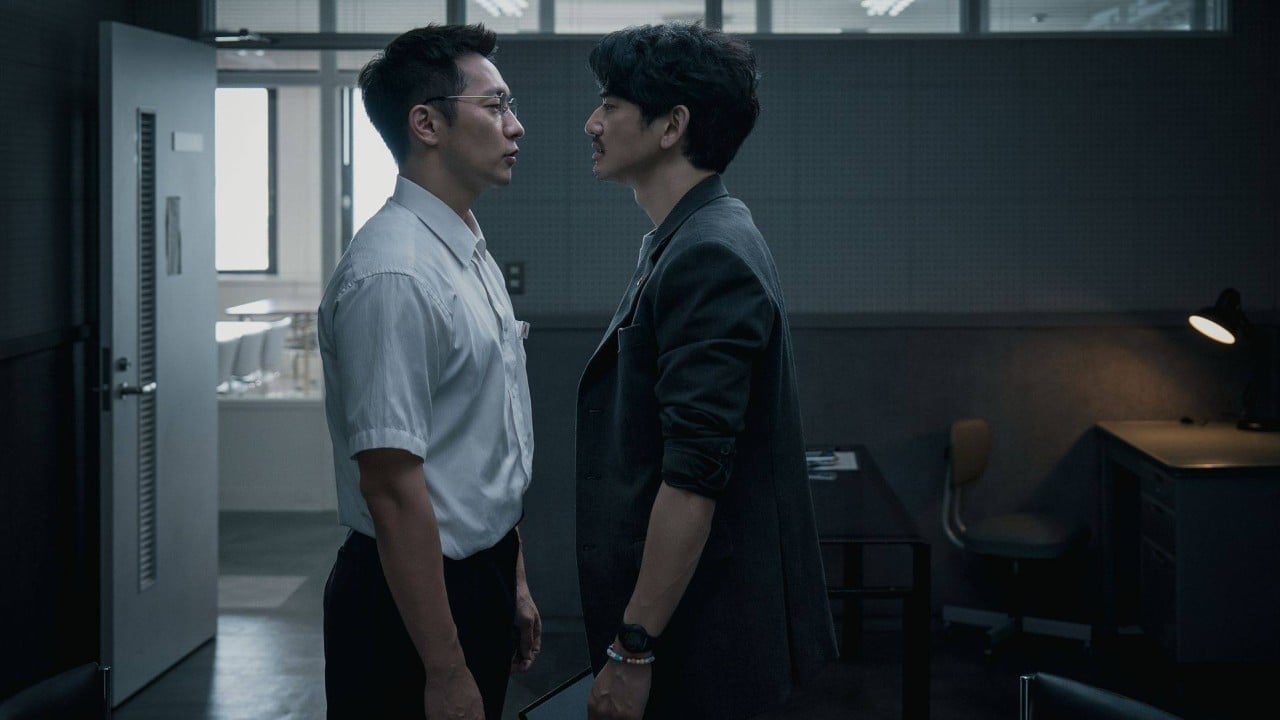
The announcement of Netflix’s upcoming K-drama, “The Blue Road,” featuring Son Suk-ku and Eita Nagayama as rival detectives, marks more than just another transnational crime thriller. The series, which sees its protagonists pursue a serial killer across South Korea and Japan, highlights an ongoing evolution in how regional narratives are constructed and consumed.
Set against the backdrop of the 2002 World Cup, an event notably co-hosted by the two nations, the K-drama draws its origins from a 2002 manhwa. This comic was itself a cross-border collaboration steered by Takashi Nagasaki, also known as Keishi Edogawa, and Gaya Kwon. This layering of transnational origins – a writer collaborating with an artist from different nations, then adapted into a K-drama for a global streaming platform – suggests a complex interplay of cultural production.
On the surface, “The Blue Road” presents a compelling murder mystery with a high-profile cast. Son Suk-ku and Eita Nagayama are named as the lead cast, teaming up to hunt a "viciously creative serial killer" whose crimes span South Korea and Japan. This premise, a classic 'buddy cop' dynamic twisted by rivalry, offers a readily accessible entry point for viewers. However, the choice of the 2002 World Cup as a historical anchor for a crime spree across these two countries is a deliberate narrative decision, one that invites contemplation beyond simple entertainment.
The 2002 World Cup represented a moment of perceived rapprochement, a shared spectacle after decades of complex historical relations. Framing a story of rivalry and crime against this specific backdrop, where the detectives themselves are rivals, taps into a collective memory of both cooperation and underlying tension. This is not merely a setting; it functions as a cultural signal, suggesting that even in moments of apparent unity, unresolved historical undercurrents persist.
While the source describes the series as "much more than a straightforward murder mystery," it avoids elaborating on what that 'much more' entails. This implies that the deeper layers are left for the audience to discern, perhaps through the narrative’s unfolding of character interactions or its thematic exploration of justice and reconciliation. The very act of adapting a cross-border comic into a K-drama for a streaming giant like Netflix speaks to a commercial calculation, undoubtedly, but it also reflects a growing appetite for stories that transcend national borders while acknowledging their specific cultural textures.
The involvement of two prominent actors, Son Suk-ku from South Korea and Eita Nagayama from Japan, further solidifies the series’ cross-cultural appeal. Their joint casting is a deliberate act of bridging, designed to attract audiences from both countries and beyond. It suggests a recognition that certain narratives gain strength, and perhaps greater authenticity, when they actively involve talent from the regions they depict.
The series’ focus on a "viciously creative serial killer" and "rival detectives" could be seen as a familiar trope, a safe commercial bet for a streaming platform. However, the repeated emphasis on the transnational nature of the crime and its origins in a cross-border manhwa, all tied to the symbolic year of 2002, hints at a narrative that may subtly interrogate the complexities of relations between South Korea and Japan, not with didacticism, but through the lens of popular culture. The unresolved tension here is not just about catching a killer, but about how two nations, linked by geography and history, navigate shared challenges and lingering differences.
Sources
Newsletter
Pacific Daily
A curated briefing from Thailand, Asia-Pacific and the world.