The Matamoros Troop Surge Exposes the Strategic Trap of Reactive Border Enforcement
Deploying 450 soldiers after cartel retaliations reveals the persistent friction between high-profile interdiction and transport corridor security.
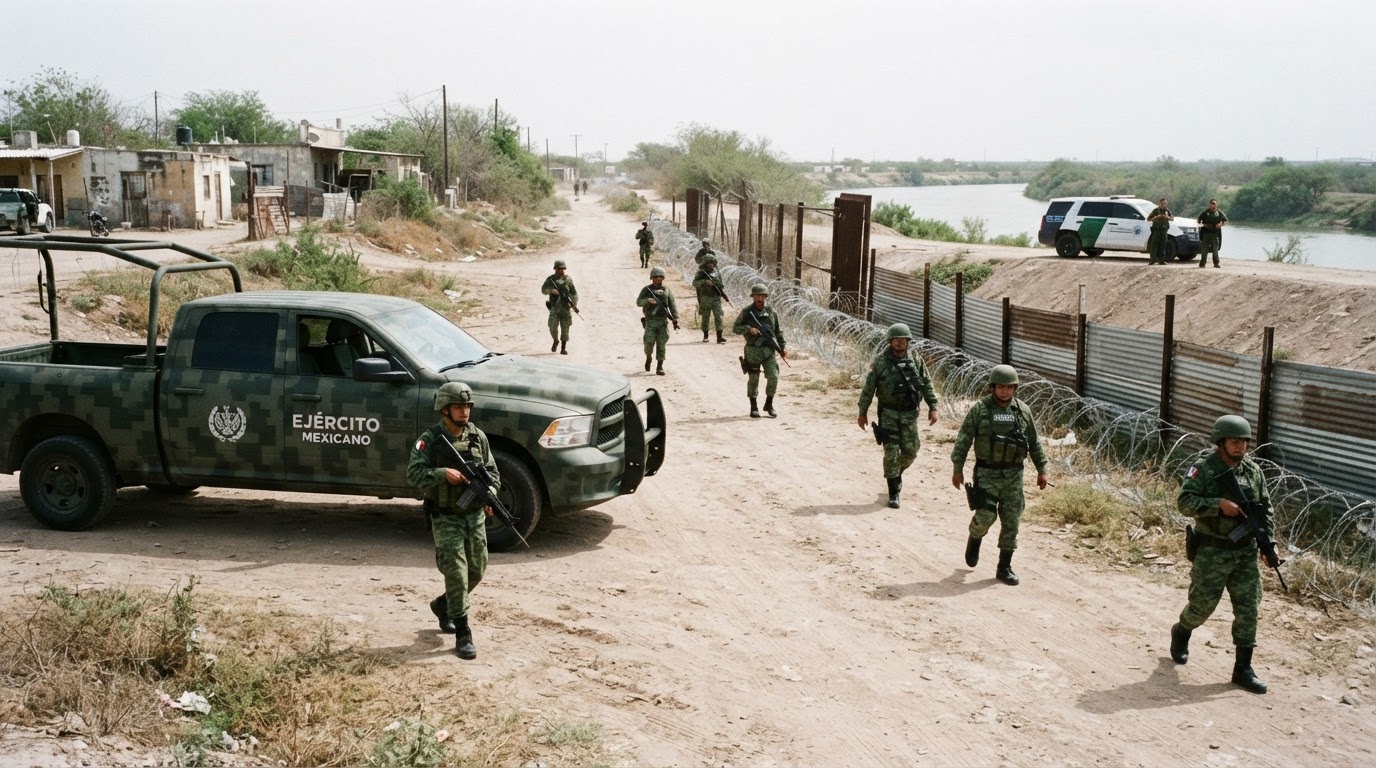
The dispatch of 450 troops to Matamoros confirms how rapidly targeted interdiction produces immediate systemic disruption along crucial trading corridors. Following an operation on Thursday by Fuerzas Especiales and national security personnel that detained two individuals, including suspected leader Axel Alfredo, retaliatory shootouts and road blockades paralyzed the border hub. Six people lost their lives during the weekend violence, among them a seven-year-old child holding United States citizenship. Mexico's federal Security Cabinet announced that the armed surge, accompanied by two military helicopters, carries the aim of preventing criminal activity and ensuring the peace and safety of Tamaulipas families. That justification reflects an operational model that trade partners throughout the Pacific Rim know well: an enforcement cycle that prioritises dramatic leadership decapitation while leaving the physical nodes of regional commerce exposed to violent reprisal.
State interdiction in key border jurisdictions has long operated under this structural contradiction. When central authorities eliminate or seize reputed criminal figures, rival and subordinate factions answer not by retreating, but by choking transit arteries. The tactics deployed in Tamaulipas demonstrate how non-state actors exploit logistical chokepoints to raise the cost of state intervention. By setting coordinated blockades across municipal boundaries, these syndicates immediately disrupt civilian movement and commercial supply chains, knowing that governments measure success through high-value arrests while local economies absorb the ensuing shock.
Tactical Enforcement and Transit Friction
Security officials argue that surging 450 soldiers and tactical aviation assets into Matamoros establishes deterrence and restores territorial order. Concentrated military presence can clear physical barriers and suppress open gunfire in urban centres. However, reactive stabilization carries acute hazards that often deepen local distrust.
The deployment has the aim of preventing criminal activity and ensuring the peace and safety of Tamaulipas families.
Allegations raised by the bereaved family of the young American casualty contend that fatal fire originated from a state helicopter during the operation. This claim underlines the severe operational risk of deploying heavy aerial and ground firepower into densely populated transit zones. When kinetic operations produce civilian casualties, the political legitimacy of security policy erodes on both sides of an international border. Cross-border friction inevitably escalates when foreign nationals are killed, turning a domestic enforcement clash into a bilateral liability that complicates diplomatic and trade relations.
Systemic Vulnerability Across Pacific Gateways
For commercial planners and policy analysts across Pacific Rim supply networks, the events in Tamaulipas illustrate the enduring weakness of reactive policing. Cross-border supply networks depend on absolute predictability at customs gates and perimeter highways. When state strategy oscillates between sudden arrests and emergency military mobilizations, industrial logistics become collateral damage. Manufacturing corridors cannot maintain efficient schedules when transit access depends on tactical troop deployments to clear highway blockades after each enforcement phase.
Maritime and overland hubs in Southeast Asia encounter parallel dynamics whenever anti-trafficking crackdowns target entrenched illicit organizations along peripheral trade corridors without first hardening local civilian infrastructure. The consequence is identical: high-profile interdictions trigger fragmented territorial conflict, leading to civilian casualties and defensive paralysis along vital transport arteries. Sustainable stability demands an administrative apparatus that protects transport routes and civic infrastructure prior to launching disruptive enforcement strikes. Until state security planning reconciles the operational drive for arrests with the imperative to secure vital economic arteries, the dispatch of hundreds of soldiers to pacify contested perimeter towns will remain an emergency patch on an unresolved structural fracture.
Sources
Newsletter
Pacific Daily
A curated briefing from Thailand, Asia-Pacific and the world.