Singapore Clears the Air While Structural Regional Exposures Persist
A divergence between real-time PM2.5 numbers and cumulative PSI metrics reveals the friction between economic output and cross-border environmental exposure.
SINGAPORE
Official environmental monitoring recorded a drop in airborne particulate levels across Singapore on Thursday, October 22, 2026, even as trailing metrics kept the western sector under an unhealthy rating. Hourly PM2.5 concentrations fell within the normal range across all five municipal zones by 8am, moving between 22 and 42. Midnight had marked the western district joining the other four sectors inside that normal band. Even so, the 24-hour Pollutant Standards Index told a contrasting story. Western Singapore logged a 24-hour PSI of 108 at 8am, remaining in the unhealthy category while the remaining four sectors recorded moderate figures between 74 and 95.
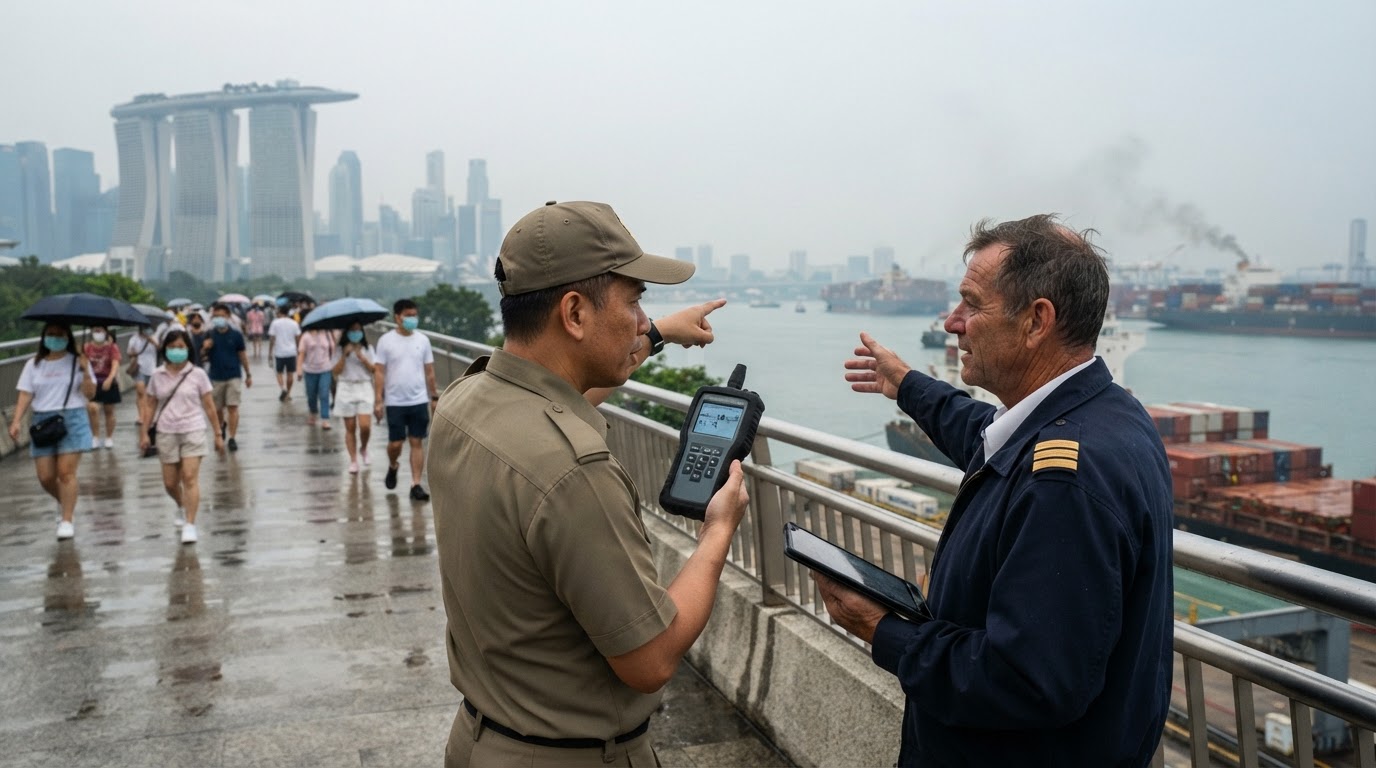
That divergence illustrates the analytical gap between immediate dispersion and accumulated physical load. Visual records showed haze shrouding commercial towers across the central business district as viewed from Elgin Bridge at 1.10pm on October 21. When upper-level winds shift, particulate counts can swing rapidly, presenting an apparent recovery on hourly monitors. Cumulative exposure metrics adjust far more deliberately. A single district recording a 108 index reading while neighbouring zones sit between 74 and 95 indicates how localized industrial concentration likely compounds regional smoke transfers.
The Geography of Industrial Friction
Singapore operates as a high-density capital hub where commercial headquarters and heavy processing zones sit within kilometers of each other. Western Singapore accommodates heavy manufacturing, logistics nodes, and petrochemical refining. Because baseline output in that quadrant generates elevated background concentrations, incoming atmospheric plumes appear to push local monitors past statutory thresholds earlier and sustain elevated indices longer. Hourly readings falling to 42 demonstrate that particulate inflow abated. The persistent 108 24-hour reading demonstrates that industrial operating zones cannot immediately clear the recorded impact of recent exposure.
Cross-border haze imposes direct operational friction, turning atmospheric stability into an unhedged industrial risk.
Commercial operations across Southeast Asia frequently price environmental risks as episodic external shocks rather than structural overhead. Factory shifts, maritime docking schedules, and construction activity calibrate their safety thresholds against published indexes. When a jurisdiction registers an unhealthy reading of 108 in its primary logistics corridor, statutory compliance rules trigger indoor work rotations and protective health advisories. Protocols mandate adjustments, meaning operations face real logistical friction even as office districts nearby observe moderate figures between 74 and 95.
The Limit of Sovereign Air Quality Defences
Advocates of real-time monitoring argue that hourly PM2.5 indicators provide sufficient guidance for commercial continuity. By relying on hourly spans between 22 and 42, industrial managers can authorize outdoor labour and transport movements without waiting for trailing twenty-four-hour calculations. That interpretation captures operational flexibility, but it understates statutory liability. Regulatory obligations for worker welfare and occupational health frequently attach to 24-hour PSI bands rather than transient hourly dips.
Capital investment across the region seeks predictable operating environments, yet air quality remains subject to cross-border fires and meteorological luck. Advanced municipal tracking and prompt data publication cannot change wind corridors. Singapore maintains rigorous domestic enforcement, yet its sovereign borders cannot filter cross-boundary smoke drift. When regional land-clearing patterns interact with shifting seasonal monsoons, external costs land directly on municipal balance sheets and corporate productivity.
Resolving this structural vulnerability ultimately appears to hinge on whether regional environmental agreements can establish enforceable economic disincentives for upstream polluters, as islandwide hourly PM2.5 normalization provides temporary operational relief without altering baseline cross-border exposure. Until those institutional mechanisms materialize, regional supply networks will continue to absorb the financial friction of sudden atmospheric disruptions.
Sources
Newsletter
Pacific Daily
A curated briefing from Thailand, Asia-Pacific and the world.