Personnel Attrition Tests New Zealand in the Nations Championship Rematch
The absence of Jordan and uncertainty around Taylor expose structural vulnerabilities ahead of England's return fixture at Twickenham
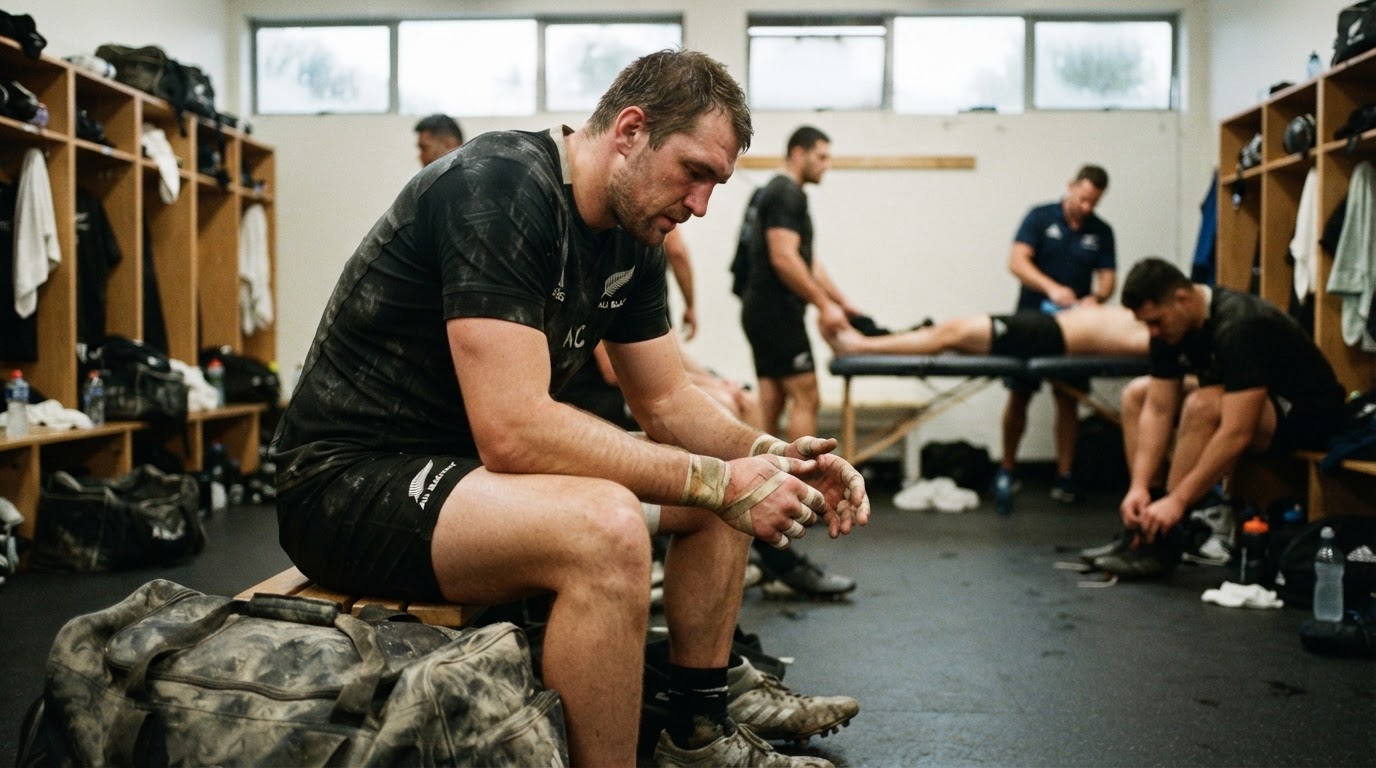
International sporting dominance rests on operational redundancy rather than ceremonial momentum. When New Zealand contest England at Allianz Stadium in Twickenham, the fixture tests institutional endurance against tactical execution. The confirmation that New Zealand lose Will Jordan for the rematch, coupled with doubts surrounding Codie Taylor, signals a tangible reduction in competitive capability rather than a routine squad rotation.
Historical parity between northern and southern hemisphere rugby union systems has frequently turned on minor margins of personnel retention. Following earlier November action where Henry Slade contested Jordan at Twickenham, the tactical framework established by both squads faced immediate strain. Preparation cycles conducted across London, including sessions at the Lensbury Hotel, demonstrated the precarious balance national selections maintain during concentrated autumn scheduling. When primary contributors exit the roster between sequential fixtures, tactical continuity breaks down, requiring coaching structures to improvise under rigid performance criteria.
The Anatomy of Roster Depletion
Removing proven personnel alters how opposition defensive systems allocate resources. Jordan provided horizontal threat and backline spacing, attributes visible during his engagement against Slade on November 21. His subsequent unavailability shifts offensive pressure toward alternative runners who lack comparable tactical integration within the current Nations Championship format.
Simultaneously, the physical demands of forward competition magnify the potential absence of Taylor. The hooker's participation in the November 20 captain's run at the Lensbury Hotel underscored his importance to set-piece stability. Forward packs rely on disciplined execution at the breakdown, and missing experienced specialists against an English side operating on home ground limits territory control. Without established personnel anchoring these phases, strategic execution becomes reactive.
Physical attrition in international rugby union strips away technical ambition, reducing elite competition to a severe test of squad depth.
Strategic counterarguments suggest that elite sporting institutions possess sufficient structural depth to mitigate individual absences. In modern professional systems, secondary selections are trained within identical structural frameworks, supposedly allowing replacement players to step into tactical assignments without degrading team execution. Yet this assumption overlooks the gap between technical preparation and high-leverage execution in hostile environments like Twickenham.
Competitive Realities Across Hemispheres
For Pacific sporting governance, cross-hemisphere tours present logistical and physical strains that statistical projections routinely underestimate. Extended campaigns in Britain place heavy burdens on player conditioning, and late November matches inevitably become contests of physical conservation. When senior figures are removed from the team sheet, the systemic margin for error narrows immediately.
The broader structural consequence extends beyond the immediate scoreboard. As the Nations Championship tests national capabilities, the inability to field an unchanged, optimal lineup limits strategic consistency across multi-week campaigns. England enter the rematch aware that defensive adjustments become simpler when primary attacking vectors are sidelined.
Whether New Zealand can offset these specific personnel losses remains constrained by the finite supply of veteran test performers available in camp. Tactical adjustments can mask individual deficits for periods, but they rarely substitute for the spatial awareness and set-piece authority of established regulars. As kickoff approaches at Twickenham, the unresolved challenge lies in absorbing sudden attritional losses before an opponent structured to exploit them.
Sources
Newsletter
Pacific Daily
A curated briefing from Thailand, Asia-Pacific and the world.