Malaysia's East Coast Rail Link Tests Whether a Railway Can Rebalance a Nation
The ECRL promises to connect Kelantan, Terengganu and Pahang to the Klang Valley. The harder task is making sure the line changes lives on the east coast.
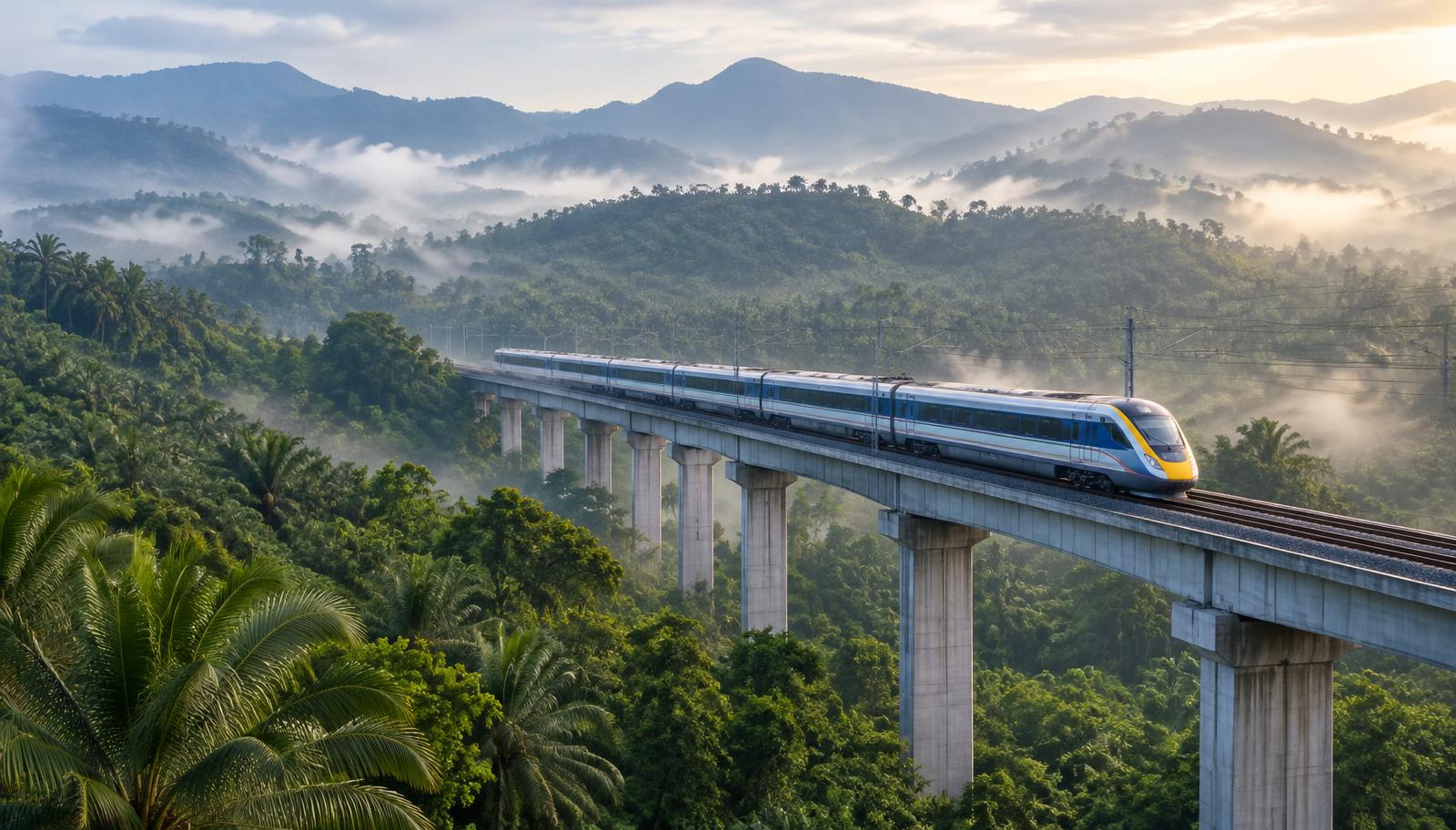
KUANTAN — For decades, Malaysia's economic map has tilted west. The Klang Valley, Penang and Johor have drawn factories, ports and talent, while the east coast states of Kelantan, Terengganu and Pahang have remained more rural, more dependent on oil, fishing and plantations, and less connected. The East Coast Rail Link, a long electrified line running from the Thai border region to Port Klang, is the most ambitious attempt yet to change that geography.
The project, built with Chinese partners under China's Belt and Road framework, has had a turbulent history. It was suspended and renegotiated after a change of government in 2018, with a revised route and lower cost. Construction has since advanced through difficult terrain, including tunnels through the Titiwangsa range that separates the east coast from the Klang Valley.
Once running, the line is expected to cut journey times between Kuala Lumpur and the east coast dramatically and to carry both passengers and freight. For travellers that means weekend trips to Cherating, Kuala Terengganu or Kota Bharu without long highway drives. For businesses it means moving goods between Kuantan Port and Port Klang on the Strait of Malacca by rail.
Railway or economic corridor?
Infrastructure alone rarely transforms a region. Studies of high-capacity rail around the world show that benefits depend on what happens around stations: industrial parks, logistics hubs, housing, tourism and local services. If those are missing, a new line can simply make it easier for young people to leave.
State governments on the east coast are therefore planning around the stations, hoping to attract manufacturing, halal food processing, renewable energy and tourism. Kuantan, with its port and industrial park, is positioned as a key node. Smaller towns along the route will want feeder buses, roads and investment so that the railway does not become a corridor passed through rather than lived on.
Debt, value and politics
Critics have focused on cost and debt, given the project's financing arrangements. Supporters argue that the renegotiated deal improved terms and that long-term economic returns should be measured over decades, not budget cycles. Both sides agree that ridership and freight volumes will decide whether the line pays its way.
There are environmental questions too. The route passes through forest and near sensitive habitats, and conservation groups have pressed for wildlife crossings and careful management of construction impacts.
What makes the ECRL significant beyond Malaysia is what it represents for Southeast Asia: a region betting heavily on rail, from Laos to Indonesia, to bind economies together. If the line delivers real opportunity to the east coast, it will strengthen the case. If it becomes a fast route away, it will be a warning that steel and concrete are only the first part of development.
Sources
Newsletter
Pacific Daily
A curated briefing from Thailand, Asia-Pacific and the world.