Forensic Enforcement Exposes the Limits of Coastal Wildlife Protection
A repeat conviction in Northland demonstrates that legal penalties cannot compensate for structural failures in domestic animal containment along vulnerable shores.
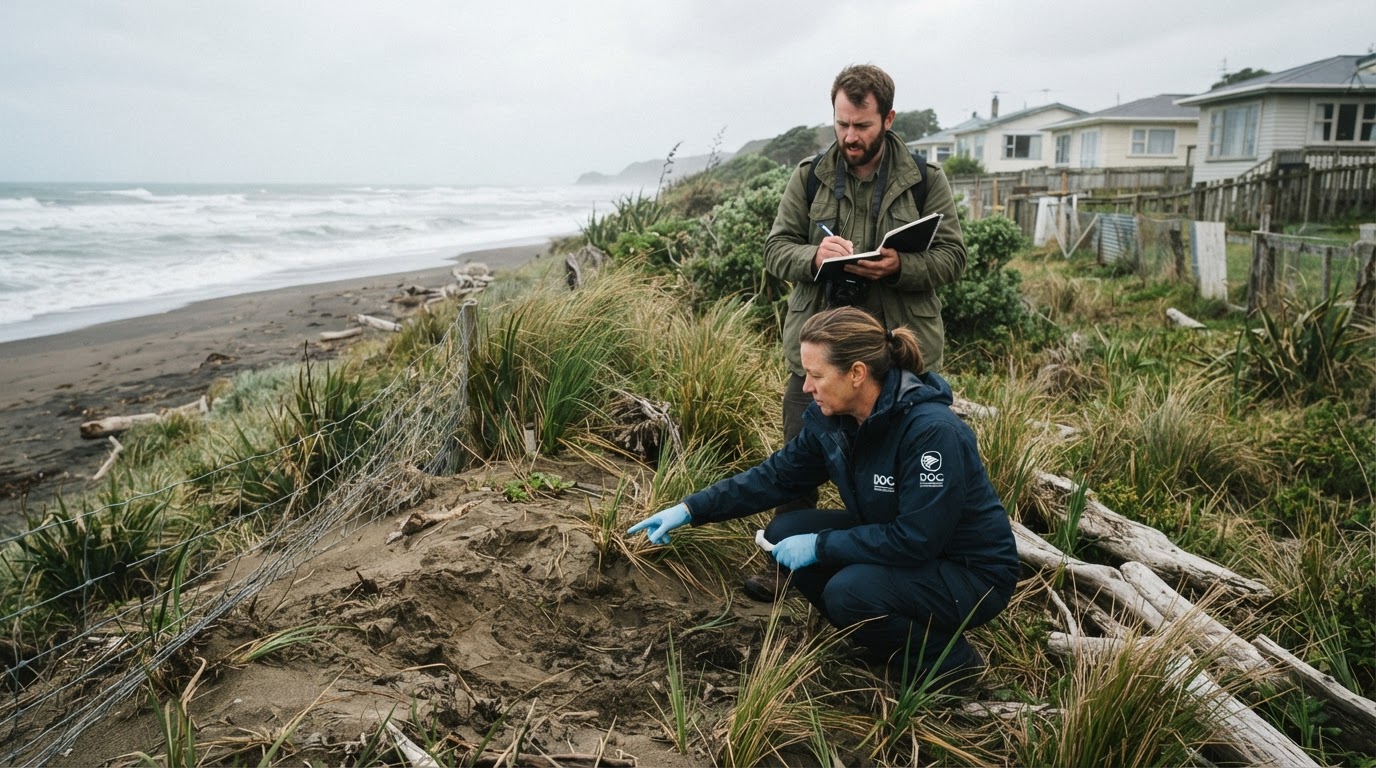
Environmental statutes punish harm after an attack occurs, yet vulnerable coastal habitats depend entirely on prevention before any breach takes place. When fifty-five-year-old Rose Paraha appeared in the Kaikohe District Court to admit a charge laid by the Department of Conservation, the legal record marked an admission of culpability. Her female pitbull-cross, Heaven, killed four kiwi around 27 December at Wharengaere Bay on the Purerua Peninsula. Saliva recovered from the dead birds established the forensic link. For Paraha, the admission represents a second conviction for owning a dog that killed wildlife, following a 2019 guilty plea after her dog caused the deaths of six kiwi.
Judicial mechanisms handle these maulings as episodic failures of private supervision. The recurrent destruction within the same coastal pocket in the northern Bay of Islands reveals a wider disconnect between statutory enforcement and ecological reality. Conservation agencies commit technical resources to biological surveys and DNA testing, producing precise post-incident evidence. Yet this investigative rigor functions only after local breeding stock has been destroyed.
The Limits of Post-Mortem Deterrence
Statutory penalties assume that prior convictions modify human behavior, but domestic animal containment along rural fringes frequently resists judicial signals. Between the 2019 plea and the December killings, ten kiwi died across two separate events connected to a single owner. Public authorities expended institutional resources documenting each loss and securing formal legal accountability. That administrative success produced no security for the flightless birds.
Recurring maulings at Wharengaere Bay confirm that courtroom sanctions provide no physical barrier for vulnerable wildlife along fragmented shorelines.
Defenders of existing wildlife legislation maintain that formal court convictions reinforce baseline public accountability. Clear charges signal that uncontrolled animals carry tangible legal consequences. That argument assumes a regulatory framework can repair what it merely tallies. On peripheral land like the Purerua Peninsula, where residential properties border coastal reserves, an uncontrolled domestic animal crosses property lines in minutes. Deterrence constructed through retrospective court appearances arrives far too late to halt that physical reality.
Structural Gaps on Island Edges
Across the Pacific, biodiversity governance encounters this persistent friction between private boundaries and adjoining ecological habitats. Conservation frameworks establish ambitious protection targets and finance intensive pest suppression programs, while the routine management of domestic animals remains dependent on voluntary compliance behind private gates. Regulatory policy falters whenever public agencies depend on retrospective punishment rather than spatial separation.
Wharengaere Bay has remained a known hotspot for kiwi maulings because conservation jurisdiction ends where private title begins. The Department of Conservation holds statutory responsibility for native wildlife, but field wardens cannot maintain continuous oversight of every domestic animal housed along adjacent boundaries. Forensic precision in matching canine saliva cannot substitute for physical containment corridors around fragile habitats.
Administrative closure in Kaikohe addresses the formal charges without altering the spatial conditions that enabled the attack. Island conservation policy remains suspended between exacting forensic accountability after the fact and an inability to secure the coastal interface before native species are lost.
Sources
Newsletter
Pacific Daily
A curated briefing from Thailand, Asia-Pacific and the world.