FIFA Term Mandates Face an Enforcement Vacuum Across Member Associations
Miguel Maduro argues Gianni Infantino cannot seek office in 2027, exposing how statutory limits rely on voting federations vulnerable to central patronage.
SINGAPORE
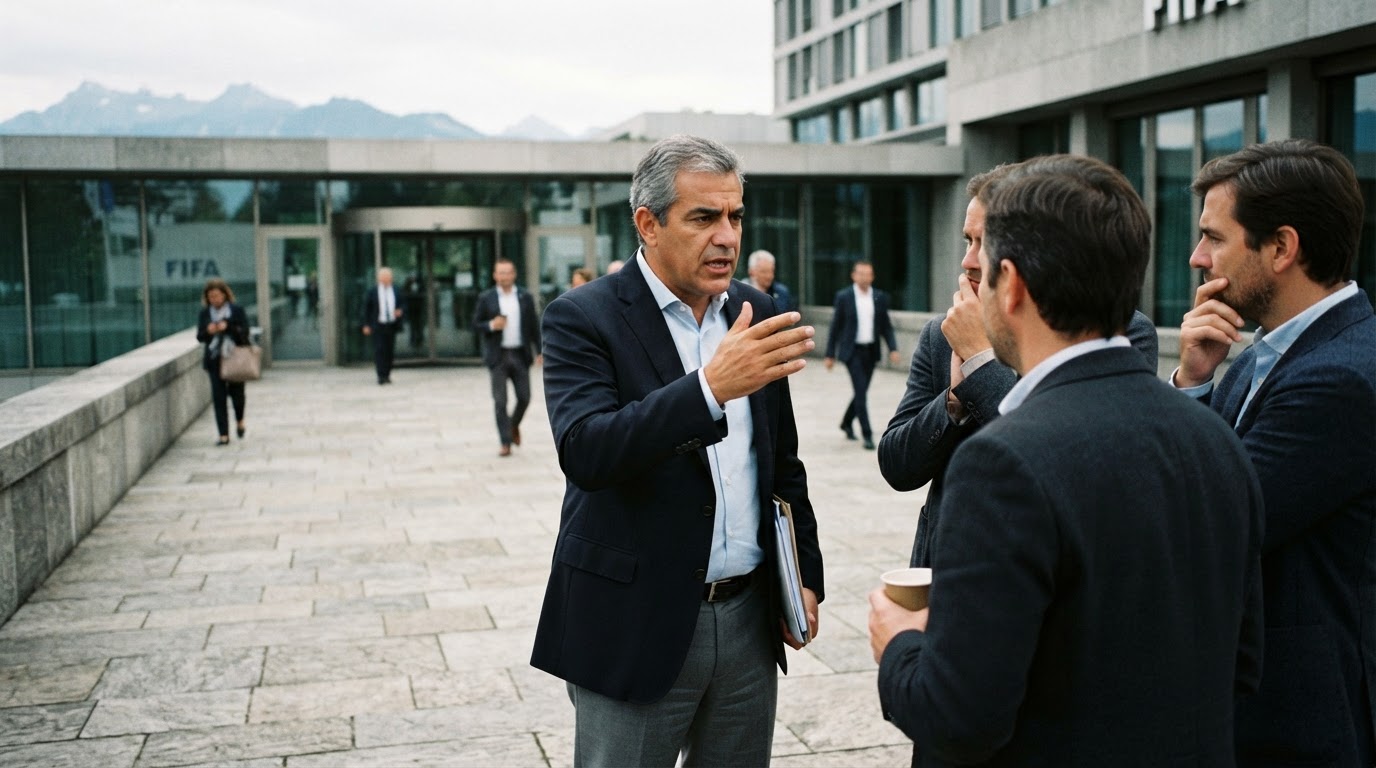
Written rules define the outer boundary of institutional power, but individual federations determine whether that boundary is ever applied. Former head of the FIFA Governance Committee Miguel Maduro stated on Tuesday that Gianni Infantino is ineligible to seek a fourth term as FIFA president in 2027 under the organisation's governing statutes. That assessment coincided with formal correspondence from human rights organisation FairSquare urging member associations to declare the incumbent ineligible. The dispute tests whether the three-term ceiling enacted during structural reforms remains operational when an executive leadership chooses to interpret its own continuity.
Infantino appeared before regional delegates at the Asian Football Confederation extraordinary congress in Tokyo, Japan, on October 23, 2026, demonstrating consolidated administrative backing weeks before Maduro's declaration. For Asian federations, challenging the interpretation of presidential eligibility requires disputing an administration that controls developmental disbursements and tournament designations. Questioning statutory compliance entails tangible administrative exposure that national delegations routinely avoid.
The accounting of tenure
The dispute rests on how the organisation calculates presidential terms following the departure of Sepp Blatter. FIFA introduced a strict three-term cap to prevent executive entrenchment, establishing a structural mechanism intended to mandate leadership turnover. Infantino assumed office in 2016 to complete Blatter's vacated mandate, subsequent to which he secured re-election in 2019 and 2022. Maduro and FairSquare contend that these successive cycles constitute three completed terms under the text of the statutes, foreclosing any legal candidacy in 2027.
Institutional leadership, however, treats the arithmetic differently. Supported by interpretations previously endorsed within the FIFA Council, the presidency categorises the initial 2016 election as an uncounted partial term rather than a standard mandate. This legal distinction effectively manufactures additional tenure from an exception, allowing the incumbent to seek an additional cycle through administrative semantics. The resulting division exposes the gap between the original intent of post-Blatter governance standards and their operational application.
Internal institutional resistance has generated documented friction. Senior FIFA official Kevin Lamour exited the organisation following internal criticism of Infantino, demonstrating the administrative cost of executive dissent. European member bodies have registered fractures, with the Scottish FA withdrawing formal support for Infantino over governance concerns. Yet isolated objections within Europe do not alter global voting structures where ballots hold equal arithmetic weight across all regional confederations.
The regional voting calculus
FairSquare has directly urged Asian and global member associations to intervene before the 2027 electoral cycle formalises the Council's interpretation. Individual federations face an uneven equation: an isolated objection risks institutional marginalisation, whereas collective compliance carries no immediate financial penalty. National associations that depend on centralised development funding have little incentive to risk institutional standing over an abstract constitutional principle.
Statutory limits without independent arbitration mechanisms rely entirely on the delegates they were written to discipline. Maduro's public determination confirms that external legal scrutiny views Infantino's potential 2027 candidacy as a breach of governing statutes. The governing bodies that hold the formal authority to disqualify an ineligible candidate remain the exact institutions least positioned to challenge the executive who dispenses their institutional resources.
Sources
Newsletter
Pacific Daily
A curated briefing from Thailand, Asia-Pacific and the world.