Direct Flights and the Fragile Geometry of Island Leisure
As Milan links directly to Cozumel, the bypass of traditional transit hubs tests how insular destinations absorb long-haul surges.
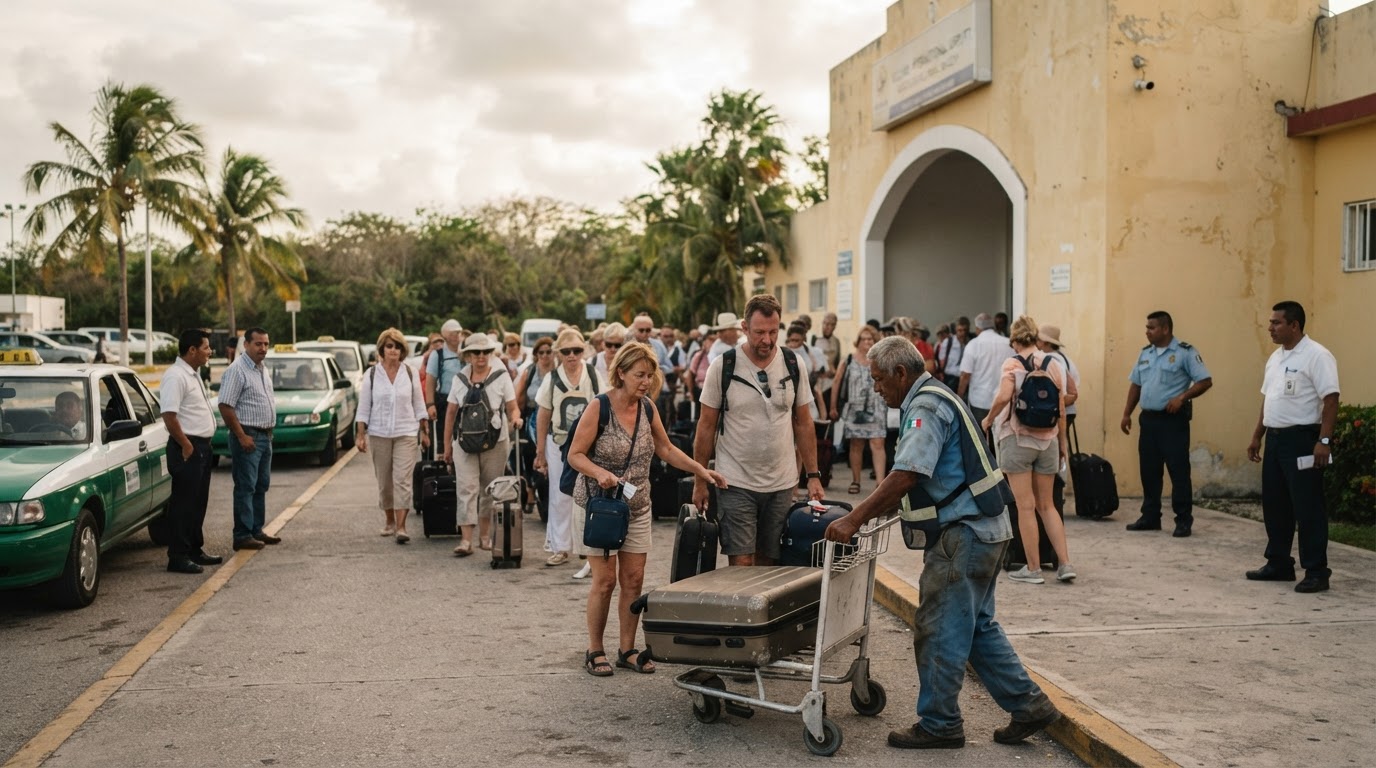
Long runways carved along island peripheries dictate a peculiar geography, obliging isolated territories to organize life around sudden arrivals. When a Boeing 787 Dreamliner descends toward Cozumel on a scheduled Thursday service, the runway receives hundreds of long-haul passengers delivered directly from Milan’s Malpensa Airport. That arrival marks the Mexican Caribbean island’s first direct air connection with Europe, altering an insular economy historically reached through ferry crossings or domestic hops. What an island asks of people who arrive is patience and spatial restraint. Long-range widebody services demand the precise opposite, encouraging instant immersion without the deceleration of intermediate transit.
State officials celebrate direct access as an unalloyed victory for local exposure. Quintana Roo Governor Mara Lezama framed the route operated by Italian carrier Neos, scheduled to commence operations on Dec. 24, as opening doors so travelers can discover the territory known as the Island of the Swallows. The announcement arrived alongside broader network shifts, including three Aeroméxico routes from Mexico City to the United States enabled by lifted American restrictions. Restoring bilateral services between major capitals signals standard administrative recovery. Planting a weekly transatlantic widebody on a single Caribbean airstrip represents a distinct operational gamble.
The Friction of Bypassing Hubs
Traditional travel routes impose structural pacing. Travelers previously filtered through continental gateways like Mexico City International Airport, a transfer rhythm that distributed visitors across multiple transportation layers before dropping them into delicate island ecosystems. Bypassing those inland hubs delivers passengers into provincial infrastructure that must suddenly process hundreds of disembarking passengers in a single afternoon hour. Aviation planners prize non-stop efficiency because direct point-to-point connections bypass hub congestion. For host communities, that calculated efficiency transfers the full burden of immediate reception to the shoreline.
Carriers across global leisure networks are pursuing identical patterns. From United Airlines expanding point-to-point services into regional outposts like Okinawa and Osaka, to Qantas testing extreme endurance corridors between Sydney and London or New York, airlines systematically eliminate intermediate stops. Non-stop convenience commands premium yields. Yet long-range passenger aircraft alter the spatial economics of regional tourism, leaving destination municipalities to absorb sudden concentrations of waste, water usage, and vehicular transit. When long-distance travel becomes frictionless in the air, spatial friction simply relocates to the ground.
The Limits of Island Capacity
Direct long-haul routes inherently treat remote destinations as terminal arrival lounges. A weekly service aboard a widebody jet might represent a small footprint compared with daily transpacific frequencies. However, once an airfield opens direct transatlantic corridors, commercial pressure inevitably mounts to justify terminal handling expansions, extended customs facilities, and widened coastal corridors. The island is no longer a peripheral retreat sheltered by transfer costs. It becomes an integrated station in a European carrier's winter rotation.
Air transport networks expand by promising access without accountability for destination thresholds. Travelers stepping off a Thursday flight from Milan encounter an island navigating the consequences of compressed geography. If provincial infrastructure buckles beneath simultaneous widebody arrivals, the convenience of the non-stop flight ceases to be a triumph. Aviation corridors cannot expand indefinitely without transforming the very shorelines they intend to reveal.
Sources
Newsletter
Pacific Daily
A curated briefing from Thailand, Asia-Pacific and the world.