Why Border Interdictions in Chiang Rai Leave Illicit Supply Intact
A tactical seizure of 261.5 kilogrammes of crystal methamphetamine in Mae Sai exposes the structural limits of frontline interdiction against industrial manufacturing.
SINGAPORE
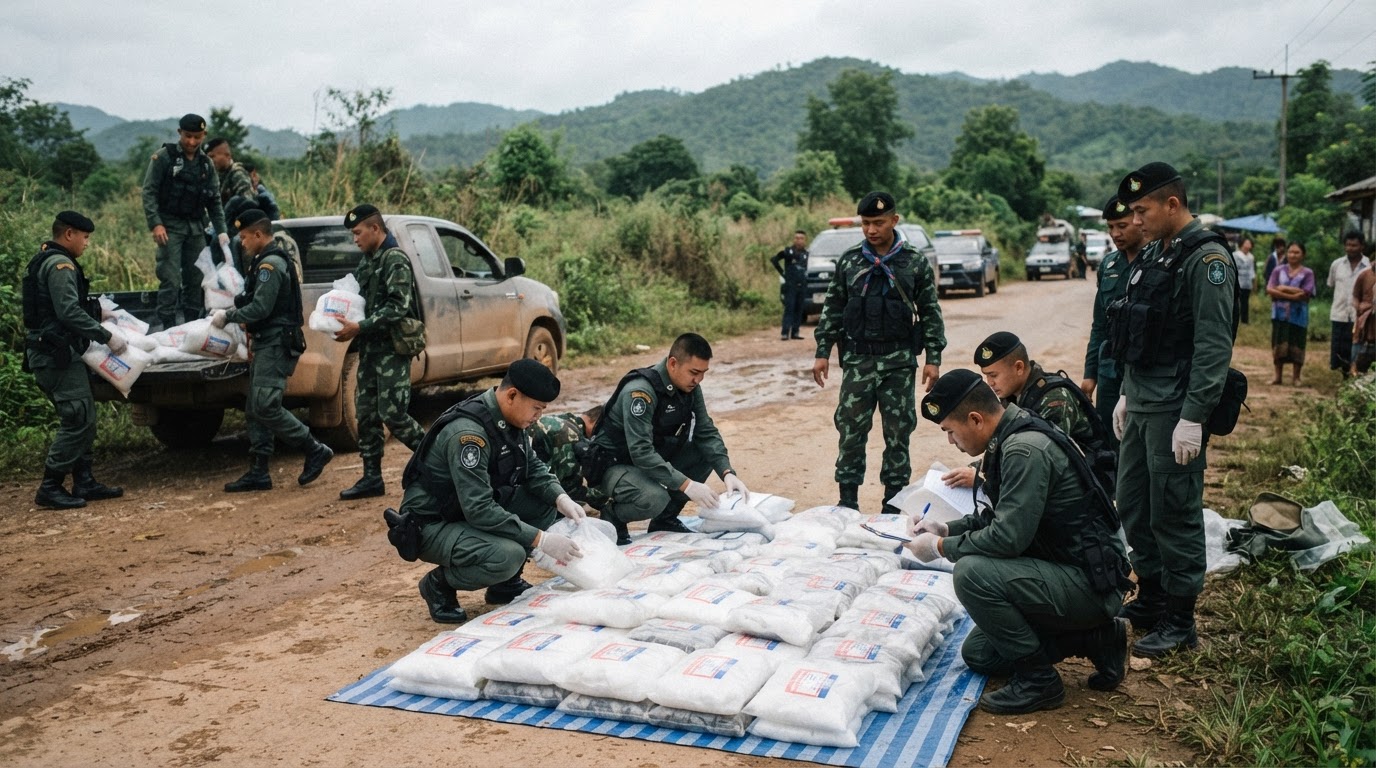
Frontline interdiction does not alter upstream manufacturing capacity. Early on Wednesday, patrolling soldiers from the Chao Tak special unit under the Pha Muang Task Force seized 261.5 kilogrammes of crystal methamphetamine in Mae Sai district of Chiang Rai. The military reported that troops engaged five or six men carrying parcels through a forested area of Srichaiyaphum village in tambon Koh Chang of Mae Sai, recovering the abandoned narcotics following an exchange of gunfire.
Tactically, the engagement represents an unambiguous operational success. Structurally, it demonstrates how perimeter policing is asked to resolve an industrial trade.
When armed couriers attempt to move more than 260 kilogrammes of refined crystal methamphetamine in a single foot march, the weight of the cargo indicates that upstream laboratories are operating at scale. Trafficking syndicates commit shipments of this volume across difficult terrain only when synthesis is sufficiently continuous to treat individual consignments as routine transit exposure. Frontline units secured a dangerous border sector, yet the sheer volume of the confiscated cargo demonstrates that northern logistical pipelines remain active.
Frontline defense personnel absorb severe operational risks along the Chiang Rai boundary. Regional leadership within northern operational commands, including Maj Gen Sathit Waiyanon and Col Suphan Roiphut, maintains intense perimeter patrols to deny territory to armed transport groups. Patrols manage rugged jungle topography under direct ballistic risk. Yet physical border defense operates as a downstream filter. The decisive structural drivers of the trade—cross-border precursor chemical acquisition, industrial processing compounds, and financial settlements—remain beyond the reach of a patrol rifle in Koh Chang of Mae Sai.
Upstream Output and Frontier Friction
Security planners often counter that physical interdiction remains indispensable because it forces commercial attrition onto smuggling syndicates. Frontier engagements compel networks to surrender valuable inventory, write off equipment, and recruit replacement couriers, thereby raising transport costs. Seizing 261.5 kilogrammes certainly prevents that specific consignment from entering wholesale distribution hubs in Bangkok or feeding distribution routes across the wider Asia-Pacific.
Territorial interdiction imposes immediate logistical friction on transit routes without degrading the industrial capacity that finances production.
That reasoning measures transit disruption while disregarding production economics. For synthetic narcotics operations, goods intercepted along the Mae Sai frontier represent calculated transit waste rather than an existential commercial shock. Precursor inputs generate margins wide enough to absorb routine physical seizures at the border. When soldiers from the Chao Tak unit intercept a crossing in Srichaiyaphum, the syndicates adjust transit timing or divert to alternative paths without reducing factory synthesis. Interdiction raises transport friction, but it leaves factory yield intact.
The Enforcement Dilemma
National security policy continues to place an excessive tactical burden on territorial border units while cross-border regulatory gaps remain unaddressed. Institutions in Bangkok rely on task forces such as Pha Muang to display physical enforcement results. These seizures deliver undeniable proof of state vigilance, yet they leave the political economy of regional narcotics production unchanged.
Stemming illicit supply requires moving beyond territorial firefights toward coordinated structural measures against precursor chemical transfers and shadow financial settlements. Interdictions in Mae Sai address the point of physical entry rather than the industrial system that finances it. Until regional policy addresses the industrial networks that supply the raw chemicals and launder the proceeds, border defense will remain a perpetual holding action against an industrial production line that replaces seized cargo before military inventories are completed.
Sources
Newsletter
Pacific Daily
A curated briefing from Thailand, Asia-Pacific and the world.