A Private Arsenal, A Public Concern
The incident in Bang Phlat exposes a recurring tension between private space and public safety in Bangkok.
SINGAPORE
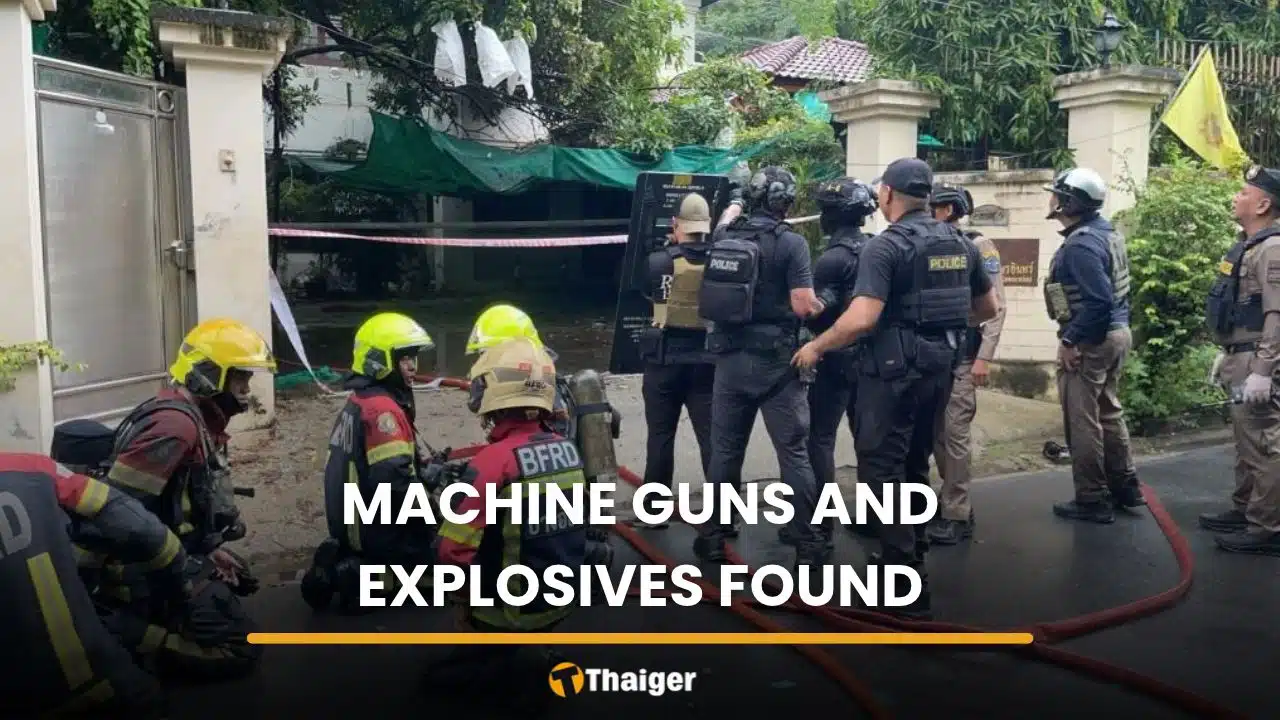
The report from Bang Phlat is precise: a fire, then gunshots, and the discovery of M60 machine guns, ammunition, and suspected explosives within a private residence. The son of a retired army major general, found dead, had allegedly shot at firefighters responding to the blaze. Police and Explosive Ordnance Disposal personnel were called; firefighters withdrew then continued from a safer position. This sequence of events, verified by The Thaiger, highlights not a unique occurrence, but a persistent design flaw in the urban fabric of Bangkok: the precarious boundary between the individual and the collective, particularly when domestic spaces become sites of extreme, unregistered force.
Bangkok's urban planning often prioritizes individual property rights and privacy. Integrated community safety infrastructure receives less emphasis. Residences, even within dense neighborhoods, can operate as isolated fortresses. The architectural implications are clear: high walls, obscured interiors, and a cultural deference to the private sphere mean that activities within these spaces can remain opaque until crisis erupts. In this instance, a domestic fire—a common urban hazard—escalated into a standoff due to an unregistered private arsenal. The structure did not, in a functional sense, 'work' for its inhabitants, nor for the public safety personnel tasked with intervening.
The immediate implication is the vulnerability of public responders. Firefighters, designed to save lives and property, faced direct armed assault. The necessity for police tactical units and EOD personnel underscores a systemic risk. The wider implication, however, extends to broader civic trust. If a private dwelling can house military-grade weaponry without detection, what does this imply for the regulation and oversight of dangerous materials in a metropolis? It suggests a critical gap in enforcement, or a societal blind spot, regarding the potential for such materials to destabilize public order from within seemingly innocuous residential settings.
One might argue this is an isolated incident, an anomaly, or a consequence of mental distress rather than a systemic failure of design or oversight. The individual's actions, the argument goes, were the primary cause, and no amount of urban planning can fully mitigate human unpredictability. Yet, this counterargument overlooks the specific evidence. Two M60 machine guns and suspected explosives were present. These are not common household items. Their existence within a residential property represents a significant regulatory failure, regardless of the individual's state of mind. The building, in this case, became a shell concealing a public threat, its privacy shielding not just an individual, but a significant danger to the surrounding community and the first responders.
This incident is not about one house, but about the unaddressed tension between the inviolability of private space and the imperative of public safety in a sprawling city. It forces a reconsideration of how urban design and regulatory frameworks can better integrate to prevent private spaces from becoming arenas of public peril. The constraint that remains unresolved is how to balance the deep-seated right to privacy with the equally fundamental right to collective security, particularly when the tools of violence are so readily available, yet so deeply hidden.
Sources
Newsletter
Pacific Daily
A curated briefing from Thailand, Asia-Pacific and the world.