Where Is Vietnam’s Elite After 1975?
Vietnam’s post-1975 elite can be found at home and abroad, distinguished by their ability, integrity and lasting contributions to society—not simply by wealth, status or fame.
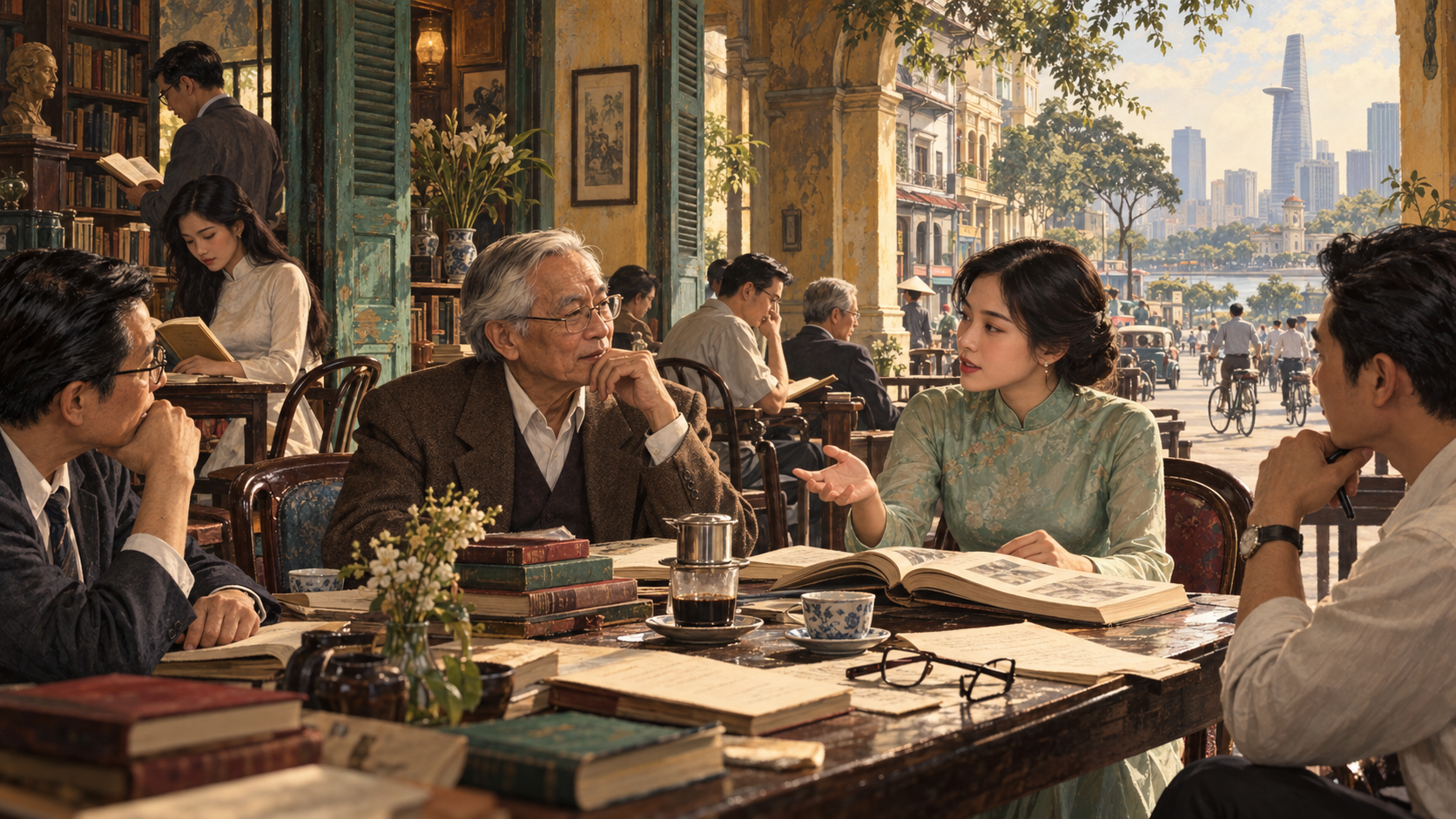
Where Is Vietnam’s Elite After 1975?
At an expensive dinner, wealth is easy to spot. The watch, the seating arrangement, the practiced familiarity with the wine list. Power announces itself through the people waiting to shake someone’s hand. Celebrity draws the cameras.
Distinction is harder to identify.
Money, office and visibility can establish a person’s standing. None, on its own, tells us whether that person has the judgment, cultural depth or record of contribution to deserve it.
More than half a century after 1975, asking where Vietnam’s elite can be found raises a larger question: What, exactly, earns someone that designation?
The word needs a working definition. Here, it refers to people whose exceptional abilities produce lasting value, and who exercise their influence responsibly. Wealth may be part of that picture. So may intellectual achievement or public authority. But the case must rest on what someone has accomplished—and what those accomplishments make possible for others.
The end of the war in 1975 marked the beginning of a new political and social order. Migration carried many Vietnamese abroad. UNHCR records the arrival of the first Vietnamese boat refugees in Malaysia in May of that year. Those departures involved people from different backgrounds, occupations and circumstances. They cannot be treated as a single class of intellectuals or professionals.
Nor does their departure establish that the country’s talent went with them.
That assumption turns a complicated history into a hierarchy of human worth. Those who left had to rebuild their lives. Those who stayed had to navigate the demands of a postwar society. Their choices deserve to be understood in context. An address, whether in California or Hanoi, offers little evidence of a person’s ability, integrity or contribution.
A serious account must also resist nostalgia. The pre-1975 world cannot simply be imagined as a lost age of refinement, any more than later prosperity can be accepted as proof of progress in every sphere. Each generation deserves examination on its own record. Family pedigree is evidence of inheritance; achievement requires a separate argument.
The economic reforms launched under Đổi Mới in 1986 changed the landscape of opportunity again. The World Bank credits those reforms, together with favorable global conditions, with helping transform Vietnam from one of the world’s poorest countries into a middle-income economy within a generation. Markets opened new avenues for enterprise, accumulation and social mobility.
Economic success brought a question that remains essential: How should private wealth translate into public standing?
A business that creates productive jobs, improves its industry and honors its obligations gives society reasons to respect its founders. A fortune alone leaves much unanswered. How was it made? What did it build? Who benefited? Who absorbed the costs?
These are questions about the quality of success, and they belong in any assessment of an elite.
The distinction becomes especially important in lifestyle culture, where status can be packaged and sold. A residence, a school, a vacation or a private club can offer entry into a world advertised as exclusive. The purchase supplies the setting and its social signals. It may also supply the flattering suggestion that the customer has joined a superior class.
The transaction proves purchasing power. Everything else remains to be established.
There is nothing objectionable about enjoying the rewards of work. Beautiful homes, good food and well-made clothes can enrich a life. Trouble begins when taste becomes a shortcut for evaluating character.
A designer bag tells us something about a purchase. It tells us very little about how its owner treats an employee. A handsome house reveals resources and preferences. It does not establish whether the person inside respects the neighborhood beyond the gate.
The substance of a life emerges in less photogenic decisions: paying people fairly, keeping a difficult promise, accepting criticism, correcting an error when silence would be easier.
Such habits shape the relationships on which a society depends. They also reveal what influential people teach through example. Someone who makes accumulation look desirable may be an effective promoter of consumption. Leadership requires a broader contribution.
Vietnamese distinction also exists beyond the country’s borders, and its value can travel back through research, teaching, investment and collaboration. The ICISE center in Quy Nhon, initiated by physicist Trần Thanh Vân and opened in 2013, offers a concrete example: an international scientific network taking institutional form in Vietnam.
Its significance lies in the opportunities that connection creates. Prestige acquires substance when other people can put it to use.
Within Vietnam, the search should extend to people whose work rarely attracts a camera: physicians who maintain professional standards under pressure; teachers who develop independent judgment; engineers who solve difficult problems; business owners who invest beyond the next quarter.
Their occupations do not automatically qualify them as an elite. Their work provides a place to look. Ability can be examined there through results, professional conduct and the confidence of people who depend on them.
Recognizing such people also requires institutions capable of giving them room to work.
Transparent selection, credible evaluation and the freedom to question weak decisions matter. If competence repeatedly loses to access, an organization teaches its members to cultivate connections before expertise. When capable people withdraw or leave, their departure should prompt scrutiny of the conditions that made their contribution difficult.
So where is Vietnam’s elite after 1975?
Across borders, inside major institutions and in demanding work performed without an audience. Some possess wealth and authority. Others exercise influence through the standards they maintain and the opportunities they create.
The useful question is who deserves recognition—and on what evidence. Who produces lasting value? Who raises expectations? Whose success expands the possibilities available to someone else?
Look only in the country’s most expensive rooms, and privilege will be easy to find. The people worth following may require a closer look.
Newsletter
Pacific Daily
A curated briefing from Thailand, Asia-Pacific and the world.