Vietnam's Stated Policy Focus: Continuity Amidst Regional Economic Pressures
While Hanoi emphasizes innovation, regional markets will observe how this translates into practical economic shifts, particularly concerning its engagement with established industrial players.
SINGAPORE
Vietnam's Party General Secretary and President To Lam has recently articulated the country's intent to contribute to peace, development, and international cooperation, while advancing a new development model. This model, as described by To Lam, prioritizes science, technology, innovation, and high-quality human resources. Such pronouncements from Hanoi frequently underscore a consistent national strategic direction.
Historically, Vietnam has navigated complex geopolitical and economic landscapes by emphasizing self-reliance while selectively engaging with international partners. The push towards a 'new development model' is not an abrupt pivot, but rather an evolution of previous stated objectives. For instance, Prime Minister Le Minh Hung, elected earlier this year, also outlined governmental priorities that align with general economic advancement. The current leadership's emphasis on innovation and high-quality human resources represents a targeted refinement within this broader historical trajectory, acknowledging the demands of a globalized economy. This emphasis is also reflected in corporate initiatives, such as Carlsberg Vietnam's roadmap for women's leadership, suggesting a broader internal focus on human capital development.
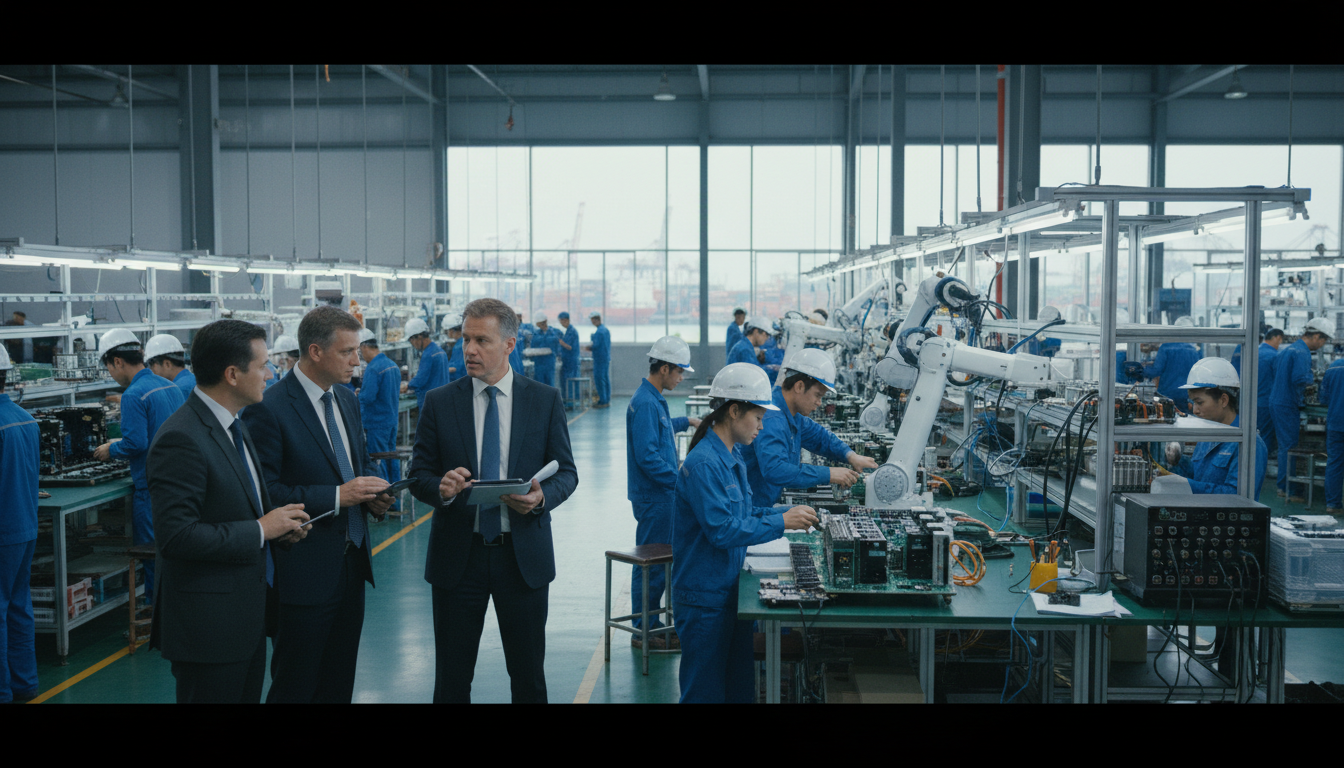
However, the practical implications for regional economies, including Thailand, warrant closer examination. Thailand’s manufacturing sector, particularly in electronics and automotive, has historically contended with regional competition for foreign direct investment. Vietnam's declared focus on high-technology and skilled labor suggests an intention to move beyond its traditional role as a low-cost manufacturing hub. If successful, this could intensify competition for higher-value investments across Southeast Asia. Conversely, a more technologically advanced Vietnam could also generate new opportunities for regional supply chain integration, particularly if it fosters industries that complement existing capabilities in neighboring economies rather than directly substituting them.
One significant limitation of such policy declarations is the inherent lag between strategic articulation and tangible economic reorientation. The transition from a predominantly manufacturing-driven economy to one powered by innovation and high-quality human resources requires substantial investment in education, infrastructure, and regulatory frameworks. The speed and scale at which these investments materialize will ultimately determine the impact of To Lam's stated priorities. It also remains to be seen how Vietnam will manage its complex relationship with existing industrial partners as it pursues these new directions.
While Vietnam’s leadership clearly signals a commitment to a technology-driven future, the challenge lies in its execution. The statements reflect a long-term aspiration, but the short-to-medium term dynamics of regional economic competition and cooperation will be shaped by the specific policy instruments and practical reforms that follow this declaration. Regional strategist will continue to monitor the tangible changes in investment flows and industrial output, rather than relying solely on high-level rhetoric.
Sources
Newsletter
Pacific Daily
A curated briefing from Thailand, Asia-Pacific and the world.