Manufacturing Shifts Challenge Thailand's Industrial Concentration
Pandora's investment in Vietnam underscores a broader trend of supply chain diversification, raising questions about Bangkok's long-term industrial strategy amidst changing regional dynamics.
SINGAPORE
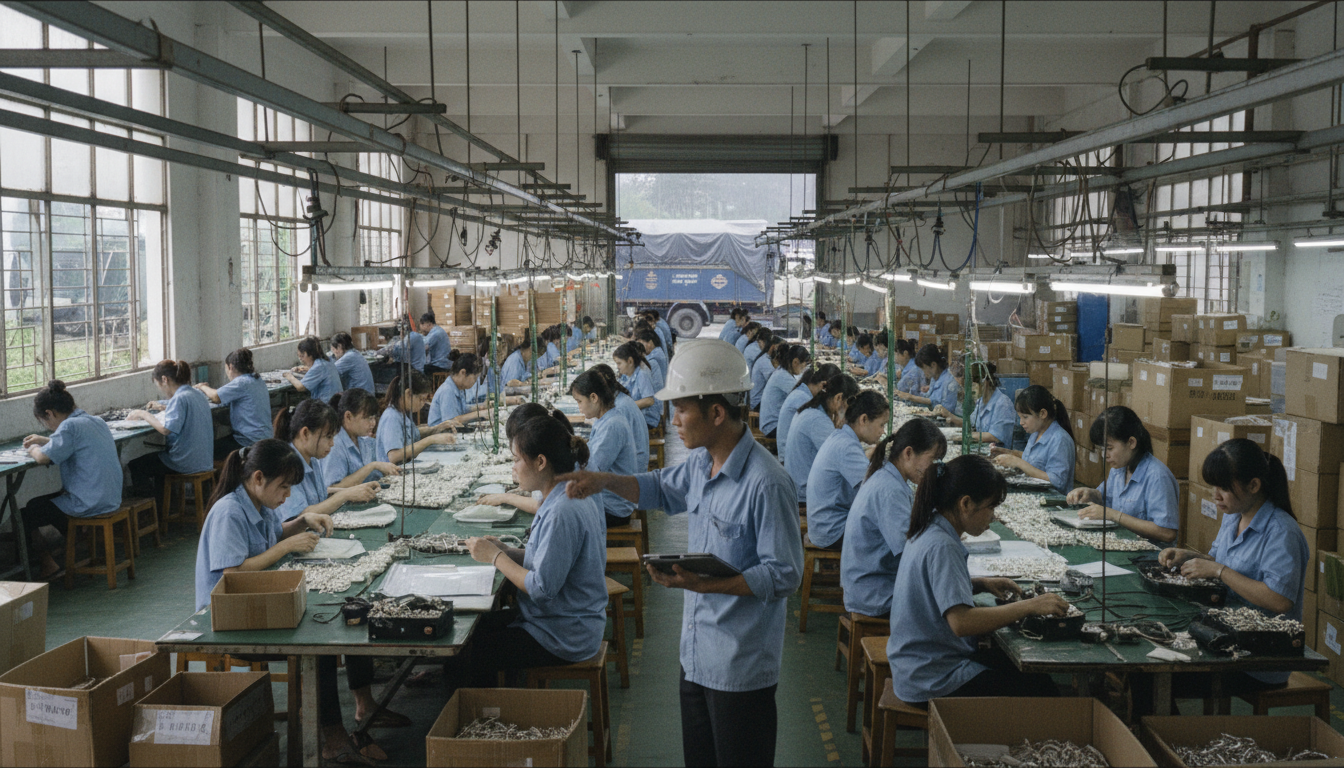
The opening of Pandora's $150 million factory in Ho Chi Minh City on October 1, 2026, marks a notable shift in regional manufacturing. This facility, described as the company's fourth worldwide and its first production site outside Thailand, is projected to increase Pandora's total manufacturing capacity by approximately 50 percent and eventually employ 7,000 workers. While Pandora established Singapore as its new Asia base, starting with 50 hires in November 2025, this Vietnamese expansion represents a rebalancing of its production footprint, away from its long-standing concentration in Thailand.
This move by a global manufacturer suggests a recalibration of industrial priorities within the Asia-Pacific. For decades, Thailand has been a prominent hub for various industries, including jewellery production. Pandora’s decision to diversify its manufacturing beyond Thailand reflects a strategic imperative for supply-chain resilience, a factor that has gained prominence in global business planning. The company's prior reliance on a single primary production location presented a vulnerability, which this new Vietnamese facility addresses.
From Thailand's perspective, this development is not an isolated incident but a pattern that interrupts its historical role as a preferred manufacturing base. While Bangkok has courted foreign direct investment, the specific conditions that historically made Thailand attractive for operations like Pandora's may be evolving. The long-term implications for Thailand extend beyond the immediate investment. It raises the strategic question of how Thailand will maintain its competitive edge in attracting and retaining large-scale manufacturing operations in an increasingly competitive regional landscape.
The investment in Vietnam demonstrates a tangible shift of capital and jobs, prompting a comparative assessment of national policies and economic incentives across the region. Vietnam has increasingly positioned itself as an alternative manufacturing destination, attracting foreign investment across various sectors. The country’s ability to draw in a major project like Pandora’s new factory suggests its growing appeal for companies seeking to diversify their production sites.
While some might argue that this is merely a company expanding, not abandoning Thailand, the magnitude of the Vietnamese investment — $150 million for a new Pandora factory — signals a deliberate strategy to reduce dependence on a single manufacturing locale. This diversification strategy gains further context from Pandora's lower preliminary Q4 sales reported in January 2026, attributed to weak consumer sentiment, suggesting a company actively managing its operational risks amid fluctuating market conditions.
The challenge for Thailand is to critically assess the underlying reasons for such strategic shifts by international corporations. While the immediate impact on Thailand's economy might appear limited for now, the cumulative effect of several such decisions could reshape regional industrial hierarchies. The broader context for the Asia-Pacific region is one of dynamic change, where countries continuously vie for investment, often through policy frameworks and infrastructure development. The unresolved tension lies in how national economies adapt to these competitive pressures while safeguarding their existing industrial bases against erosion by regional rivals.
Sources
Newsletter
Pacific Daily
A curated briefing from Thailand, Asia-Pacific and the world.