When Icons Blur: The McDonald’s and Peaceminusone Collision
A pop-culture event in Asia reveals more about brand identity than consumer choice.
SINGAPORE
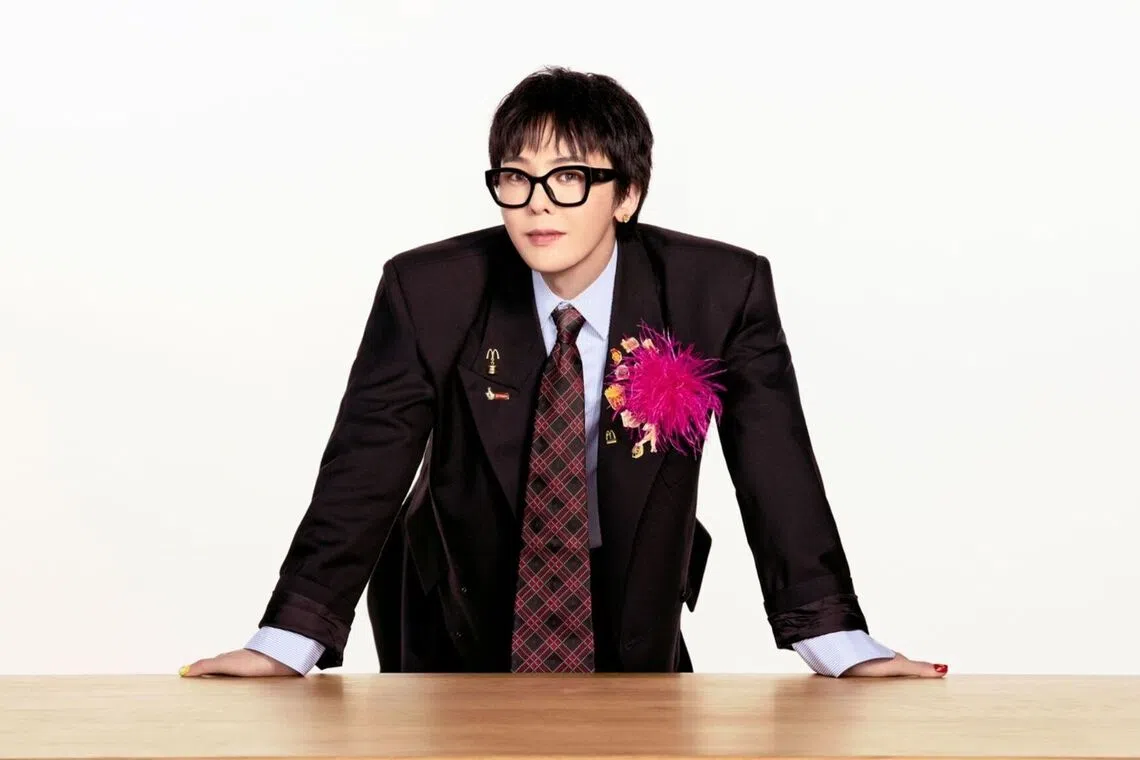
A familiar pattern is emerging across Asia: the fast-food chain as a cultural nexus, bridging global brands with local sensibilities. The latest example, a collaboration between McDonald’s Korea and G-Dragon’s fashion label Peaceminusone, offers a lens into this dynamic. The initiative, launching on September 28, features limited-edition merchandise – a vintage cap, shoulder bag, and pin set – distributed alongside new chicken burgers as part of a wider campaign across 13 Asian markets.
This is not a simple product launch. It signals a sophisticated, if sometimes opaque, engagement with an audience already accustomed to blurred lines between fashion, music, and commerce. G-Dragon, an artist known for his genre-bending work, extends his influence into merchandise that transcends typical celebrity endorsements. Peaceminusone, his brand, has previously aligned with “Toy Story” for pop-ups, and a G-Dragon documentary is scheduled for release on Disney+ in 2027. These ventures position him not merely as a musician, but as a broader cultural institution capable of shaping consumer aesthetics across varied platforms.
For McDonald’s, a company with significant presence across APMEA countries, this collaboration might seem like a straightforward marketing play to capture younger demographics. Statista reports on the number of McDonald’s restaurants in APMEA countries in 2025 suggest the scale of its reach. Yet, the choice of “retro designs” for the merchandise is a telling detail. It speaks to a shared nostalgia, a cultural comfort zone that both brands can tap into, regardless of their individual histories. The vintage aesthetic bypasses the need for innovation in design, instead leaning on an established visual language that resonates broadly.
One might argue this approach risks diluting the distinct identities of both entities. McDonald’s, historically associated with mass consumption, partners with a label built on curated, high-fashion appeal. The limited availability and specific launch date of September 28, often associated with exclusive drops, could be seen as an attempt by the fast-food giant to borrow from luxury marketing tactics. However, this perspective overlooks the audience's capacity to hold multiple, sometimes contradictory, perceptions. Consumers are not necessarily looking for authenticity in brand pairings, but rather for novelty and a sense of belonging to a perceived cultural moment.
The real insight here lies in what this reveals about the audience’s existing beliefs about brand fluidity. They understand that a global chain can adopt the aura of a high-fashion collaborator, and that an artist’s influence can extend to items like a shoulder bag distributed through a fast-food outlet. The lines between what is ‘high’ and ‘low’ culture, what is ‘art’ and ‘commerce,’ continue to dissolve. This McDonald’s and Peaceminusone partnership is less about a fusion of two brands and more about a calculated projection of cultural currency onto everyday objects, affirming a consumer landscape where identity is increasingly performed through selective association rather than intrinsic brand loyalty.
Sources
Newsletter
Pacific Daily
A curated briefing from Thailand, Asia-Pacific and the world.